

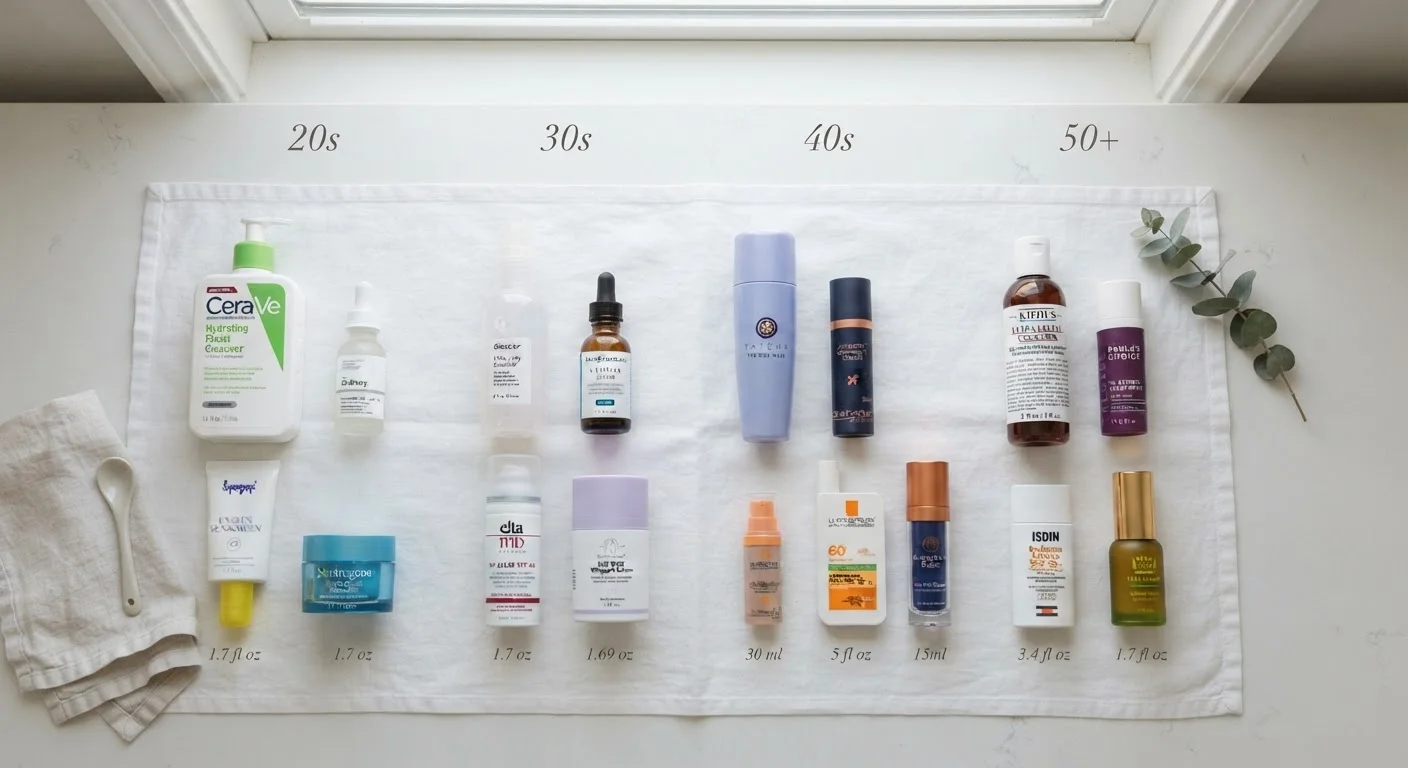
Key Takeaways
- Sun protection is the single highest-impact habit across every decade of life.
- Collagen production begins slowing in the mid-to-late 20s, making early care meaningful.
- Skin becomes drier and less resilient with age, calling for richer moisturizers over time.
- Retinoids have the strongest research backing for addressing visible aging signs.
- Hormonal shifts in the 40s and 50s meaningfully change how skin behaves and feels.
- A consistent, simple routine generally outperforms a complicated, frequently changed one.
Why Skin Changes Decade to Decade
Skin isn't static. It's a living organ shaped by genetics, hormones, environment, and the cumulative effect of daily habits. Understanding why it shifts helps you make smarter choices rather than chasing whatever trend is currently being marketed.
The core biological changes are fairly predictable. Collagen and elastin - the structural proteins that keep skin firm and springy - begin declining around the mid-20s. Cell turnover, the process by which fresh skin cells rise to the surface and old ones shed, slows noticeably with each decade. Oil production tends to peak in adolescence, moderate in the 20s and 30s, and drop significantly later - which is why many people who had oily or acne-prone skin find themselves dealing with dryness in their 40s and 50s. Hormonal changes, particularly around perimenopause and menopause, introduce another layer of variability.
None of this is cause for alarm - it's simply useful context. Just as the foundations of overall wellness shift across life stages, so do the building blocks of a practical skin care routine.
~1%
Annual collagen decline after age 25
Research published in dermatology literature estimates skin collagen content decreases by roughly 1% per year beginning in the mid-20s.
Up to 90%
Visible aging attributed to UV exposure
Dermatologists widely cite research indicating that the majority of premature skin aging is driven by cumulative sun exposure rather than intrinsic aging.
~30%
Drop in skin collagen in first 5 years post-menopause
Studies have found collagen content can decline by around 30% in the five years following menopause, largely due to falling estrogen levels.
Skin Care in Your 20s: Prevention Is the Real Work
The 20s tend to be the decade when most people are the least deliberate about skin care - and ironically, when consistency pays the biggest long-term dividends. The biggest lever available is sun protection. UV exposure is the primary external driver of premature skin aging, and research consistently shows that daily broad-spectrum SPF use is more impactful than almost any corrective treatment applied later.
Beyond SPF, a basic routine in your 20s looks like: a gentle cleanser suited to your skin type, a lightweight moisturizer that maintains the skin barrier, and an antioxidant like vitamin C in the morning to help neutralize free radical damage. If acne is a concern, ingredients like salicylic acid or benzoyl peroxide are well-studied options - though persistent or severe acne warrants a conversation with a dermatologist rather than a trial-and-error product approach.
In your 20s, think of SPF as an investment, not a vanity step - apply it last in your morning routine every single day, even in winter or when working indoors near windows.
UVA rays, which drive long-term skin aging, penetrate glass and are present year-round. Cumulative daily exposure adds up significantly over decades.
When introducing a retinoid for the first time, try the 'sandwich' method: apply moisturizer first, then the retinoid, then moisturizer again to buffer irritation while your skin acclimates.
Retinoid-induced irritation is a common reason people abandon the ingredient; buffering reduces dryness and peeling without eliminating efficacy.
This is also a good decade to build the habit of reading ingredient labels rather than packaging claims. See our step-by-step morning routine guide for a practical starting point.
Skin Care in Your 30s: Maintenance Meets Early Repair
In the 30s, many people notice the first visible changes: fine lines around the eyes or forehead, slightly uneven tone, or skin that doesn't bounce back quite as quickly after a poor night's sleep. Cell turnover has slowed enough that dullness becomes more common, and the effects of past sun exposure may begin surfacing as faint hyperpigmentation.
This is the decade where retinoids - a class of vitamin A derivatives - earn their reputation. They have the strongest body of evidence for stimulating collagen production and accelerating cell turnover. Starting at a low concentration and introducing them gradually minimizes irritation. If you're switching or adding new actives, doing so one product at a time is a sensible approach.
Hydration becomes more important as oil production moderates. Understanding whether your skin is dry or simply dehydrated can meaningfully change which products actually help. Nighttime routines also matter more in the 30s - skin repair peaks during sleep, making evening application of actives particularly effective.
Start Retinoids Before You Think You Need Them
Dermatologists often suggest introducing a low-strength retinoid in the late 20s or early 30s - before deep lines are established - because retinoids work best as a maintenance tool, not just a corrective one. Start with two to three nights per week, always follow with moisturizer, and allow at least eight to twelve weeks before assessing results.
Skin Care in Your 40s: Addressing Structural Shifts
The 40s often bring the most noticeable structural changes. Collagen loss accelerates, skin may feel less firm, and deeper lines can develop around the mouth and between the brows. For many people - particularly women approaching perimenopause - hormonal fluctuations trigger unexpected changes: some experience adult acne for the first time, while others find their previously oily skin has become noticeably dry.
Exfoliation becomes a valuable tool here. Chemical exfoliants - particularly AHAs like glycolic and lactic acid - help accelerate cell shedding and improve radiance. Our guide to AHAs, BHAs, and PHAs explains how to choose an approach suited to your skin. The goal isn't aggressive peeling; gentle, consistent exfoliation is more sustainable and less irritating.
Richer moisturizers with ingredients like ceramides, peptides, or hyaluronic acid can help support a barrier that's working less efficiently. Eye creams formulated with retinol or peptides may address the thinner, drier skin around the eye area. If new concerns - pigmentation, volume changes, persistent dryness - are affecting your quality of life or confidence, a board-certified dermatologist can discuss evidence-based options well beyond what over-the-counter products offer.
Skin Care Beyond 50: Comfort and Resilience
After 50, the priority often shifts toward comfort and resilience as much as appearance. Skin is typically thinner, drier, and slower to heal. The drop in estrogen after menopause is particularly significant - it affects collagen content, skin thickness, and moisture retention in ways that are measurable and often noticeable within months.
Rich, barrier-supportive moisturizers become non-negotiable rather than optional. Gentle cleansers that don't strip the remaining natural oils are important - harsh foaming formulas can leave skin feeling tight and reactive. Fragrance sensitivity also tends to increase with age, so fragrance-free formulations are worth seeking out.
Sun protection remains essential - skin cancer risk doesn't plateau or reverse. Physical filters (mineral sunscreens containing zinc oxide or titanium dioxide) are often gentler for sensitive or reactive skin. Checking in with a dermatologist annually for a skin examination is a health habit well worth maintaining. For a broader look at how personal wellness needs shift over time, our guide to wellness across life stages offers useful parallel context.
What Stays the Same at Every Age
Across all the decades, a handful of fundamentals don't change - and keeping them front of mind is often more valuable than chasing the newest ingredient.
- Daily SPF. The evidence is unambiguous: UV protection is the most effective anti-aging intervention available without a prescription.
- Consistent moisturization. A healthy skin barrier is foundational to everything else. The specific formulation changes with age; the habit doesn't.
- Gentle cleansing. Over-cleansing or using harsh formulas disrupts the microbiome and barrier at any age.
- Patience with actives. Most evidence-backed ingredients - retinoids, vitamin C, niacinamide - take weeks to months to show results. Switching products before they have time to work is one of the most common missteps.
You can use our weekly skin and hair care audit to periodically check whether your current habits are actually working for you - and spot gaps without overhauling everything at once.
This article is for general informational and educational purposes only. It is not a substitute for professional medical or dermatological advice. If you have specific skin concerns, persistent symptoms, or questions about treatments or medications, please consult a qualified healthcare provider or board-certified dermatologist.