

Key Takeaways
- A capsule wardrobe is defined by intentionality, not a specific item count.
- It works best when built around your actual lifestyle, not an idealized one.
- The approach can reduce decision fatigue and overspending on impulse purchases.
- A capsule doesn't have to mean dull - color and personality still belong.
- It requires honest editing, which can be harder than it sounds.
Capsule Wardrobe
A capsule wardrobe is a small, intentionally chosen collection of clothing items that work well together and cover most of your everyday needs. The idea is that every piece earns its place - nothing sits unworn, and almost everything pairs with something else. Instead of a closet stuffed with options, you have a manageable set of versatile clothes you actually reach for.
The concept was popularized by London boutique owner Susie Faux in the 1970s and later brought to mainstream attention by designer Donna Karan's 1985 'Seven Easy Pieces' collection.
The Concept Behind It
The pitch is simple: own fewer clothes, but clothes that all work together. No orphan pieces that only pair with one thing you no longer have. No items bought in a moment of optimism that don't fit your actual days. Just a smaller, smarter collection that reliably gets you dressed.
A capsule wardrobe isn't defined by a strict item count or a particular color palette - those are stylistic choices people layer on top. The actual principle is intentionality: every item serves a purpose, pairs with multiple other pieces, and fits your real lifestyle.
If you've ever felt overwhelmed staring at a full closet, the quiet reasons your closet feels full but has nothing to wear usually come down to exactly this - a collection of items that don't work together, rather than a shortage of clothes.
No Single 'Right' Version Exists
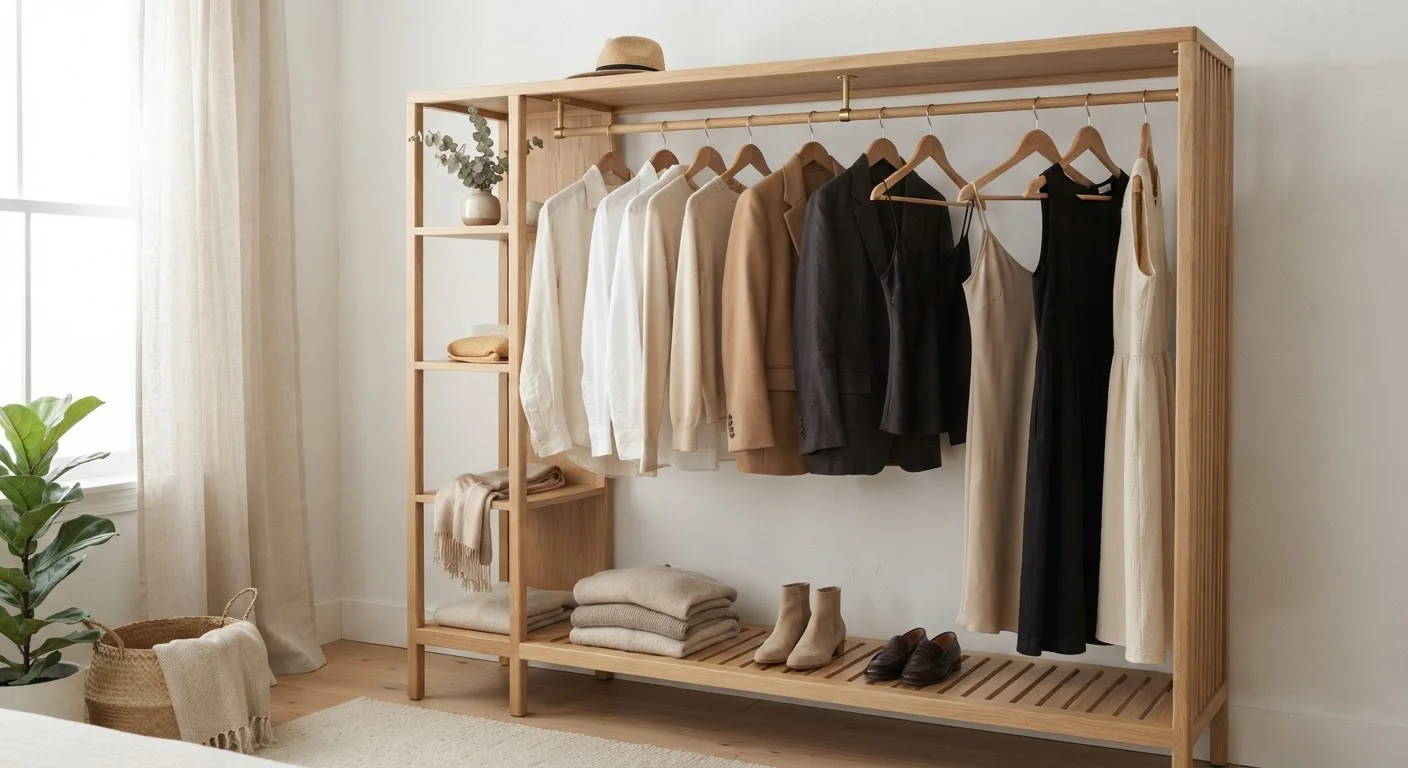
Social media tends to portray capsule wardrobes as all-white linen and bare shelves - that's an aesthetic choice, not a requirement. The concept works across personal styles, climates, and budgets. What matters is that your collection is intentional and functional for your specific life, not that it looks like anyone else's.
What It Actually Involves
Building a capsule wardrobe isn't just a decluttering session - it's a deliberate editing process. You start by understanding what you genuinely do each week: where you go, what dress codes you navigate, what activities fill your time. Then you assess your current wardrobe against that reality.
The editing part is where most people get stuck. It requires honesty about what you actually wear versus what you think you should wear, or what you paid too much for to let go. Common capsule categories include everyday basics (tees, jeans, a simple dress), layering pieces (a blazer, a cardigan, a denim jacket), shoes that cover multiple occasions, and at least one dressier option.
Balancing timeless staples with a few current pieces is a worthwhile consideration here - a capsule built entirely on trend items defeats the purpose, but that doesn't mean your personality has to disappear from your closet.
~33
Average items worn regularly from a typical wardrobe
Research cited by fashion sustainability organizations suggests most people regularly wear roughly a third of what they own, with the rest rarely or never used.
82 lbs
Clothing discarded per American per year on average
According to the U.S. Environmental Protection Agency, Americans discard an estimated 82 pounds of clothing and textiles per person annually.
Whether It Actually Works
For many people, yes - but with important caveats. The capsule wardrobe approach works best for those whose daily lives have some regularity. If your schedule, climate, and dress codes are reasonably predictable, a small cohesive collection genuinely reduces the mental load of getting dressed each morning.
It works less cleanly for people with highly varied routines - caregivers who need functional clothes for physical tasks and professional attire, or anyone whose social life spans very different contexts. That doesn't mean the concept is useless; it may just mean you maintain a few mini-capsules rather than one master collection.
The reported benefits - less decision fatigue, reduced impulse buying, clearer sense of personal style - are real for people who stick with it. A seasonal wardrobe audit can help maintain the system once it's set up. A seasonal wardrobe audit checklist is a practical tool for reassessing what's earning its place each time seasons change.
Getting Started Without Overhauling Everything
You don't need to empty your closet this weekend. A more sustainable approach is to start observing what you actually wear over two to four weeks - those items are your capsule in progress. What remains untouched is the candidate list for editing.
From there, note the gaps: pieces you keep wishing you had, occasions you struggle to dress for, or items that would unlock combinations you can't currently make. If you're starting with very little or rebuilding after a big life change, building a wardrobe from scratch on a realistic budget covers a practical, step-by-step approach that doesn't require spending all at once.
Color is another lever worth thinking through - a capsule where most pieces share a general palette makes getting dressed faster. If that sounds limiting, using color in everyday dressing offers a useful, low-pressure framework for making intentional choices without draining the fun from your wardrobe.
Start With What You Already Wear
Before buying anything new, spend two to four weeks paying attention to what you actually reach for. Those frequently worn pieces are the natural core of your capsule. Building outward from real habits is more reliable than planning from scratch on paper.