

Key Takeaways
- Composting converts kitchen scraps and yard waste into a free, nutrient-rich soil amendment.
- A healthy pile needs a balance of carbon-rich 'browns' and nitrogen-rich 'greens,' plus moisture and air.
- Finished compost improves soil structure, supports beneficial microbes, and reduces the need for synthetic fertilizers.
- Most home compost systems - bins, tumblers, or open piles - follow the same core principles.
- Meat, dairy, and oily foods should generally be kept out of standard backyard compost to avoid pests and odors.
Home Composting
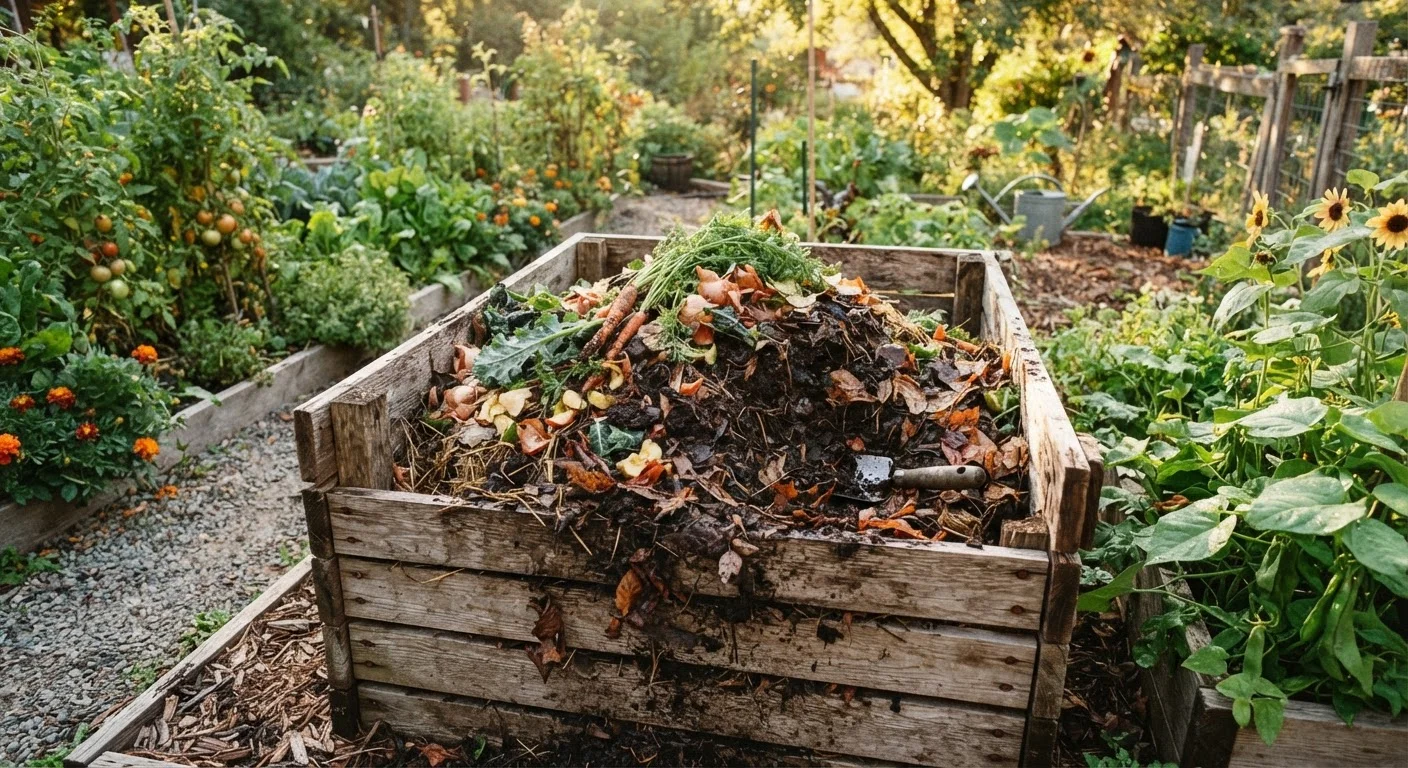
Home composting is the process of intentionally decomposing organic materials - such as vegetable peels, coffee grounds, grass clippings, and fallen leaves - into a dark, crumbly, soil-like substance called compost. Microorganisms, fungi, and invertebrates break down the raw materials over time, producing a nutrient-rich amendment that improves garden soil. It's a natural cycle that happens in forests on its own; composting at home simply manages and accelerates that process.
The decomposition process is driven primarily by aerobic bacteria that require a balanced carbon-to-nitrogen (C:N) ratio, adequate moisture, and oxygen. An ideal C:N ratio of roughly 25-30:1 supports the fastest, most efficient breakdown.
The Science Behind Decomposition
At its core, composting is controlled decomposition - the same biological process that recycles organic matter in any natural ecosystem. Bacteria do most of the heavy lifting, particularly in the early, hot stages of a working pile. As they consume organic material, they generate heat as a byproduct, which is why a healthy active compost pile can reach internal temperatures of 130-160°F. That heat is useful: it kills many weed seeds and pathogens.
Fungi take over as conditions shift, breaking down tougher materials like woody stems and straw. Invertebrates - earthworms, pill bugs, millipedes - then process the partially decomposed matter further, leaving behind castings that are especially rich in plant-available nutrients. The end result of all this activity is humus, a stable organic compound that gives finished compost its characteristic dark color and earthy smell.
~24%
Share of U.S. municipal solid waste that is food and yard trimmings
According to EPA waste characterization data, food and yard debris together represent one of the largest fractions of what Americans send to landfills annually.
130-160°F
Internal temperature of an active hot compost pile
Sustained temperatures in this range, achieved through proper green/brown balance and turning, are sufficient to kill many common weed seeds and pathogens.
6-8 weeks
Time to finished compost with active management
Regularly turned, properly moistened piles with a balanced C:N ratio can yield usable compost in as little as six to eight weeks under favorable conditions.
Greens, Browns, and Getting the Balance Right
Every composting guide comes back to two categories of ingredients: greens and browns. Greens are nitrogen-rich materials - fresh vegetable scraps, fruit peels, coffee grounds, grass clippings, and fresh plant trimmings. Browns are carbon-rich - dry leaves, cardboard, paper, straw, and wood chips. Both are essential.
Nitrogen feeds the microorganisms doing the decomposing work. Carbon provides the energy source and physical structure that keeps the pile from becoming a soggy, smelly mat. Too many greens and the pile gets slimy and odorous; too many browns and decomposition slows to a crawl. A rough target of two to three parts browns for every one part greens by volume works well for most home systems.
Moisture matters just as much. The pile should feel like a wrung-out sponge - damp throughout but not dripping. In dry climates or during summer heat, you may need to water the pile occasionally. In rainy regions, covering the pile can prevent waterlogging.
Chop or Shred Before Adding
Cutting vegetable scraps into smaller pieces and shredding cardboard or dry leaves significantly speeds up decomposition. More surface area means more contact with decomposing microbes. A few seconds of chopping can shave weeks off your composting timeline.
Choosing a Composting System
You don't need special equipment to start composting. The simplest method is an open pile in a corner of the yard - just layer materials and let time do the work. For a tidier setup, a three-sided wooden or wire bin corrals the materials while still allowing airflow. Enclosed plastic bins retain more heat and moisture and are a common choice for smaller yards.
Compost tumblers - sealed drums mounted on a frame - make turning easier and can deter rodents, though they hold less volume and can dry out faster than ground-contact piles. For gardeners focused on speed, a three-bin system (one active, one resting, one finished) allows continuous composting without interrupting the curing process.
If you're also building or improving beds, finished compost pairs naturally with mulch. Our guide to what mulch does underground explains how organic materials layered on the soil surface complement the biology that compost supports below it.
Why Compost Matters for Your Garden and Beyond
Finished compost improves soil in several measurable ways. It loosens compacted clay soils, improving drainage and root penetration. In sandy soils, it acts like a sponge, helping the ground retain water and nutrients that would otherwise leach away. It also feeds the beneficial microbial communities that healthy plants depend on - communities that synthetic fertilizers alone don't sustain.
Compost also reduces household waste. The EPA has estimated that food scraps and yard trimmings make up a significant portion of what Americans send to landfills - material that, when buried without oxygen, produces methane instead of becoming a useful resource. Composting at home redirects that material back into a productive cycle.
If you're preparing a new bed - especially for vegetables - starting with compost-enriched soil gives transplants and seeds a strong foundation. See our guide to starting a vegetable garden from scratch for how to incorporate compost into a planting plan from day one.