

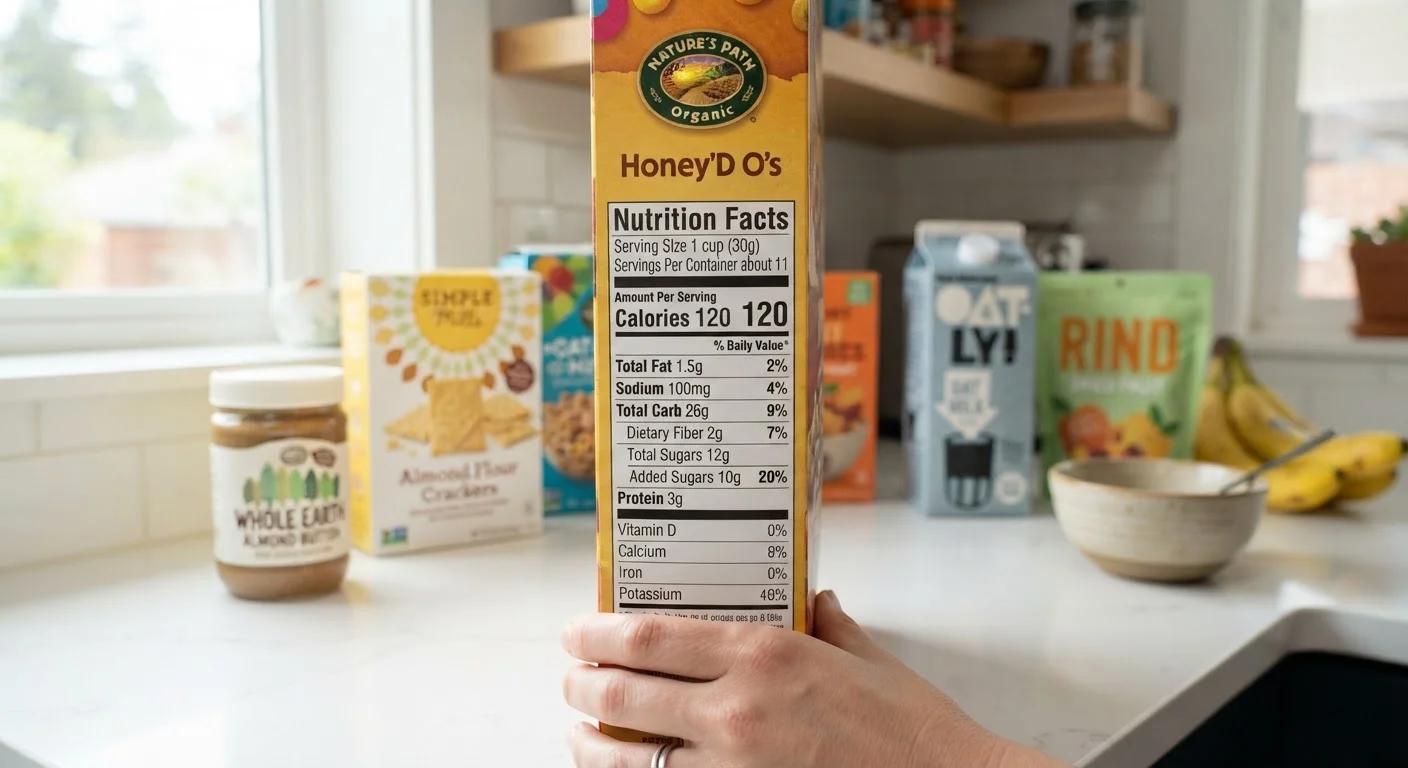
Key Takeaways
- Added sugars are sweeteners put into food during manufacturing, not sugars naturally present in whole ingredients.
- They've been required on U.S. Nutrition Facts labels since 2020 under FDA rules.
- The Dietary Guidelines for Americans recommends limiting added sugars to less than 10% of daily calories.
- Natural sugars in whole fruit and dairy come packaged with fiber, protein, and nutrients that affect how the body processes them.
- A food can be high in total sugar but have zero added sugars - or the reverse.
- Checking this line helps you spot heavily sweetened products that may not look sweet on the surface.
Added Sugars
Added sugars are any sugars or caloric sweeteners introduced to a food during processing or preparation - not sugars that occur naturally in the ingredient itself. This includes table sugar, honey, syrups, fruit juice concentrates, and other sweeteners added to improve flavor, texture, or shelf life. They're listed separately on the Nutrition Facts label so consumers can see how much sweetness comes from the manufacturer, not from the food's natural state.
Chemically, added and natural sugars are often identical molecules (e.g., fructose, glucose, sucrose), but they differ in the nutritional context they arrive with - added sugars carry no accompanying fiber, vitamins, or minerals.
Where the Line Came From
Before 2020, U.S. Nutrition Facts labels showed only total sugars - a single number that lumped together the natural sugar in a cup of milk and the tablespoons of corn syrup a manufacturer stirred in during production. Consumers had no way to tell the difference.
The FDA's updated label rules, finalized in 2016 and fully required by 2020, changed that by adding a dedicated Added Sugars sub-line indented beneath Total Sugars. The decision followed years of nutrition research linking high added sugar consumption to metabolic health concerns, and it aligned the label more closely with how the Dietary Guidelines for Americans frames sugar intake.
For a fuller picture of how all the rows on a Nutrition Facts panel fit together, see our guide to reading nutrition labels without the confusion.
17 tsp
Average daily added sugar intake for U.S. adults
According to CDC data, Americans consume roughly 17 teaspoons of added sugar per day on average - well above recommended limits.
10%
Recommended daily calorie limit from added sugars
The Dietary Guidelines for Americans recommends keeping added sugars below 10% of total daily caloric intake for adults and children over age 2.
2020
Year added sugars became required on U.S. labels
Most food manufacturers were required to display the separate Added Sugars line on Nutrition Facts panels by January 1, 2020, per FDA rules.
What Counts as 'Added' - and What Doesn't
The FDA defines added sugars as sugars that are either added during the processing of foods, or are packaged as such. In practice, that covers a wide range of ingredients beyond simple white sugar:
- High-fructose corn syrup and corn syrup solids
- Honey, maple syrup, molasses, and agave nectar
- Fruit juice concentrates used as sweeteners
- Brown sugar, raw sugar, turbinado, and similar refined forms
- Dextrose, maltose, and other named sugars added as ingredients
What doesn't count: the lactose naturally present in milk, the fructose in a whole apple, or the sugars in plain unsweetened yogurt. These arrive bound to fiber, protein, vitamins, and minerals that change how the body encounters and uses them.
This is the core reason the distinction matters nutritionally - not because the molecules differ, but because their nutritional company does. Learn more about why nutrition science treats these two differently.
Reading the Label in Real Life
Once you know what you're looking at, the Added Sugars line becomes one of the more useful tools on the panel. A few practical patterns worth knowing:
A high total sugar with zero added sugars often signals a product like plain yogurt or 100% orange juice - the sugar is inherent to the ingredient. A low total sugar but nonzero added sugars can appear in savory products like pasta sauce, salad dressing, or bread, where sweetener is added for balance rather than obvious sweetness.
The percent Daily Value (%DV) next to Added Sugars is based on a limit of 50 grams per day (the 10% threshold on a 2,000-calorie diet). A single flavored coffee drink or sweetened yogurt can consume a substantial share of that allotment in one serving.
Understanding how ingredients are listed alongside these numbers adds another layer of clarity - reading an ingredient list without getting lost explains how sweeteners appear by name and position in that list.
This article is for general informational purposes only and is not a substitute for advice from a qualified healthcare provider or registered dietitian. Individual nutritional needs vary.