

Key Takeaways
- Nutrient-dense foods like legumes, oats, and frozen vegetables are consistently among the most affordable options available.
- Core nutrition principles - adequate protein, fiber, and micronutrients - do not require premium or specialty products.
- Cooking methods and meal planning habits amplify the nutritional value of low-cost ingredients significantly.
- Many expensive 'health foods' offer no proven advantage over their budget-friendly counterparts.
- Understanding a few foundational nutrition concepts helps you evaluate any food's value independently of its price tag.
The Price-Nutrition Disconnect
A persistent myth in American food culture is that eating well costs more. Marketing budgets reinforce the idea that premium-priced products - superfoods, supplements, specialty grains - are necessary for good health. The evidence doesn't support that premise. Many widely held nutrition beliefs fall apart under scrutiny, and the idea that healthy food must be expensive is among them.
The nutrients your body actually needs - protein, complex carbohydrates, dietary fiber, essential fats, vitamins, and minerals - are abundantly available in foods that cost very little. The key is knowing which principles to prioritize, rather than chasing product trends. If you're new to thinking about nutrition fundamentals, a grounded introduction to how food fuels the body is a useful starting point before diving into specific strategies.
Nutrition Practices That Work at Any Budget
The following practices reflect established nutrition science. None of them require expensive ingredients. Taken together, they form a framework for genuinely nourishing eating that holds regardless of what you spend.
Build meals around legumes as your primary protein source.
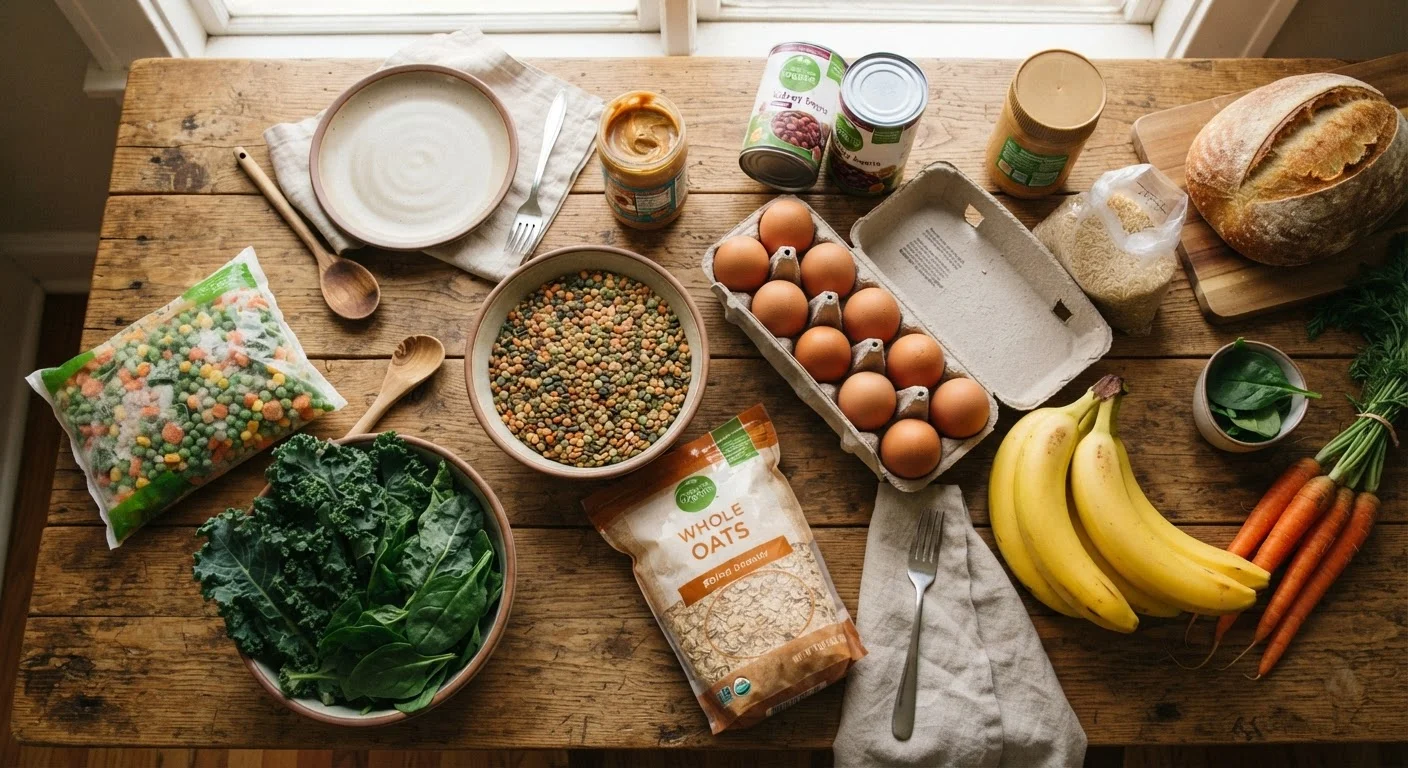
Dried or canned beans, lentils, and chickpeas are among the most nutrient-dense foods per dollar available in any grocery store. They provide substantial protein, soluble fiber, iron, and B vitamins - nutrients that matter for energy metabolism and long-term health. Regular legume consumption is associated with lower rates of cardiovascular disease and improved blood sugar regulation in nutritional research.
Choose frozen vegetables over skipping vegetables entirely.
Frozen vegetables are harvested and flash-frozen at peak ripeness, which locks in most of their vitamins and minerals. Research published in food science literature consistently shows frozen produce retains comparable nutrient levels to fresh - and often more than produce that has traveled long distances. They also reduce food waste, since nothing spoils before you use it.
Prioritize whole grains over refined grains when cost is similar.
Whole grains like oats, brown rice, and whole-wheat bread retain their bran and germ layers, which carry fiber, magnesium, B vitamins, and antioxidants stripped away in refining. Fiber slows digestion and supports satiety, helping meals feel more filling without requiring larger portions. Oats in particular represent exceptional nutritional value at a very low per-serving cost.
Use eggs as a nutritional anchor across multiple meal types.
Eggs are one of the most complete single-ingredient protein sources available, providing all nine essential amino acids along with choline, vitamin D, and B12. They're versatile enough to anchor breakfast, lunch, or dinner, making them one of the most cost-effective sources of high-quality protein on the market.
Reduce reliance on ultra-processed packaged foods, not on food overall.
Ultra-processed foods - characterized by lengthy ingredient lists dominated by additives, stabilizers, and refined ingredients - tend to displace more nutritious options without increasing satiety proportionately. Research from observational studies links high ultra-processed food consumption to poorer diet quality across populations. Reducing them frees both budget and plate space for whole-food alternatives.
Plan meals around a weekly protein anchor to minimize waste.
Deciding in advance which protein source will be the week's foundation - whether a bag of lentils, a carton of eggs, or a whole chicken - reduces impulse purchases and ensures each ingredient gets used fully. This structural approach to meal planning is consistently associated with reduced food spending and less food waste per household.
Quick Actions You Can Take This Week
Understanding nutrition principles is one thing; putting them into motion is another. The actions below require little planning and can produce meaningful changes in how nourishing your meals are - without adding to your grocery bill.
$0.14
Average cost per gram of protein from lentils
Analysis of USDA food cost data consistently places dried lentils among the lowest-cost protein sources in the American grocery market.
~58%
Of American adults meet vegetable intake recommendations
According to CDC dietary surveillance data, a majority of U.S. adults fall short of recommended vegetable intake - a gap that frozen vegetables can help address affordably.
What Budget Eating Doesn't Mean
Budget nutrition isn't about eating less or going without. All-or-nothing thinking is one of the most common patterns that quietly undermine healthy eating goals, and it shows up in how people approach affordable food too. Choosing cheaper ingredients doesn't mean compromising on variety, satisfaction, or nutritional adequacy.
Practical cooking skills multiply what affordable ingredients can do. Techniques that stretch a modest grocery budget further can help you get more nourishing meals from fewer items. And if you find portion balance difficult to maintain, building a balanced plate without counting every calorie offers practical, non-restrictive strategies worth exploring.
Special Dietary Needs Require Professional Guidance
The principles in this article apply to generally healthy adults. If you're managing a chronic health condition, are pregnant, or are making dietary decisions for young children or older adults, individual needs may differ significantly. A registered dietitian can help tailor any of these general principles to your specific circumstances.
This article is for general informational purposes only and is not a substitute for personalized advice from a qualified healthcare or nutrition professional. Individual dietary needs vary; consult a registered dietitian or your healthcare provider for guidance tailored to your health circumstances.