

Key Takeaways
- Ghost kitchens are delivery-only food operations with no physical dining space for customers.
- Lower overhead costs compared to traditional restaurants make them appealing to both new and established food entrepreneurs.
- The rise of third-party delivery apps was a major driver of the ghost kitchen model.
- A single commercial kitchen can host multiple virtual restaurant brands at once.
- Ghost kitchens raise questions about transparency, food quality, and the future of restaurant employment.
Ghost Kitchen
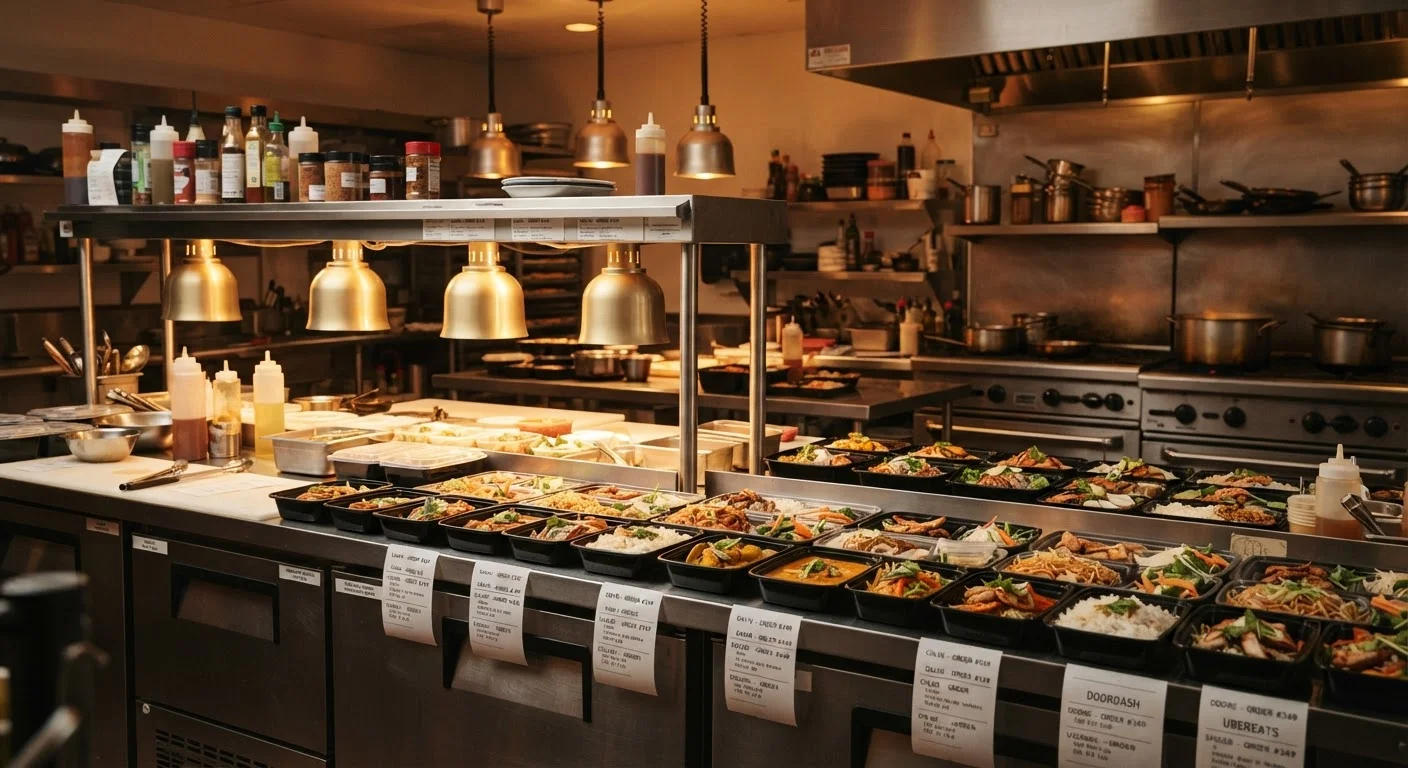
A ghost kitchen - also called a virtual kitchen or dark kitchen - is a professional food preparation facility that produces meals exclusively for delivery or takeout. There is no dining room, no walk-up counter, and often no public-facing storefront. Customers order through delivery apps or websites, and the food is dispatched directly to their door.
Ghost kitchens may house a single restaurant brand or dozens of virtual brands operating simultaneously from one shared space, a model sometimes called a 'multi-brand kitchen' or 'kitchen incubator.'
Where the Ghost Kitchen Concept Came From
The ghost kitchen model didn't emerge overnight. It grew steadily alongside the explosion of third-party food delivery platforms - apps that made it possible for any restaurant to reach customers who never intended to leave their couch. As delivery demand surged through the 2010s, some entrepreneurs began asking a logical question: why pay for a dining room if customers never come in?
Early ghost kitchens appeared in major cities like Los Angeles, New York, and Chicago, often in underutilized commercial spaces - repurposed warehouses, back-alley commissaries, or shared prep facilities. The model gained significant mainstream attention when the COVID-19 pandemic forced dining rooms across the country to close, pushing both hungry consumers and struggling restaurateurs heavily toward delivery as the only viable option.
The pandemic acted as a forcing function, compressing years of behavioral change into a matter of months. According to industry analysts, U.S. food delivery revenue grew substantially during 2020 and 2021, creating fertile ground for delivery-only operations to scale quickly.
$1 trillion
Projected global ghost kitchen market value by 2030
Industry research firms including Euromonitor and others have projected rapid long-term growth for the ghost kitchen sector globally, though estimates vary widely.
~60%
Share of U.S. restaurant orders that are off-premise
The National Restaurant Association has reported that off-premise dining - takeout, delivery, and drive-through - now accounts for the majority of restaurant transactions in the U.S.
30-40%
Typical overhead savings vs. traditional restaurants
Industry observers frequently cite lower real estate and front-of-house staffing costs as giving ghost kitchens a meaningful cost-structure advantage over brick-and-mortar operations.
Why the Model Appeals to Food Entrepreneurs
Opening a traditional restaurant is expensive. Rent in a high-traffic neighborhood, dining room furniture, front-of-house staff, and a full bar program can push startup costs well into the six-figure range before a single plate is served. Ghost kitchens strip most of that away.
A delivery-only concept needs only a licensed commercial kitchen, basic equipment, and a presence on delivery platforms. This dramatically lowers the barrier to entry, making it accessible to talented cooks who may not have the capital for a full brick-and-mortar location. It also lets established restaurant groups test new menu concepts - a Korean barbecue brand, say, or a dessert-only virtual brand - without the risk of opening a second physical location.
Operators can also adjust menus rapidly, pivoting to what sells best on delivery without worrying about whether dishes travel well in a dining room context. That flexibility is genuinely new in the restaurant business.
How to Evaluate a Ghost Kitchen Brand
When ordering from a delivery app, look up the restaurant's address to see if multiple brands share the same location - this signals a ghost kitchen or shared facility. You can also search your local health department's website for inspection records using that address. Knowing these basics helps you make more confident choices about where your meal is coming from.
What Ghost Kitchens Mean for American Food Culture
Ghost kitchens represent a fundamental shift in how Americans relate to restaurant food. Dining out has historically been a social experience - a reason to get dressed, leave the house, and share a table. The delivery-only model quietly decouples the food from that ritual entirely. The meal arrives the same, but the experience surrounding it is completely different.
This has implications worth thinking about honestly. On one hand, ghost kitchens can democratize access to diverse cuisines - a family in a suburban neighborhood can now order from a Cambodian or Ethiopian virtual brand that would never have opened a storefront nearby. On the other hand, the anonymous nature of virtual brands makes it harder for eaters to know much about who is cooking their food, under what conditions, or what the kitchen's values are.
The broader restaurant landscape is shifting around this model too. While ghost kitchens grow, experiential dining concepts like food halls are drawing customers who specifically want the communal aspect that delivery can't replicate. As our piece on why food halls are replacing food courts explores, some diners are actively seeking out physical spaces that emphasize community and curation. Ghost kitchens and food halls are, in a sense, two answers to the same question about what people want from food - and they're pulling in opposite directions.
Understanding the ghost kitchen model also changes how you read a delivery app menu. Much like reading a restaurant menu with a curious eye, knowing what's behind a virtual brand helps you make more informed choices about where your food dollar actually goes.
Looking Ahead: Transparency and the Consumer's Role
As ghost kitchens become more common, questions of transparency have moved to the front of the conversation. Consumer advocates and some local regulators have raised concerns about virtual brands that obscure their origins - particularly when multiple brands with different names and photos all operate from the same address and kitchen staff.
Some delivery platforms have responded by labeling shared kitchen operations or requiring virtual brands to disclose their physical location more clearly. Health inspection records for ghost kitchen facilities are generally public, just like those for traditional restaurants, and curious consumers can often search their local health department's database by address.
The ghost kitchen model will likely continue evolving. Shared kitchen spaces, sometimes called kitchen incubators, are also supporting small food businesses, cottage bakers, and culinary entrepreneurs who lack access to commercial equipment. That dimension of the trend connects to a broader story about who gets to participate in American food culture - and how the industry continues to change in response to how, where, and why Americans choose to eat.