

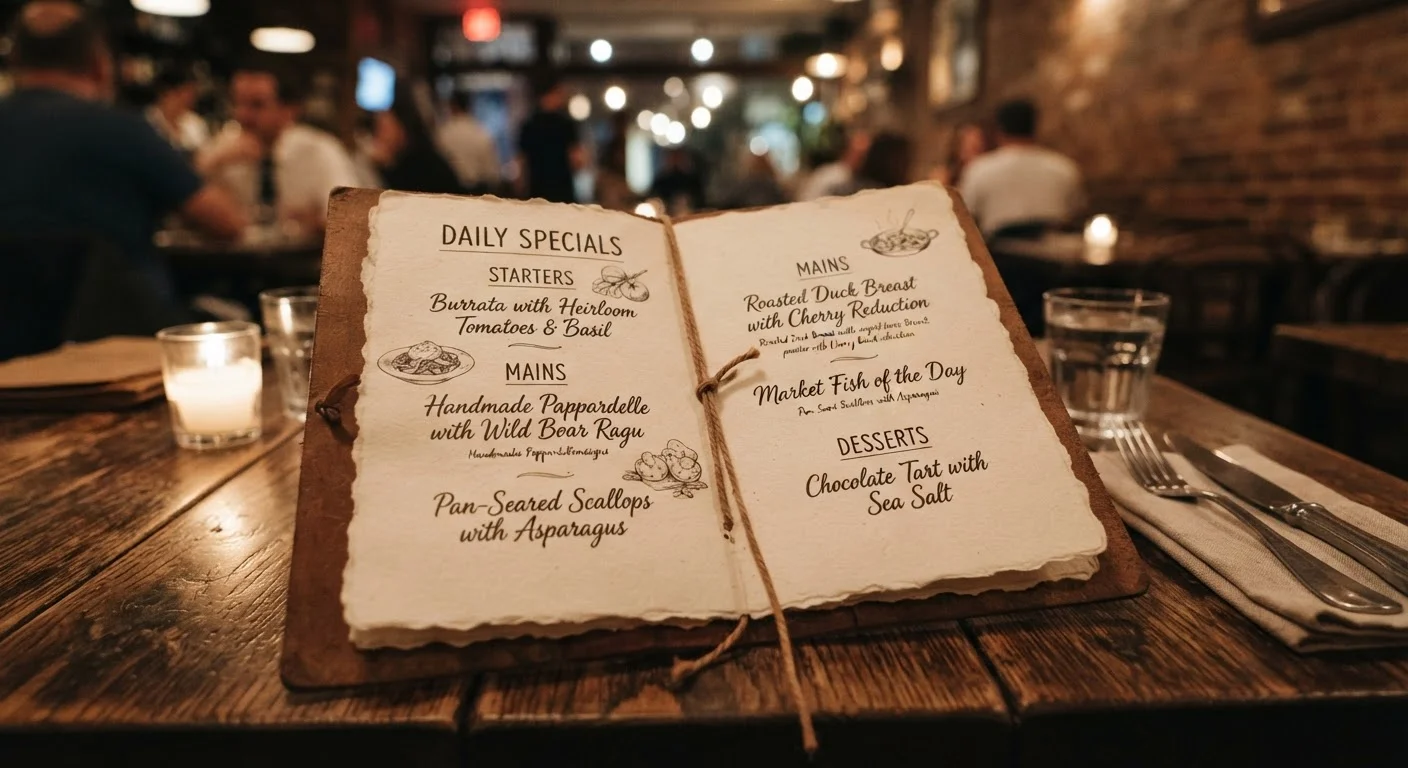
Key Takeaways
- Menus are deliberately designed documents that communicate a restaurant's identity, values, and culinary influences.
- Dish names, ingredient sourcing language, and section order are all intentional choices worth noticing.
- Asking questions about unfamiliar terms shows curiosity, not ignorance - good restaurants welcome it.
- Understanding menu structure helps you order more confidently and enjoy the meal more fully.
- Terms like 'farm-to-table' and 'house-made' carry real meaning but vary widely in how they're applied.
What you will need
Why a Menu Is Worth Reading Carefully
Most people scan a menu looking for something appealing and stop there. But a restaurant menu is one of the most compressed, intentional documents in everyday American life. Every word, every section heading, every omission is a choice made by a chef, a restaurateur, or both. Reading it with attention - the way you might read the back cover of a book before committing - changes the entire experience of dining out.
Menus communicate a kitchen's values, its supply chain, its cultural influences, and its understanding of what diners want. They're also living documents: a menu that changes seasonally tells a different story than one that hasn't shifted in a decade. Street food and restaurant dining both carry cultural signals, but the sit-down menu offers a uniquely curated window into a kitchen's identity.
Let the Menu Tell You What the Kitchen Does Well
Shorter menus often reflect a kitchen focused on doing a few things exceptionally well. If a dish appears in multiple sections - as an ingredient in an appetizer, a salad, and an entrée - it's a good sign that item is a house strength. Follow those threads when deciding what to order.
The steps below walk you through a systematic way of reading a menu - not to make ordering harder, but to make the meal more meaningful.
Curiosity and an Open Mind
The most useful tool for reading a menu is genuine interest in what the kitchen is communicating.
Your Server
Servers can clarify unfamiliar terms, describe preparations, and flag what the kitchen does best that evening.
A Basic Food Vocabulary
Familiarity with common culinary terms (braise, confit, emulsion) helps decode descriptions without guesswork.
Following the Steps at the Table
The approach outlined here takes only a few extra minutes but pays off in how clearly you understand what you're eating and why. Think of it as the difference between watching a film passively and watching with awareness of how the director made choices. The enjoyment doesn't diminish - it deepens.
Read the Menu Structure Before the Dishes
Before scanning for something that sounds good, pause and look at how the menu is organized. Notice how many sections there are, whether the restaurant uses a prix fixe (set price, multi-course) format or à la carte (individual items priced separately), and whether the sequence follows a traditional progression from lighter to richer dishes.
A thoughtfully organized menu reflects how the kitchen wants you to experience the meal. Some contemporary restaurants abandon the appetizer-entrée-dessert model entirely, favoring small plates meant for sharing. That structure tells you something about the philosophy behind the food.
Decode the Language of Dish Names
Restaurant dish names are compressed storytelling. A single line might reference a cooking technique, a geographic origin, a cultural tradition, and a key ingredient all at once. 'Braised short rib with chimichurri' tells you the meat is slow-cooked in liquid (braise), and the sauce is an Argentine herb condiment - signaling a specific flavor profile.
Pay attention to place names embedded in dish titles. 'Calabrian chili,' 'Tuscan white bean,' or 'Oaxacan mole' are invitations to connect what's on the plate to a real culinary tradition. These aren't just marketing words - they point toward recipes with genuine cultural roots, even if adapted for a local audience.
Notice Sourcing and Provenance Claims
Many menus now name farms, regions, or fisheries alongside ingredients: 'Hudson Valley duck,' 'Gulf shrimp,' 'locally milled grains.' These details are deliberate. They signal that the kitchen has thought about ingredient origin - and that the restaurant wants you to know it.
Farm-to-table language is common but unregulated, so treat named sourcing as a positive indicator rather than a certified standard. When a restaurant names a specific farm or region, that specificity is generally more meaningful than a generic 'locally sourced' claim.
[important_callout]Look for the Kitchen's Signature Moves
Recurring ingredients across a menu - a particular grain, a fermented element, a house-made condiment - reveal the kitchen's culinary personality. If cultured butter appears in the bread course, a compound butter finishes the steak, and a butter-basted fish features in the mains, you're reading the work of a kitchen that cares about dairy technique.
Similarly, if a menu lists several housemade ferments, house-cured meats, or freshly milled flours, you're in a kitchen investing real labor into foundational flavors rather than purchasing ready-made components. That investment usually shows up in the eating.
Connect the Menu to Broader Food Culture
A menu is a snapshot of culinary history in motion. The dishes a restaurant serves reflect immigration patterns, regional agriculture, shifting American tastes, and the chef's own biography. A Korean-Mexican fusion menu in Los Angeles tells a different story than a New England seafood house or a Southern barbecue counter in Memphis.
Understanding these connections makes dining richer. For a deeper look at how cultural forces shaped what Americans eat, explore the history behind American food culture. And if you're eating in an unfamiliar city, menus can serve as a guide to local identity - something discussed more fully in our piece on using food to navigate a new city.
Ask Questions and Order with Intention
Reading a menu actively means you'll arrive at ordering with real questions. That's a feature, not a problem. Asking 'Is the pasta made in-house?' or 'What does the preparation on the lamb involve?' shows genuine engagement - and the answers help you order something you'll actually love.
If you're interested in understanding more about what's in your food beyond the menu description, the principles behind reading an ingredient list translate well to thinking critically about composed dishes. And if you're working to make more informed choices about what you eat, the Nutrition Basics hub offers grounded, practical guidance.
[warning_callout]For readers interested in applying similar analytical thinking to packaged food labels, our guide to reading a nutrition label without the confusion covers what each section of a label actually communicates and which figures deserve the most attention.