

Key Takeaways
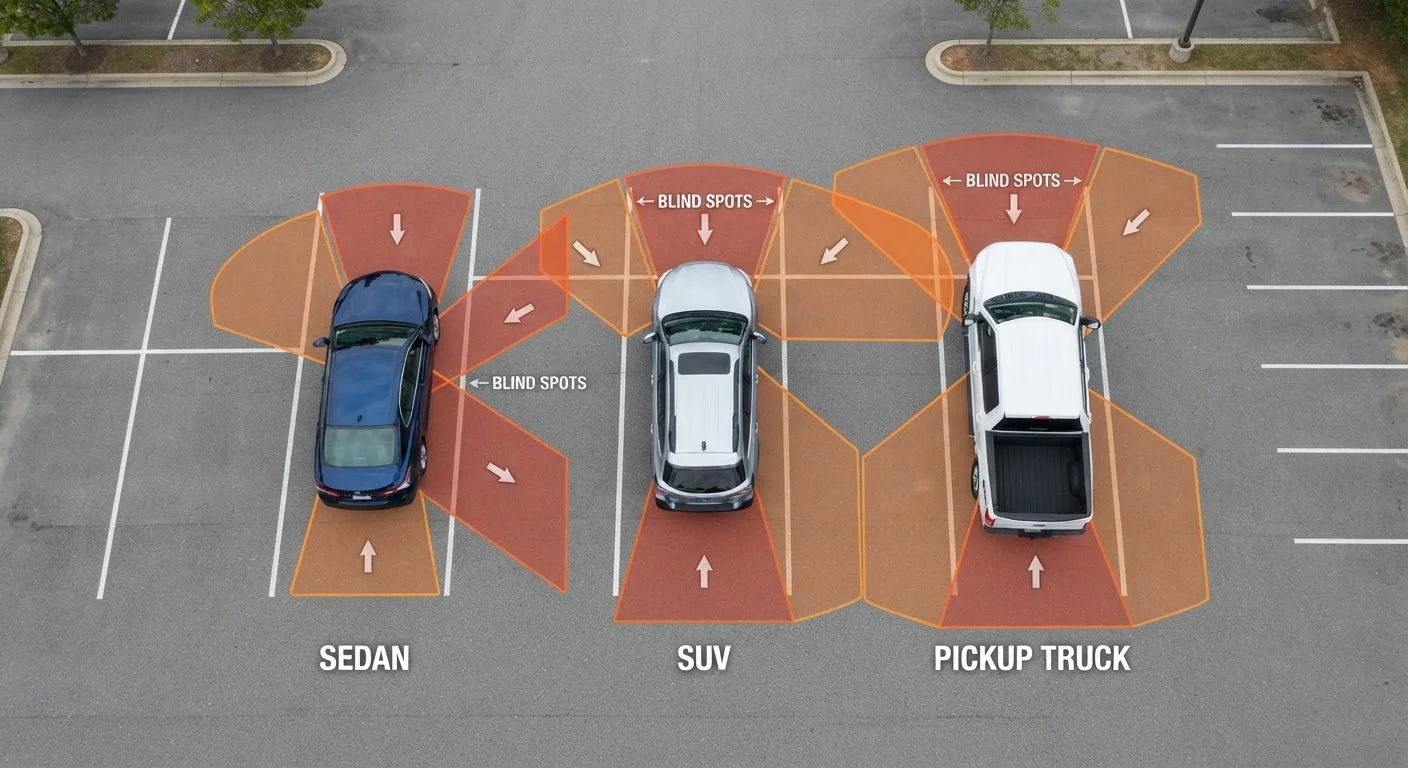
- Pickup trucks have the largest rear blind zones, sometimes extending 50 feet or more behind the vehicle.
- SUVs combine tall rooflines with wide bodies, creating significant front, rear, and side blind areas.
- Sedans have the smallest overall blind zones but still have notable rear-quarter blind spots.
- Correct mirror adjustment - not just checking mirrors more often - is the most effective countermeasure.
- Understanding your specific vehicle's blind zones changes how you should change lanes, park, and merge.
Our Verdict
No vehicle is blind-spot-free, but the size and shape of what you drive directly determines where those danger zones fall and how large they are. Trucks carry the highest rear-blind-zone risk, SUVs present the broadest overall coverage challenge, and sedans offer the most manageable profile - though none should be driven without deliberate mirror strategy and regular shoulder checks.
| Best for | Recommended |
|---|---|
| Drivers prioritizing the smallest blind zone footprint | Sedan |
| Drivers needing cargo or towing capacity who must manage large rear blind zones | Pickup Truck with active rear camera and sensor use |
| Drivers balancing passenger space and visibility who need intentional mirror setup | SUV with properly adjusted mirrors and blind-spot monitoring |
Why Vehicle Shape Determines Blind Zone Size
A blind spot isn't just the area your mirrors miss - it's any zone around your vehicle where another car, cyclist, or pedestrian can exist without you knowing it. The shape, height, and length of your vehicle determine exactly where those zones are and how large they grow.
Three factors drive blind zone size: roofline height (taller vehicles obscure more in front), body length (longer vehicles extend rear blind zones), and pillar thickness (the A, B, and C pillars flanking your windows block side visibility). Understanding which combination applies to your vehicle is the starting point for driving it safely.
This matters beyond parking lot maneuvers. Blind zones affect lane changes at highway speed, merging onto busy interstates, and backing out of driveways - situations where misjudging space around you has real consequences.
Sedans: Smallest Footprint, But Not Blind-Spot-Free
Sedans sit lowest to the ground and have the shortest bodies of the three vehicle types, which works in their favor. Front visibility is generally excellent, and rear blind zones are relatively compact. However, the sloped rear roofline characteristic of most sedans creates a meaningful rear-quarter blind spot - the area just behind each rear door and alongside the trunk.
The thick C-pillars (the supports connecting the rear roof to the body) are the primary culprit. When changing lanes, a motorcyclist or compact car can disappear completely into this zone. The fix isn't checking mirrors more often; it's adjusting them correctly and always performing a physical shoulder check before any lane change.
| Sedan | SUV | Pickup Truck | |
|---|---|---|---|
| Rear blind zone size | Small to moderate | Moderate to large | Very large (50+ ft possible) |
| Front blind zone (close proximity) | Minimal | Moderate - hood height a factor | Significant - long hood and cab height |
| Side/rear-quarter blind spots | Moderate - C-pillar issue | Moderate to large | Moderate - improved by wide mirrors |
| Backup camera required (new vehicles) | Yes | Yes | Yes |
| Difficulty of mirror adjustment | Low | Medium | Medium to High |
| Recommended additional aid | Shoulder checks | Blind-spot monitoring sensors | Camera + sensors + walkaround |
SUVs: Height Creates a Different Kind of Problem
SUVs offer commanding road presence, but that elevated seating position comes with tradeoffs. The increased height improves some forward sightlines but dramatically worsens front blind zones close to the vehicle - the area directly in front of the hood can hide a small child, a bollard, or a bicycle completely from view.
Rear blind zones in SUVs are longer than in sedans due to greater overall vehicle length. Wide body designs also push side blind spots further out. Drivers transitioning from a sedan to an SUV are frequently surprised by how much more space the vehicle occupies in all directions.
Set Your Mirrors Before Every Drive
Mirror position shifts subtly when passengers adjust their seat or when you switch between drivers in a shared vehicle. Take five seconds to verify your side and rearview mirrors are correctly positioned before pulling out. A mirror aimed even slightly wrong at highway speed can hide an entire lane of traffic in your blind zone.
Properly set side mirrors - angled outward so you can just barely see the edge of your own vehicle - eliminate significant overlap between mirror coverage and rear-quarter blind zones. Many drivers aim mirrors too far inward, seeing redundant views of their own doors rather than the lane beside them.
Pickup Trucks: The Largest Rear Blind Zones on Public Roads
Pickup trucks present the most significant blind zone challenge of common consumer vehicles. The rear bed creates an unobstructed barrier between the driver and anything behind the truck. Studies from the National Highway Traffic Safety Administration (NHTSA) have documented rear visibility distances behind pickup trucks that can exceed 50 feet - meaning objects that close aren't visible through mirrors or over the tailgate.
Truck cabs also sit high, amplifying the front blind zone problem seen in SUVs. The long hood of most full-size trucks conceals the area directly ahead of the front bumper. For drivers accustomed to sedans, this requires a deliberate mental adjustment to the vehicle's actual footprint versus what it feels like from behind the wheel.
Backing cameras are now federally required on all new vehicles sold in the U.S., which helps - but cameras have their own narrow fields of view and don't replace a full spatial awareness strategy. Coupling camera use with slow, deliberate reversing and physical walkarounds before backing in tight spaces gives the most complete picture.
Good visibility habits also extend to nighttime driving, where blind zones compound reduced contrast - see our coverage on night driving risk factors for more on that combination.
Mirror Adjustment: The Most Underused Safety Tool
Across all three vehicle types, incorrect mirror adjustment is one of the most consistent and correctable blind-spot contributors. The common default - angling mirrors so the driver can clearly see the back corner of their own vehicle - wastes valuable coverage on information you don't need.
A widely recommended approach: adjust each side mirror outward until your own vehicle's body is just barely out of the frame. This expands the mirror's coverage into the lane beside you, significantly reducing the gap between what your mirror shows and what a shoulder check covers. Combined with a properly centered rearview mirror, this setup comes much closer to seamless rear coverage without electronics.
No mirror setup eliminates the need for shoulder checks, particularly in larger vehicles. Build the habit regardless of what your vehicle type is, and stay alert to all vehicle feedback systems that can support safer driving decisions.