

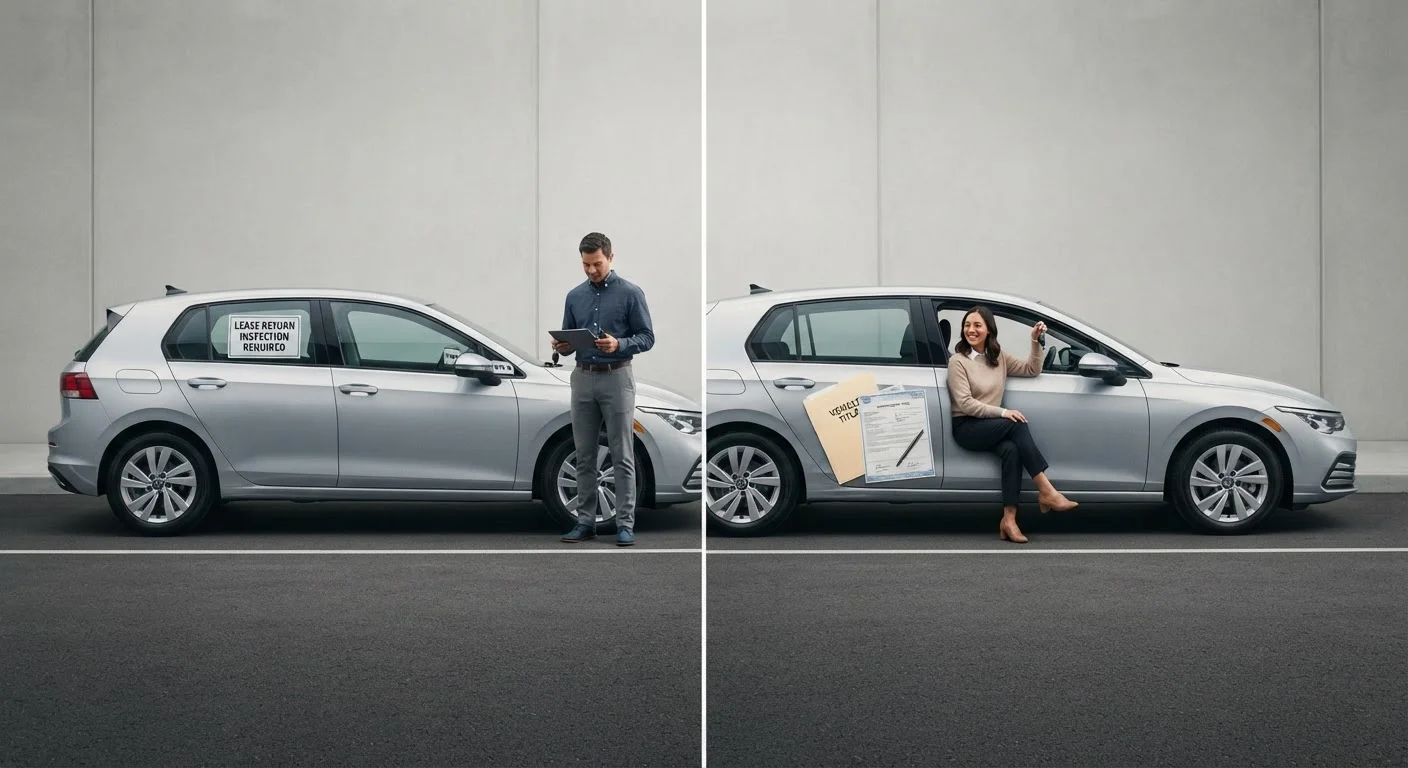
Key Takeaways
- Leasing typically offers lower monthly payments but builds no equity in the vehicle.
- Ownership costs more upfront but provides long-term value once the loan is paid off.
- Mileage limits and wear-and-tear fees are significant hidden risks in leasing.
- Your driving habits and financial goals should drive this decision more than the monthly payment alone.
- Neither path is universally better - the right choice depends on your lifestyle and priorities.
Our Verdict
Leasing is a practical fit for drivers who prioritize lower monthly costs and enjoy driving newer vehicles every few years - but only if they drive predictable mileage and keep the car in good condition. Owning rewards patience: once a loan is retired, the vehicle becomes a financial asset you can use, modify, or sell on your own terms. Most drivers building long-term wealth will find ownership the more cost-effective path over time.
| Best for | Recommended |
|---|---|
| Drivers who want lower monthly payments and prefer new vehicles regularly | Leasing |
| Those who drive high mileage or want to avoid per-mile overage fees | Owning |
| Drivers who plan to keep a vehicle long-term and build equity | Owning |
| Business users seeking potential tax advantages on vehicle use | Leasing (consult a tax professional) |
How Leasing and Owning Actually Work
When you lease a car, you're essentially paying to use it for a set period - typically two to four years - while the dealership or finance company retains ownership. Your monthly payment covers the vehicle's expected depreciation during your lease term, plus interest and fees. At the end of the lease, you return the car, and you have no equity to show for the payments made.
When you buy, you either pay in full or finance the purchase through a loan. Each payment builds equity in an asset you'll eventually own outright. For a fuller picture of what ownership entails financially, see what car ownership actually costs beyond the monthly payment.
Understanding this foundational difference shapes everything else in the comparison.
Breaking Down the Long-Term Costs
Monthly lease payments are almost always lower than loan payments for the same vehicle - sometimes significantly so. That's because you're only financing the depreciation portion of the car's value, not the full purchase price. However, because you return the vehicle at lease-end with nothing to show for it, the cycle restarts. Over a decade, continuous leasing typically costs more in total outlay than buying and keeping a car.
Owning carries higher upfront costs, but once a loan is paid off, you eliminate that recurring monthly expense. The vehicle continues to have value - resale or trade-in - and maintenance becomes your primary ongoing cost. Drivers who hold onto vehicles well past the loan payoff period often find ownership dramatically cheaper on a per-year basis.
| Leasing | Owning | |
|---|---|---|
| Monthly Payment | Typically lower | Typically higher (loan) |
| Long-Term Total Cost | Higher if leasing continuously | Lower once loan is paid off |
| Equity Built | None | Yes - full ownership at payoff |
| Mileage Flexibility | Capped; overage fees apply | Unlimited |
| Customization | Generally not permitted | Full freedom |
| End-of-Term Options | Return, buy out, or re-lease | Sell, trade, or keep |
| Maintenance Responsibility | Typically within warranty window | Full responsibility post-warranty |
| Early Exit | Usually costly | Sell or trade at will |
It's also worth considering what changes financially the moment you drive off the lot. Depreciation begins immediately, which affects owners and lessees differently - owners absorb that loss in equity, while lessees essentially pre-pay it through their monthly rate.
The Responsibilities Each Path Carries
Leasing comes with rules. Most agreements cap annual mileage - commonly between 10,000 and 15,000 miles - and charge per-mile overage fees that can add up quickly. Returning the car with excess wear or modifications can trigger additional fees. You also carry insurance requirements that may be more stringent than what you'd maintain on an owned vehicle.
Ownership gives you freedom - to drive as many miles as you choose, to modify the vehicle, and to let it accumulate some honest wear without a financial penalty. The responsibility shifts: you bear the full cost of repairs after warranty expiration, which can be substantial as vehicles age. For drivers who want to understand which maintenance beliefs actually hold up, common car ownership myths cost drivers real money is a useful read.
Calculate Your Annual Mileage First
Before choosing a lease, track your actual driving distance over a few months and project your yearly total. Exceeding a lease's mileage cap by even a few thousand miles per year can generate fees that eliminate any savings from the lower monthly payment. Honesty about your driving habits is the single most important factor in making leasing work financially.
New owners should also plan for expenses that catch first-time owners off guard - from gap insurance to emissions testing - that apply regardless of whether you leased or bought.
Which Path Fits Your Situation?
Leasing tends to suit drivers who have predictable, moderate mileage; work in professions where a late-model vehicle carries professional weight; or simply prefer not dealing with a depreciating asset over the long haul. Some business uses may also allow lease payments to be deducted as a business expense - a question best directed to a qualified tax professional.
Buying makes more sense for high-mileage commuters, families who need flexibility for road trips or lifestyle changes, and anyone planning to hold a vehicle for seven or more years. If you're weighing how you'd finance a purchase, the trade-offs between auto loans and cash purchases deserve a separate look.
One final consideration: your tolerance for uncertainty. An owned vehicle can be sold, traded, or kept - giving you options. A leased vehicle locks you into a contract with exit costs if your circumstances change. For ongoing maintenance decisions once you own, practical car maintenance guidance can help you keep long-term costs in check.