

Key Takeaways
- The 3,000-mile oil change rule is outdated for most modern vehicles; manufacturer intervals are more accurate.
- Engine oil does more than lubricate - it cools, cleans, and protects internal components simultaneously.
- Oil degrades through heat and chemical breakdown, not just accumulated miles.
- Your owner's manual specifies the correct oil type and change interval for your specific engine.
- Ignoring oil changes is one of the most common - and preventable - causes of long-term engine damage.
Engine Oil Change
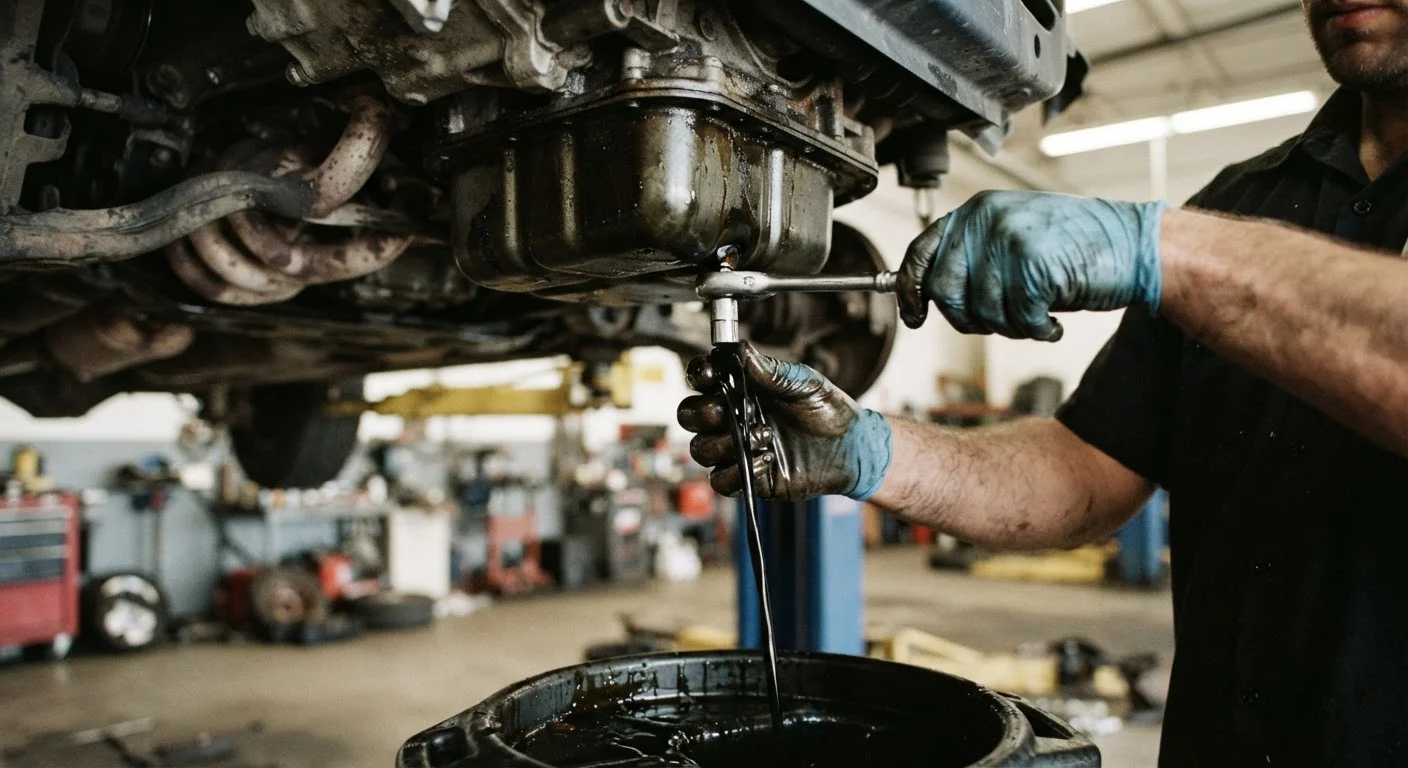
An oil change is the process of draining the old motor oil from an engine and replacing it with fresh oil, along with a new oil filter. Engine oil lubricates moving metal parts, reduces friction, carries away heat, and suspends contaminants so they can be trapped by the filter. Over time, oil breaks down chemically and accumulates debris, making it less effective at protecting the engine.
Motor oil degrades through a process called oxidation, and its additive package - which includes detergents, dispersants, and anti-wear agents - depletes with use, regardless of mileage.
What Engine Oil Actually Does
Most drivers know they need oil changes, but fewer understand why engine oil matters so much in the first place. Motor oil serves four simultaneous functions inside your engine: it lubricates metal parts that move against each other at high speed, reduces the friction and heat that would otherwise cause rapid wear, acts as a coolant for components the water-cooling system can't reach, and suspends microscopic contaminants so they can be captured by the filter rather than grinding through engine components.
These functions depend on the oil maintaining certain chemical properties. Fresh oil contains a carefully engineered additive package - detergents to keep engine surfaces clean, dispersants to hold contaminants in suspension, and anti-wear compounds to protect metal surfaces under pressure. As those additives are consumed and the oil itself oxidizes from heat exposure, the oil becomes progressively less effective. That degradation is why oil changes are necessary, and it happens whether you're driving highway miles or letting the car sit.
For a broader look at how oil fits into your vehicle's fluid ecosystem, see Fluids Under the Hood.
The 3,000-Mile Rule: Where It Came From and Why It's Outdated
The 3,000-mile oil change interval became conventional wisdom during a period when engines had looser manufacturing tolerances and motor oil technology was far less sophisticated. For engines of that era running conventional petroleum-based oil, the guideline made sense.
Modern engines are machined to much tighter specifications, and oil formulations - particularly full synthetic oils - have advanced substantially. As a result, most vehicle manufacturers now specify oil change intervals well beyond 3,000 miles. Many current models using full synthetic oil carry manufacturer-recommended intervals of 5,000 to 10,000 miles, and some push further depending on driving conditions and engine design.
Following the 3,000-mile rule on a modern vehicle doesn't provide extra protection - it mostly means more frequent spending on service that isn't yet needed. The reliable source for your actual interval isn't a general guideline or a quick-lube shop's reminder sticker: it's your owner's manual. That document reflects the engineering reality of your specific engine. Our article on your owner's manual maintenance schedule explains how to read and apply those recommendations.
5,000-10,000 mi
Typical synthetic oil change interval for modern vehicles
Most current vehicle manufacturer recommendations reflect advances in engine design and oil chemistry, far exceeding the old 3,000-mile guideline.
~25%
Estimated engine wear that occurs at cold startup
Industry engineering data indicates that a significant share of engine wear happens in the first seconds after a cold start, underscoring the importance of correct oil viscosity for your climate.
1 qt per 1,000 mi
Oil consumption threshold worth monitoring
Consuming more than roughly one quart of oil per 1,000 miles may indicate engine wear and warrants evaluation by a qualified mechanic.
What Affects How Quickly Oil Degrades
Mileage is only one factor in oil breakdown. Several driving conditions accelerate degradation and can justify shorter intervals than the standard recommendation:
- Frequent short trips: Engines that rarely fully warm up accumulate moisture and fuel vapors in the oil more quickly, which shortens its effective life.
- Towing or hauling heavy loads: Higher engine loads generate more heat, accelerating oxidation.
- Extreme temperatures: Both very hot and very cold climates place additional stress on oil's viscosity and stability.
- Stop-and-go urban driving: More idling and acceleration cycles mean more heat cycles for the oil to withstand.
Most owner's manuals distinguish between "normal" and "severe" driving conditions, with shorter recommended intervals for the latter. Honest self-assessment of how you typically drive helps you apply the right schedule to your situation.
Check Your Oil Between Changes
Don't wait for your next scheduled service to know what's happening with your oil. Checking the level and condition monthly takes under two minutes and can catch a slow leak or consumption issue before it becomes serious. Pull the dipstick, wipe it clean, reinsert it, then read both the level and the color - amber is healthy, very dark or gritty oil is a signal the engine is working harder than it should.
Oil Type, Viscosity, and the Filter
Two other variables matter alongside the interval: the type of oil and the viscosity grade. Viscosity refers to how well oil flows at different temperatures and is expressed as a two-number rating such as 5W-30 or 0W-20. The first number describes cold-weather flow; the second describes behavior at operating temperature. Using the grade specified by the manufacturer ensures the oil reaches all engine components quickly at startup - the moment when most engine wear occurs - and maintains proper pressure at operating temperatures.
Whether to use synthetic or conventional oil is a related decision. Your owner's manual will specify if synthetic is required; if the choice is open, understanding the differences helps. See our practical breakdown of synthetic vs. conventional oil for a clear comparison.
The oil filter deserves equal attention. It physically traps the contaminants the oil holds in suspension, and a saturated or low-quality filter reduces that protection. Replacing the filter at every oil change - which most service shops do as a matter of course - is the correct practice.
For drivers managing older, higher-mileage vehicles, these decisions carry added weight. Our guide to high-mileage vehicle care covers what shifts in your maintenance approach as the odometer climbs.