

Key Takeaways
- A TV show typically begins with a written pitch or treatment before a single frame is ever shot.
- The pilot episode serves as a proof of concept that determines whether a network or streamer orders more episodes.
- Writers, directors, and showrunners collaborate on every season, not just individual episodes.
- Post-production - editing, color grading, sound mixing - can take as long as the shoot itself.
- Renewal and cancellation decisions are driven by audience data and platform strategy, not just critical reception.
Television Production Pipeline
The television production pipeline is the full sequence of stages a show passes through before it reaches your screen - beginning with a creator's pitch and ending with a finished, broadcast or streamed episode. Each stage involves distinct teams, decisions, and gatekeepers. Understanding this journey helps viewers appreciate why shows take years to develop and why certain creative choices happen the way they do.
In industry terms, the pipeline divides into three broad phases: development (pre-greenlight), production (principal photography and writing), and post-production (editing, sound, and delivery).
It Starts With an Idea - and a Pitch
Before cameras roll, a TV show lives entirely on paper. A writer or creator develops a concept into a pitch - typically a verbal presentation backed by a written document called a treatment or bible. The bible outlines the premise, the main characters, the show's tone, and enough story to suggest where it could go across multiple seasons.
Creators pitch to network executives, studio development teams, or streaming platforms. Most pitches are rejected. Those that advance move into a development deal, where the creator is paid to write a pilot script. That script goes through multiple drafts and notes sessions before anyone decides whether to actually produce it.
This phase is slower than most viewers imagine - it is entirely normal for a show to spend a year or more in development before a pilot is ever greenlit. The format of the show - serialized or episodic - is often baked into the pitch itself, shaping how the story is structured from the very beginning.
The Pilot: Proof of Concept
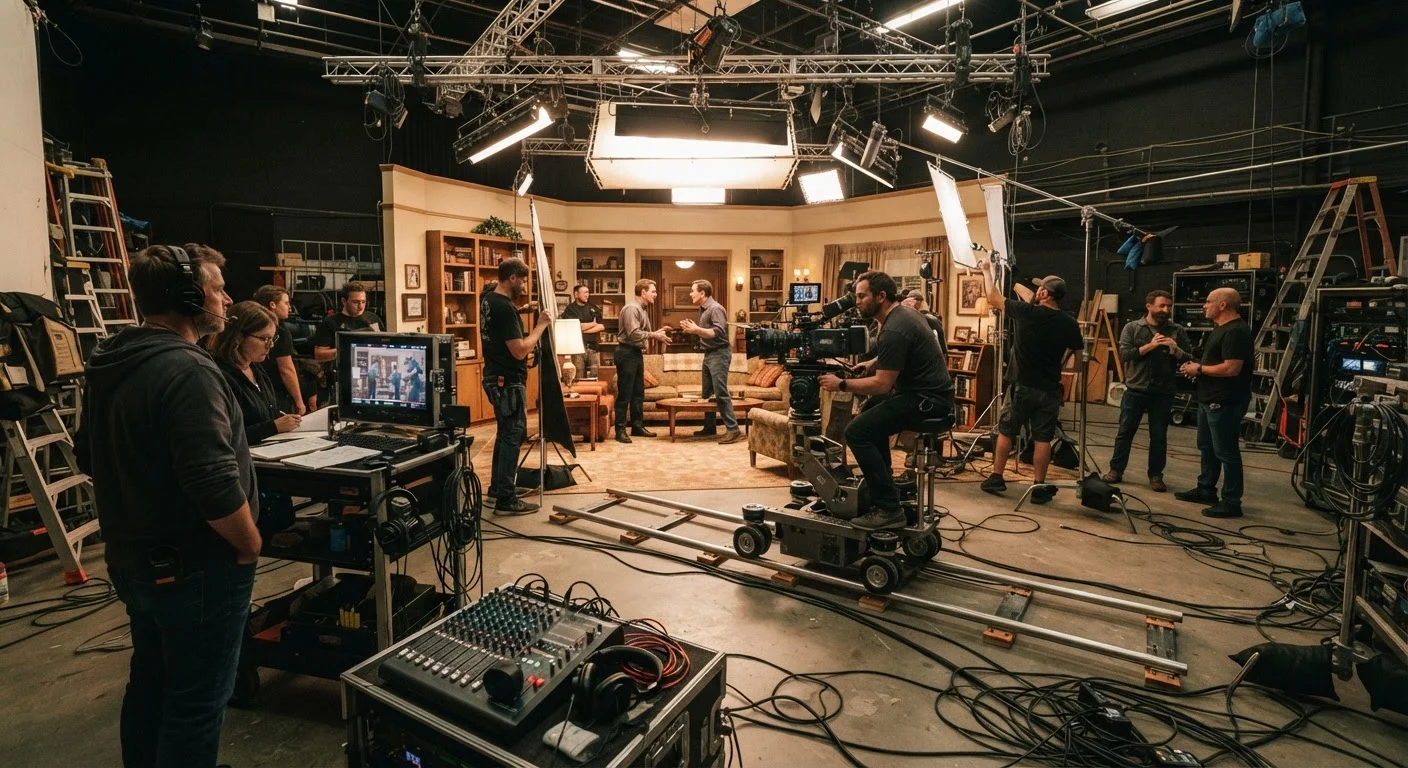
Once a pilot script is approved, production begins on a single episode designed to prove the show deserves a full order. Casting is finalized, directors are hired, sets are built or locations are scouted, and the crew assembles for what amounts to a test run of the entire series.
Pilots are expensive - sometimes more costly per episode than the season that follows, because all the infrastructure is being created from scratch. After the pilot is shot and edited, executives screen it, conduct test audience research, and ultimately decide whether to pass or to order a season.
~500
Scripted series airing in the U.S. in recent peak years
FX Networks research has tracked the number of scripted originals airing on American television, which peaked at around 500 series in a single year during the streaming expansion era.
1-3 years
Typical pitch-to-premiere timeline for scripted drama
Industry observers and production professionals generally cite a one-to-three-year window from initial pitch to on-air premiere for most scripted drama series.
~30%
Share of produced pilots that are never broadcast
Industry estimates suggest a significant portion of pilot episodes shot each development cycle are never ordered to series or aired publicly, representing substantial sunk costs.
Not every pilot that gets made gets aired. Networks sometimes reshoot pilots with new casts or retool them significantly based on feedback. A show that makes it to a full series order has already survived several rounds of gatekeeping before the public ever sees it.
Writers, Directors, and the Room
Once a series is greenlit, the writers' room becomes the engine of the show. Unlike film - where a director typically holds singular creative authority - television centralizes creative control in the showrunner, who is almost always the head writer. The showrunner hires a staff of writers at various experience levels, and together they break stories for the season.
"Breaking" a story means working out, episode by episode, how the season arc will unfold. Individual episodes are assigned to specific writers, but the whole room shapes every story beat before scripts are drafted. This collaborative structure is one of the defining features of American television, and it stands in sharp contrast to how stage productions are developed and run.
“Television is a writer's medium. In film, the director is god. In television, the writer is god - and the showrunner is the writer who stuck around long enough to be in charge.”
— Shonda Rhimes, Television creator and showrunner, known for Grey's Anatomy and Bridgerton
Directors rotate across episodes - it is rare for one director to helm an entire season. Each director receives a finished script, preps for a week or two, shoots for eight to ten days on average, then hands the cut footage to the showrunner and editors. Creative continuity between episodes is maintained by the showrunner, not the director.
Production, Post, and the Long Road to Your Screen
Principal photography - the actual shooting of episodes - typically runs concurrently with the writers' room finishing later scripts. A production team might be shooting episode four while writers are still breaking episode eight. This overlapping process keeps the season on schedule but demands constant coordination.
Once shooting wraps on each episode, it enters post-production: picture editing, visual effects, color grading, music composition, and sound mixing. A single episode can spend weeks in post before it is ready to deliver to the network or platform. The final product the viewer sees is often substantially shaped in the editing room.
Renewal and cancellation decisions happen after the platform reviews audience data - a process that is frequently misunderstood. Ratings and viewing metrics measure different things on broadcast versus streaming, and those numbers directly influence whether a show returns for another season. If a second season is ordered, the entire pipeline begins again - new writers' room, new production schedule, new post calendar - though with the advantage of an established infrastructure and cast already in place. For viewers trying to keep pace with an expanding television universe, understanding this cycle helps explain why favorite shows sometimes feel inconsistent between seasons or take long hiatuses. Navigating a sprawling TV landscape is easier when you understand the machinery behind it.