

Key Takeaways
- Apply for your passport at least six months before departure to allow processing time.
- Always verify visa requirements through official government sources - rules vary widely by country.
- Budget for hidden costs like airport transfers, tipping customs, and travel insurance.
- Pack light and layer - overpacking is the most common first-timer mistake.
- Set up a phone plan before you leave to avoid unexpected roaming charges abroad.
Start here
Getting Your Passport in Order
Next
Researching Visa Requirements
Then
Building a Realistic Travel Budget
Before you pack
Packing Smart for International Travel
Final prep
Staying Connected and Safe Abroad
Getting Your Passport in Order
Your passport is the single most important document for international travel - and securing it is the first step in your planning process. If you don't already have one, apply as early as possible. The U.S. State Department recommends applying at least six months before your planned departure, as routine processing can take six to eight weeks, and demand fluctuates seasonally.
To apply, you'll need proof of U.S. citizenship (such as a birth certificate), a government-issued photo ID, a passport photo, and the appropriate application form. Applications are accepted at many post offices, libraries, and government offices designated as passport acceptance facilities. Renewal applicants who already hold a valid passport may be able to renew by mail.
Check that your passport won't expire within six months of your return date. Many countries require this buffer as an entry condition, so an almost-expired passport can result in denied boarding or entry. For a deeper dive into what to expect at borders and customs, see our First-Time International Traveler's Orientation.
Speed Up Your Application With These Steps
Gather all required documents - birth certificate, valid ID, and passport photo - before visiting a passport acceptance facility. Errors or missing items are the most common cause of delays. Double-check photo requirements on the State Department's website, as specifications are strict and photos that don't comply will be rejected.
Researching Visa Requirements
A visa is official government permission to enter a foreign country. U.S. citizens are fortunate to have visa-free or visa-on-arrival access to a large number of destinations, but the rules are destination-specific and change periodically. Never assume - always verify.
Start by visiting the official website of your destination country's embassy or consulate in the United States. The U.S. State Department's travel information pages are also a reliable starting point. Look for entry requirements specific to U.S. passport holders, and note whether you need to apply before you leave or can obtain a visa at the border.
Some regions - including the European Union's Schengen Area - are introducing new pre-travel authorization systems for visa-exempt visitors. These are separate from visas but still required. Confirm current entry conditions well ahead of booking. When in doubt, contact the embassy directly.
Entry Requirements Can Change Quickly
Travel policies - including visa rules, health documentation requirements, and entry restrictions - can shift with little notice due to diplomatic, public health, or security developments. Verify entry conditions no earlier than 4-6 weeks before your departure date, and again closer to travel. Always rely on official government sources rather than travel blogs for this information.
Building a Realistic Travel Budget
First-time international travelers often underestimate the true cost of a trip. Beyond flights and hotels, factor in airport transfers, meals, attraction fees, travel insurance, and daily incidentals. Research average costs for your specific destination - prices in Western Europe differ dramatically from Southeast Asia or Central America.
A useful approach: estimate your biggest fixed costs (flights, accommodation) first, then assign a daily spending allowance for food, transport, and activities. Add a 15-20% buffer for surprises. Travel insurance deserves a line item of its own - it can cover medical emergencies, cancellations, and lost luggage, which can be expensive to handle without it.
Look into how your bank handles foreign transactions. Some accounts charge foreign transaction fees on every purchase; others do not. Carrying a modest amount of local currency for small purchases and tipping is advisable in most destinations. For broader planning tools and strategies, explore our Travel Tips hub.
Packing Smart for International Travel
Overpacking is the most common first-timer mistake. Airlines have varying baggage policies, and dragging an overstuffed suitcase through cobblestone streets or crowded transit stations gets old fast. Aim to travel with less than you think you need.
Build your packing list around versatile, layerable clothing appropriate for your destination's climate and cultural norms. Some religious or cultural sites require covered shoulders and knees - research dress codes before you go. Toiletries, medications, and any prescription drugs should go in your carry-on in case checked luggage is delayed.
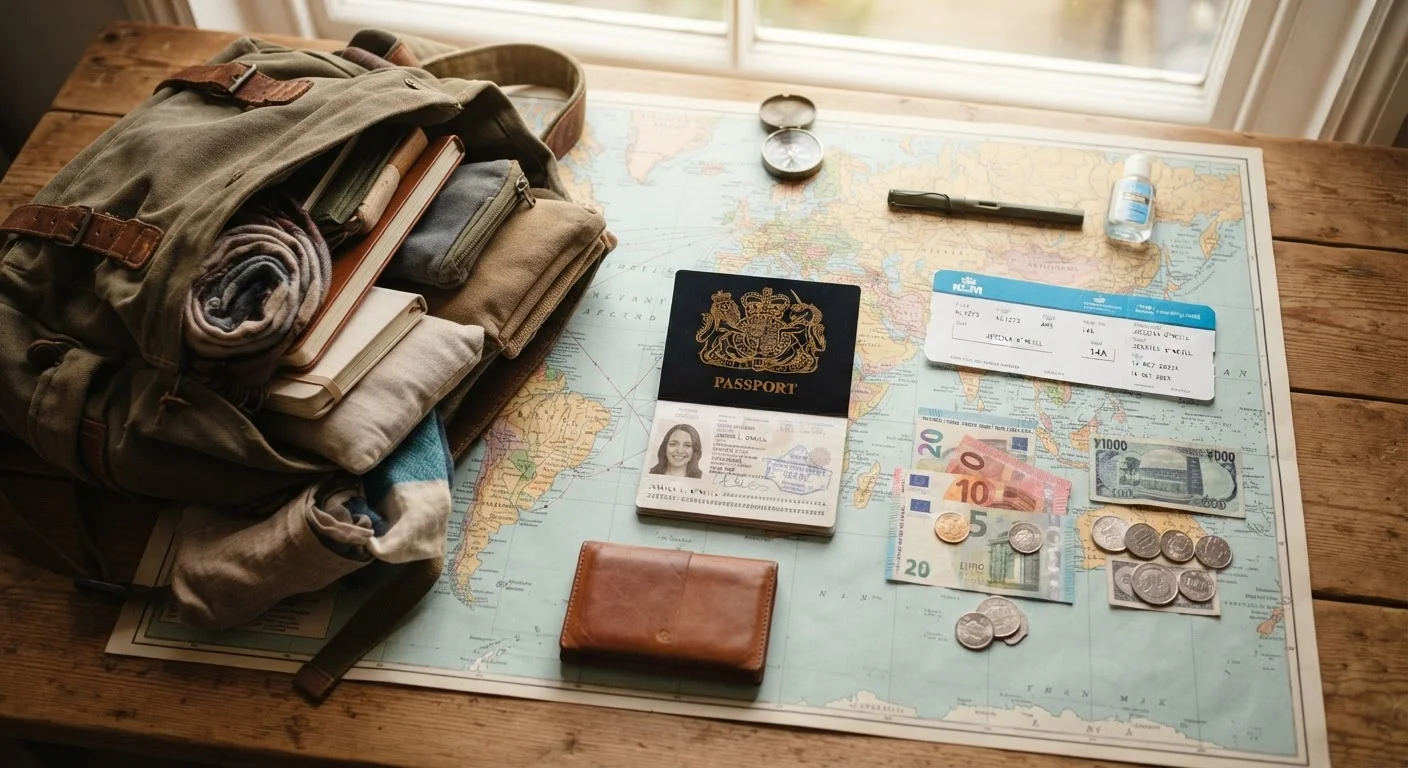
Key documents - passport, visa confirmation, travel insurance policy, accommodation addresses - should be organized in an easily accessible travel wallet. Keep digital backups in a secure, cloud-based location. If you're visiting multiple countries or planning museum-heavy days, see our guide to getting more from museum visits to help plan those days efficiently.
Staying Connected and Safe Abroad
Arriving in a foreign country without a working phone plan is stressful and avoidable. Before departure, check whether your current carrier offers an international day-pass or travel plan. Alternatively, purchasing a local SIM card at your destination or setting up an eSIM before you leave are common and cost-effective options. Our article on staying connected abroad without a surprising phone bill breaks down each approach in practical detail.
Register your trip with the U.S. State Department's Smart Traveler Enrollment Program (STEP), which allows the nearest U.S. embassy to contact you in an emergency. Save the local emergency number for your destination - it may not be 911. Share your itinerary with someone at home who can be a point of contact.
For end-to-end planning - from choosing a destination through booking and on-the-ground preparation - the complete trip planning walkthrough offers a detailed roadmap that complements this beginner's guide.