

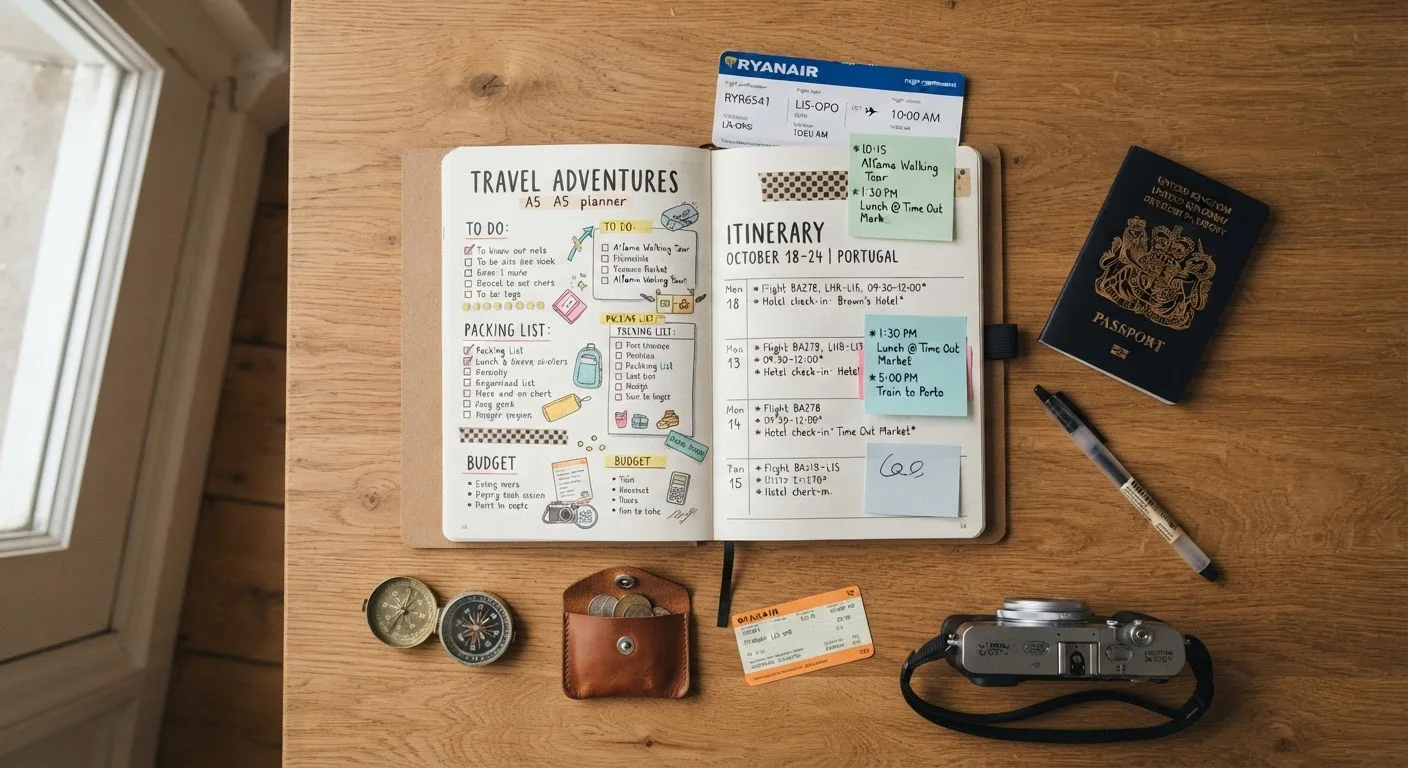
Key Takeaways
- An itinerary maps out destinations, activities, and trip flow without locking in exact times.
- A schedule assigns specific times to confirmed bookings and time-sensitive commitments.
- Most trips benefit from having both: the itinerary provides vision, the schedule provides structure.
- Over-scheduling every hour of a trip is a common pitfall that reduces enjoyment.
- Solo travelers and group travelers may rely more heavily on different planning tools.
Travel Itinerary vs. Travel Schedule
A travel itinerary is a high-level plan that outlines where you're going, what you want to see or do, and in what order - think of it as the story of your trip. A travel schedule, by contrast, is the time-specific layer on top of that plan, assigning confirmed bookings, departure times, and fixed appointments to specific hours and days. Both tools serve different purposes, and most trips benefit from having both.
In travel industry usage, 'itinerary' often refers to a booking confirmation document that includes flight numbers, hotel check-in details, and reservation codes - a narrower definition than the planning sense used here.
Two Different Planning Tools, One Great Trip
Many travelers use the words "itinerary" and "schedule" interchangeably, but treating them as the same thing can lead to either an over-structured trip or a disorganized one. Each serves a distinct planning function, and understanding the difference helps you travel with both confidence and flexibility.
Think of your itinerary as the narrative of your trip - a destination-by-destination, experience-by-experience picture of what you want your travel to look like. Think of your schedule as the logistics layer - the confirmed reservations, flight times, and time-locked commitments that need to happen at specific moments.
Neither tool is superior. They work best together, with the itinerary providing direction and the schedule providing guardrails around what's already confirmed.
72%
Travelers who plan activities before departure
According to a travel habits survey conducted by Expedia Group, the majority of leisure travelers research and plan activities ahead of time rather than deciding entirely on the ground.
3-5 days
Average leisure trip length for U.S. travelers
U.S. Travel Association research consistently finds that most American leisure trips fall in the three-to-five day range, a window where balancing itinerary and schedule matters most.
What Makes an Itinerary Different
A travel itinerary is fundamentally about what and where. It answers questions like: Which neighborhoods do I want to explore? What cultural sites are priorities? How many days should I spend in each city? In what order does everything make sense geographically?
Itineraries are intentionally flexible. They might say "Day 3: explore the old city, visit the central market, and find a spot for a long lunch" without specifying that lunch must happen at 12:30 p.m. This looseness is a feature, not a flaw - it's what allows you to follow your energy and respond to what you discover on the ground.
For multi-destination trips, the itinerary also handles the logical sequencing of cities and regions. A well-built itinerary keeps you from constantly backtracking or wasting travel days. See how to structure a multi-city trip for a deeper look at that sequencing challenge.
What Makes a Schedule Different
A travel schedule is about when. It's the time-stamped layer of your plan, built around confirmed bookings and commitments that can't shift. Your 6:45 a.m. flight, your 3:00 p.m. museum entry reservation, your 7:30 p.m. dinner booking - these all belong in a schedule.
Unlike the itinerary, the schedule isn't meant to be flexible. It exists precisely to prevent you from missing something that's already paid for or time-sensitive. A good travel schedule is also honest about transit time - factoring in how long it actually takes to get from your hotel to the airport, not just the ideal case.
That said, a schedule that accounts for every hour of every day stops being a tool and starts being a burden. Overplanning your vacation is a well-documented way to turn a trip into an exhausting checklist. The schedule should hold firm appointments, not dictate leisure time.
How to Use Both Together
The most practical approach is to build your itinerary first, then layer your schedule on top of it. Start by deciding what you want to experience and in what general order. Then, as you book flights, tours, and restaurants, note those confirmed times in a separate schedule document or app.
Your itinerary handles the open-ended days and unbooked activities. Your schedule tracks everything with a clock attached to it. When the two documents disagree - say, a spontaneous detour runs into a confirmed dinner reservation - your schedule wins, because those commitments are fixed.
Build in buffer time between fixed commitments
When creating your schedule, resist the urge to book activities back-to-back. Add at least 30-60 minutes of buffer around transit and between reservations. Unexpected delays - traffic, longer queues, a meal that runs long - are normal parts of travel, and a schedule that has no slack will amplify the stress of even minor disruptions.
How heavily you rely on each tool also depends on who you're traveling with. Solo and group travelers plan differently - a solo traveler can pivot an itinerary on a whim, while a group often needs a tighter schedule to stay coordinated. And for international travel, where entry requirements and logistics are more complex, both documents become even more valuable. See how domestic and international trip planning differ for more on that.
If you're ready to put both tools into practice, a complete trip planning walkthrough can guide you from first idea to finished plan.