

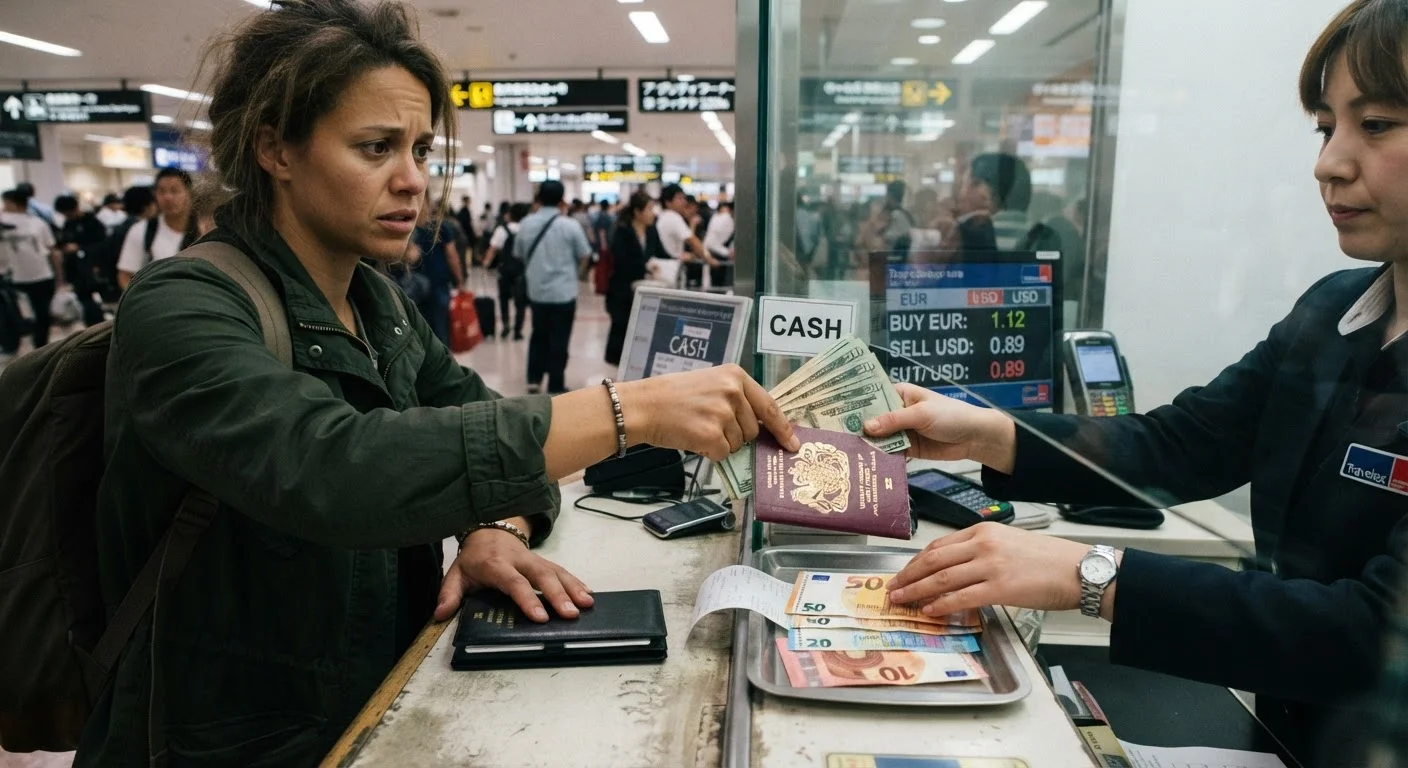
Key Takeaways
- Airport and hotel currency exchange counters typically offer the worst rates travelers will encounter.
- Dynamic currency conversion lets foreign merchants charge you in dollars - usually at an inflated rate.
- A no-foreign-transaction-fee card used wisely can outperform most cash exchange strategies.
- Having a small amount of local currency before arrival reduces pressure to accept bad rates.
- Exchange rate markups are often hidden inside the quoted rate, not listed as a separate fee.
Why Currency Exchange Trips Up Even Experienced Travelers
Currency exchange is one of those travel tasks that feels simple until you realize, mid-trip, that you've quietly paid far more than necessary. The decisions happen fast - at an airport kiosk after a long flight, at a checkout terminal in a foreign language - and the costs are rarely obvious in the moment.
The good news is that most of these mistakes follow predictable patterns. Understanding where travelers consistently go wrong means you can sidestep the same traps. This connects directly to the broader challenge of travel budgeting: as covered in our guide on building a trip budget that actually holds up, hidden fees are one of the most common reasons travel costs exceed expectations.
Exchanging large amounts of cash at the airport before departure or immediately on arrival.
Why it happens: Travelers want to feel prepared and assume airport kiosks are a standard, safe option. The convenience makes the high cost easy to overlook.
Accepting dynamic currency conversion (DCC) when paying by card abroad.
Why it happens: The merchant's card terminal frames it as a helpful option, and travelers assume paying in familiar dollars means no surprises.
Using a credit or debit card that charges foreign transaction fees without realizing it.
Why it happens: Many travelers don't read their card's fee schedule before traveling, and a 2-3% fee on every purchase accumulates quietly throughout a trip.
Assuming the posted exchange rate is the rate you'll actually receive.
Why it happens: Exchange counters advertise an attractive rate on a sign, but bury a separate flat fee or widen the spread between buy and sell rates in the fine print.
Carrying no local currency at all and relying entirely on cards.
Why it happens: Card-friendly destinations make travelers complacent, but many markets, taxis, small restaurants, and rural areas worldwide still operate primarily on cash.
The Mechanics of Exchange Rate Markup
The mid-market rate - sometimes called the interbank rate - is the baseline rate banks use when trading currency with each other. It's the number you see on Google or a currency conversion site. But that rate is almost never what you receive as a consumer. Every exchange provider builds a margin into the rate they offer you, and that margin is their profit.
Hotel Desks and Airport Kiosks: Proceed With Caution
Currency exchange counters inside airports and hotel lobbies are designed for travelers in a hurry, not travelers looking for fair rates. The spread between the buy and sell rate - plus flat fees - can effectively cost 10-15% of the exchanged amount. Use these only as a last resort for a small amount of emergency cash.
The key skill is knowing how to measure the gap. Before exchanging money anywhere, check the mid-market rate for your currency pair. Then calculate what you'd receive at the quoted rate and compare. A gap of 1-2% at a bank or ATM is generally considered reasonable; anything above 5% deserves scrutiny.
Dynamic Currency Conversion Is Almost Always a Trap
When a foreign merchant or ATM offers to charge you in U.S. dollars instead of local currency, that offer typically includes a significant markup - sometimes 3-7% above the mid-market rate. Always choose to pay or withdraw in the local currency and let your own bank handle the conversion. Decline any screen prompt that says 'Pay in USD' unless you have independently verified the rate being applied.
For international travelers, understanding these mechanics is part of the broader planning picture. Our article on how international trip planning differs from domestic travel covers currency as one of several factors that add complexity to overseas trips.
Up to 15%
Effective cost of airport currency exchange
Consumer finance analysts have estimated that airport and hotel exchange counters can cost travelers 10-15% of the exchanged amount when fees and spread are combined.
3-7%
Typical dynamic currency conversion markup
Financial industry reviews have documented DCC surcharges ranging from 3% to over 7% above the mid-market rate on foreign card transactions.
Building Better Habits Before and During Your Trip
The most effective currency strategy starts before you board the plane. Call your bank to notify them of travel dates and ask about ATM fee reimbursement policies. If your current debit card charges foreign ATM fees, consider whether your bank offers a travel-friendly alternative - some institutions reimburse international ATM fees entirely.
Once in-destination, use ATMs affiliated with established local banks rather than standalone machines in tourist areas, which often apply additional surcharges. Withdraw larger amounts less frequently to minimize per-transaction fees, but don't carry more cash than you're comfortable with from a safety standpoint.
First-time international travelers especially benefit from thinking through these logistics in advance. Our first-time international traveler's orientation covers currency alongside customs, jet lag, and other pre-trip essentials. The goal isn't to eliminate every fee - it's to avoid the largest, most preventable ones so more of your budget goes toward the trip itself.