

Key Takeaways
- Cortisol is a necessary hormone that supports metabolism, immunity, and daily energy regulation.
- Levels naturally peak in the morning and taper through the day - this is normal and healthy.
- Short bursts of cortisol are protective; chronically elevated levels are where health problems arise.
- Most wellness-product claims about "lowering cortisol" are not well supported by clinical evidence.
- Consistently poor sleep, unmanaged stress, and sedentary habits can affect cortisol patterns over time.
- Consult a healthcare provider if you suspect a cortisol-related disorder - self-diagnosing is unreliable.
Cortisol
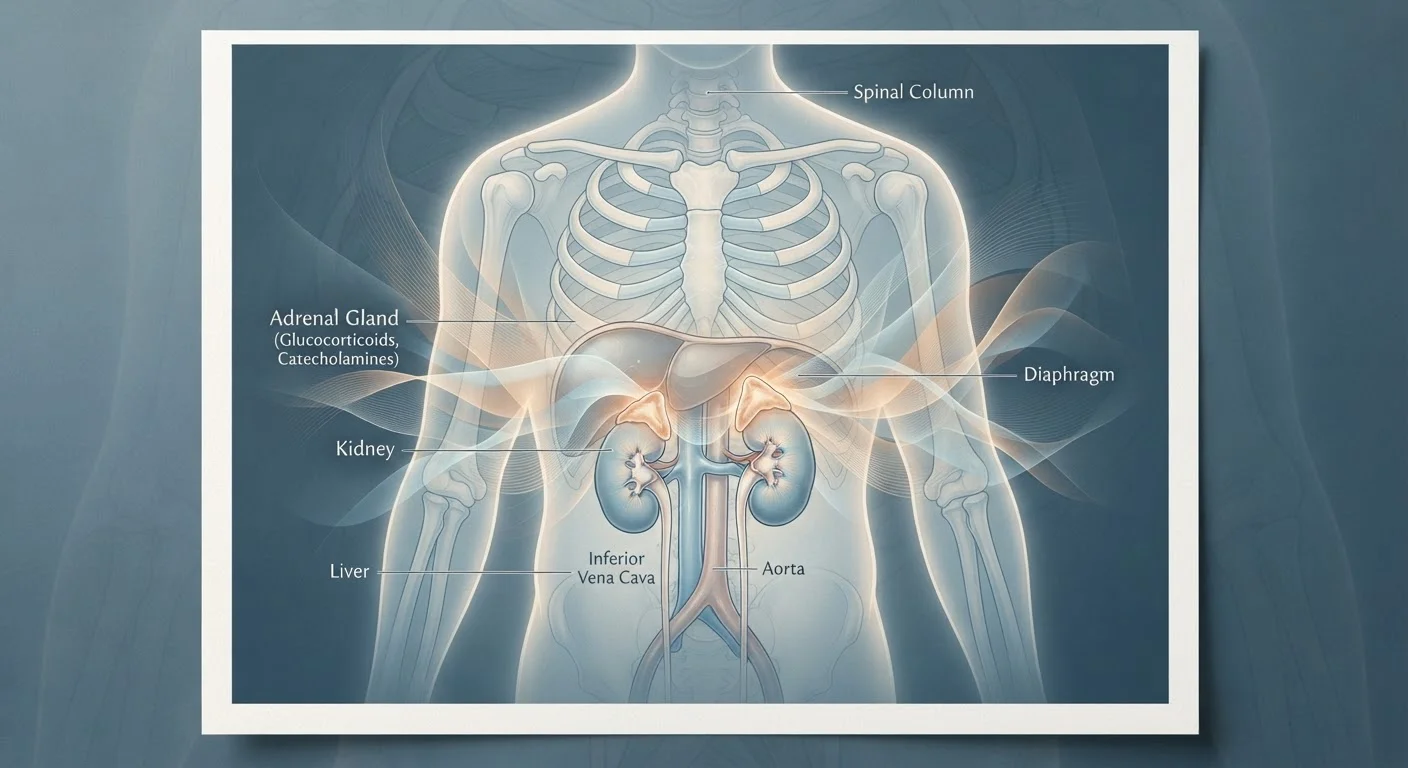
Cortisol is a hormone produced by the adrenal glands - two small glands that sit on top of your kidneys. Often called the "stress hormone," it plays a central role in your body's fight-or-flight response, but it also regulates metabolism, immune function, blood pressure, and sleep-wake cycles every single day. It's essential for life, not just a villain to be suppressed.
Cortisol is a glucocorticoid steroid hormone whose release is governed by the hypothalamic-pituitary-adrenal (HPA) axis, following a distinct circadian rhythm with peak levels occurring in the early morning hours.
More Than a Stress Hormone
If you've spent any time in wellness circles, you've heard the word cortisol used as shorthand for something harmful - a chemical your body produces too much of, responsible for belly fat, burnout, and brain fog. That framing is incomplete at best.
Cortisol is genuinely essential. Without it, you couldn't regulate your blood sugar, mount an immune response, or even wake up in the morning. Levels follow a predictable daily arc: they rise sharply in the hour after you wake up, then gradually decline through the afternoon and evening. This pattern, known as the cortisol awakening response, is a normal feature of a healthy stress-response system - not a problem to fix.
Understanding this rhythm matters because it reframes the conversation. The question isn't "how do I lower my cortisol?" It's "is my cortisol pattern working the way it should?" For most people in ordinary health, the answer is yes. See our plain-language wellness glossary for a broader breakdown of hormonal and stress-related terms.
When Cortisol Becomes a Concern
Short-term cortisol surges - the kind triggered by a near-miss on the highway or a high-stakes presentation - are protective. They sharpen focus, redirect blood flow to muscles, and give you the energy to respond. Once the stressor passes, levels return to baseline. That's the system working correctly.
The picture changes when stress is persistent and unrelenting. Chronic and acute stress activate your body in distinct ways, and prolonged HPA-axis activation is linked to disrupted immune function, metabolic changes, and mood disturbances. It's worth noting that chronically elevated cortisol is relatively rare as a standalone medical diagnosis - conditions like Cushing's syndrome (where the body produces far too much cortisol) are genuinely uncommon and require clinical diagnosis, not self-assessment.
Poor sleep is one of the most reliable disruptors of healthy cortisol patterns. Sleep and stress shape each other in a reinforcing loop: inadequate sleep raises cortisol, and elevated cortisol makes restful sleep harder to achieve.
What You Can Actually Do
Here's where the wellness industry tends to oversell. Supplements, teas, and "cortisol-blocking" products are rarely supported by strong clinical evidence. That doesn't mean you're powerless - it means the genuinely effective levers are unglamorous habits rather than products.
Regular moderate exercise, consistent sleep schedules, and stress management practices like mindfulness or time in nature are among the most evidence-supported ways to support healthy cortisol regulation. These work gradually, not overnight, and none of them require a supplement stack.
Chronic stress affects far more than mood - so addressing it consistently, with realistic expectations, is genuinely worthwhile. If you suspect something is medically off - whether because of unusual fatigue, unexplained weight changes, or persistent high blood pressure - that's a conversation for a qualified healthcare provider, not a home test kit.
This article is for general informational and educational purposes only and is not a substitute for professional medical advice, diagnosis, or treatment. Always consult a qualified healthcare provider with any questions you may have regarding a medical condition.