

Key Takeaways
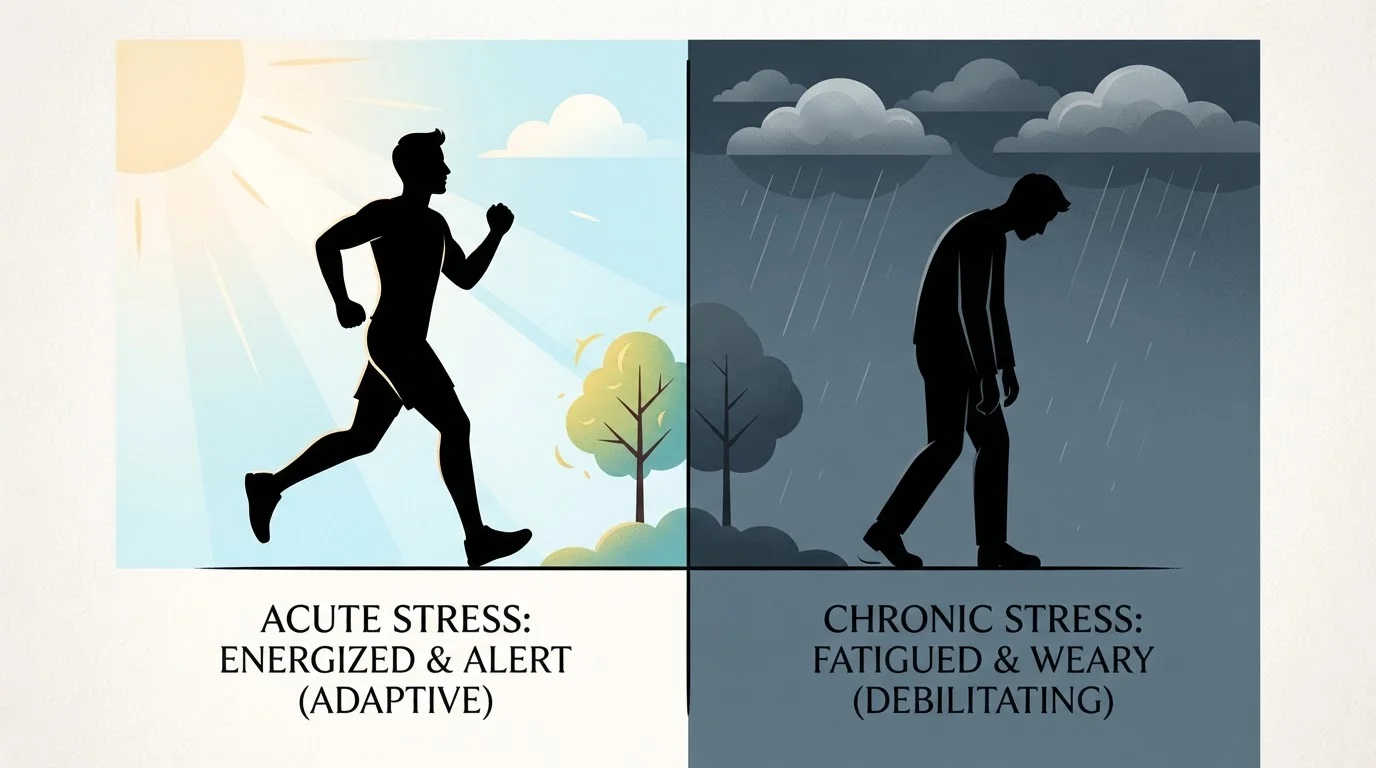
- Acute stress is a short-term response that typically resolves once a threat passes.
- Chronic stress keeps the body's alarm system activated for weeks, months, or longer.
- The same hormones that help you in a crisis become harmful when never fully switched off.
- Chronic stress is linked to cardiovascular, immune, and mental health consequences over time.
- Recognizing which type of stress you're experiencing shapes which management strategies are useful.
- General health information here is not a substitute for personalized advice from a qualified professional.
Option A
Acute Stress
The short-lived, purposeful survival response.
Best for: Helping the body mobilize quickly in response to an immediate challenge or threat.
Option B
Chronic Stress
The slow-burning strain that wears the body down over time.
Best for: Understanding long-term health risks linked to persistent, unresolved pressure.
If you feel stress only during specific events like a presentation or near-miss while driving
Acute Stress
This is a normal, healthy response. Your body is doing what it's designed to do, and symptoms should fade within hours.
If you feel persistently tense, exhausted, or on edge with no clear trigger
Chronic Stress
This pattern warrants attention. Talking to a healthcare professional can help identify root causes and effective strategies.
If you're trying to understand why your sleep, digestion, or mood has changed without an obvious reason
Chronic Stress
Long-term stress affects multiple body systems in subtle ways that are easy to miss or misattribute.
What Happens in Your Body During Acute Stress
Acute stress is your body's immediate reaction to a perceived threat or challenge - a swerving car, a job interview, a loud noise. Within seconds, your brain's hypothalamus signals the adrenal glands to release hormones including adrenaline (epinephrine) and cortisol. Your heart rate climbs, breathing quickens, muscles tense, and attention sharpens. This is the classic fight-or-flight response.
The key thing to understand is that acute stress is time-limited. Once the perceived threat passes - you dodge the car, the interview ends - your parasympathetic nervous system gradually brings your body back to baseline. Heart rate slows, cortisol levels drop, and systems like digestion and immune function return to normal operation. This cycle of activation and recovery is not only natural but healthy. Research in psychophysiology suggests that well-resolved acute stress can even temporarily sharpen cognitive performance and resilience.
For a closer look at how cortisol functions in this process, see our cortisol explainer.
| Criterion | Acute Stress | Chronic Stress |
|---|---|---|
| Duration | Minutes to hours | Weeks, months, or longer |
| Trigger | Specific, identifiable event | Ongoing or multiple overlapping pressures |
| Hormonal pattern | Sharp spike, then decline | Persistently elevated baseline |
| Recovery | Body returns to baseline naturally | Full recovery is delayed or incomplete |
| Health impact | Generally low when resolved quickly | Linked to immune, cardiovascular, and mental health effects |
| Common physical signs | Racing heart, rapid breathing, muscle tension | Fatigue, disrupted sleep, recurring headaches, digestive changes |
How Chronic Stress Works Differently - and Why It's More Concerning
Chronic stress develops when stressors persist or pile up over weeks, months, or years - financial pressure, relationship conflict, caregiving demands, or a workplace that never truly lets you decompress. The biological machinery is the same as with acute stress, but the critical difference is that the off switch never fully activates.
When cortisol and other stress hormones remain chronically elevated, they begin to disrupt the very systems they're meant to protect. Sustained cortisol can suppress immune function, impair sleep architecture, alter metabolism, and over time may contribute to elevated blood pressure and inflammation. The brain is also affected - the hippocampus, which plays a role in memory and mood regulation, is sensitive to prolonged cortisol exposure. This helps explain why chronic stress often co-occurs with difficulty concentrating, low mood, and a sense of being emotionally depleted.
77%
Adults reporting physical stress symptoms
According to the American Psychological Association's Stress in America survey, a large majority of U.S. adults report experiencing physical symptoms they associate with stress.
3x
Higher cardiovascular risk linked to chronic stress
Research published in peer-reviewed cardiology literature suggests chronically high psychological stress is associated with meaningfully elevated cardiovascular risk compared to low-stress individuals.
Understanding what this looks like in practice matters. Our article on what chronic stress does to your body goes deeper on the long-term physical effects.
This article is for general informational purposes only and does not constitute medical advice. If you're concerned about stress and its effects on your health, please consult a qualified healthcare professional.
Telling the Two Apart in Everyday Life
The distinction between acute and chronic stress isn't always obvious from the inside - both can feel intense. A few practical markers help:
- Duration: Acute stress has a clear start and end; chronic stress feels ongoing with no visible finish line.
- Triggers: Acute stress usually ties to a specific event; chronic stress often has diffuse or overlapping sources.
- Recovery: After acute stress, rest genuinely restores you. With chronic stress, rest may feel incomplete or unsatisfying.
- Physical signals: Chronic stress is more likely to produce persistent symptoms - recurring headaches, digestive issues, disrupted sleep, or frequent illness - that don't track neatly to any single event.
If the pattern you recognize sounds less like occasional pressure and more like a persistent low-grade alarm, it's worth exploring whether you're seeing early signs of burnout. Our piece on signs that stress has crossed into burnout can help you evaluate where you stand.
Once you have a clearer picture, building a realistic stress-management routine is a practical next step - one grounded in your actual life, not generic wellness advice.