

| Most Common Dress Codes | Casual, Smart Casual, Business Casual, Business Professional, Cocktail, Black Tie |
| Safe Default When Uncertain | Dress one level above what you think is expected |
| Wedding Guest Color to Avoid | White and ivory (and any color that could be mistaken for bridal) |
| Black Tie vs. Black Tie Optional | Black tie = tuxedo expected; optional = dark suit acceptable |
| Most Versatile Wardrobe Piece | A well-fitted dark blazer - transitions from office to evening to semi-formal |
| Key Modifier of Any Dress Code | Venue, region, time of day, and industry culture all shift expectations |
How to Read a Dress Code
Dress codes are shorthand - a quick signal from a host or employer about the formality level they're expecting. The challenge is that the shorthand isn't always consistent. "Cocktail attire" means something slightly different at a Kentucky Derby party than at a Manhattan gala, and "casual" at one workplace can look nothing like casual at another.
A few guiding principles cut through most of that confusion:
- When in doubt, dress up slightly. It's easier to remove a blazer or swap heels for flats than to look underdressed and feel self-conscious all evening.
- Ask if you're unsure. Reaching out to a host or HR contact is always appropriate. It signals consideration, not ignorance.
- Context shapes the code. Region, industry, season, and venue all modify expectations. A "formal" event in Austin may be less buttoned-up than a "semi-formal" event in Boston.
For a deeper look at where two commonly confused codes diverge, see our breakdown of smart casual vs. business casual.
| Most Common Dress Codes | Casual, Smart Casual, Business Casual, Business Professional, Cocktail, Black Tie |
| Safe Default When Uncertain | Dress one level above what you think is expected |
| Wedding Guest Color to Avoid | White and ivory (and any color that could be mistaken for bridal) |
| Black Tie vs. Black Tie Optional | Black tie = tuxedo expected; optional = dark suit acceptable |
| Most Versatile Wardrobe Piece | A well-fitted dark blazer - transitions from office to evening to semi-formal |
| Key Modifier of Any Dress Code | Venue, region, time of day, and industry culture all shift expectations |
Occasion-by-Occasion Reference
Use this section as a quick lookup for the occasions most American adults encounter regularly.
Black Tie
A formal evening dress code requiring a tuxedo for men and a formal gown or sophisticated cocktail dress for women. It's one step below the very rare "white tie" standard.
Cocktail Attire
A semi-formal dress code typically calling for knee-length or midi dresses, dressy separates, or a suit. It sits between casual and black tie in formality.
Business Casual
A workplace dress standard that allows neat, polished clothing without requiring a full suit - think chinos, blouses, blazers, and loafers. It excludes jeans, athletic wear, and casual tees.
Smart Casual
An informal but intentional dress level that combines relaxed pieces - like well-fitted jeans or chinos - with sharper items such as blazers or structured tops. It reads as put-together without being formal.
Garden Party Attire
A daytime-friendly semi-casual code common at outdoor events. Floral prints, light fabrics, midi dresses, and linen suits fit well; stilettos and heavy formal wear do not.
Business Professional
A formal workplace standard requiring a full suit or coordinated separates in conservative colors. It's the typical expectation at corporate interviews, law firms, and financial institutions.
Weddings
Follow the invitation's stated dress code first. If none is listed, take cues from the venue and time of day: outdoor afternoon ceremony suggests garden-party or cocktail attire; evening ballroom suggests formal or black tie. Avoid wearing white, ivory, or anything that could compete with the wedding party. Traditional black is generally acceptable now at most American weddings, though very conservative families may prefer you err toward color.
Job Interviews
Dress one level above the company's everyday standard. If the office is business casual, wear business professional. Research the company culture - a startup and a law firm have genuinely different norms. When you're uncertain, a clean, well-fitted blazer over neat separates rarely fails. Keep fragrance minimal and jewelry simple.
Funerals and Memorial Services
The default expectation in most American communities is muted, respectful attire - dark neutrals like navy, charcoal, dark gray, or black. Some services, particularly celebration-of-life events, may request bright colors at the family's direction; follow any stated guidance. Avoid busy patterns, casual athletic wear, or anything that draws attention away from the occasion.
Business Formal and Black Tie
Business formal means a suit and tie for men, a tailored suit or formal dress for women. Black tie means a tuxedo for men and a floor-length or formal cocktail gown for women - "black tie optional" means a dark suit is acceptable if you don't own a tux. "White tie" is the most formal American dress code and requires tailcoats for men and full-length ball gowns for women; it's rare outside of state dinners and very formal galas.
Casual Fridays and Relaxed Workplaces
Casual at work still means presentable. Clean, well-fitting jeans, chinos, neat knits, and polished sneakers or loafers are typically appropriate. Avoid anything with visible wear, offensive graphics, or beach-ready silhouettes. A good personal benchmark: would you be comfortable if a client or senior colleague walked in unexpectedly?
Religious and Cultural Ceremonies
Dress codes at religious services vary widely by tradition and community. When attending a service outside your own background, a modest, conservative approach is always respectful - covered shoulders, longer hemlines, and muted tones. Some traditions require head coverings or the removal of shoes; hosts or posted signage will usually indicate this. If you're attending as a guest, asking the host in advance is entirely appropriate.
Building a Versatile Occasion Wardrobe
You don't need a different wardrobe for every event - you need a core of versatile pieces that can flex across formality levels. A few well-chosen items do the heavy lifting:
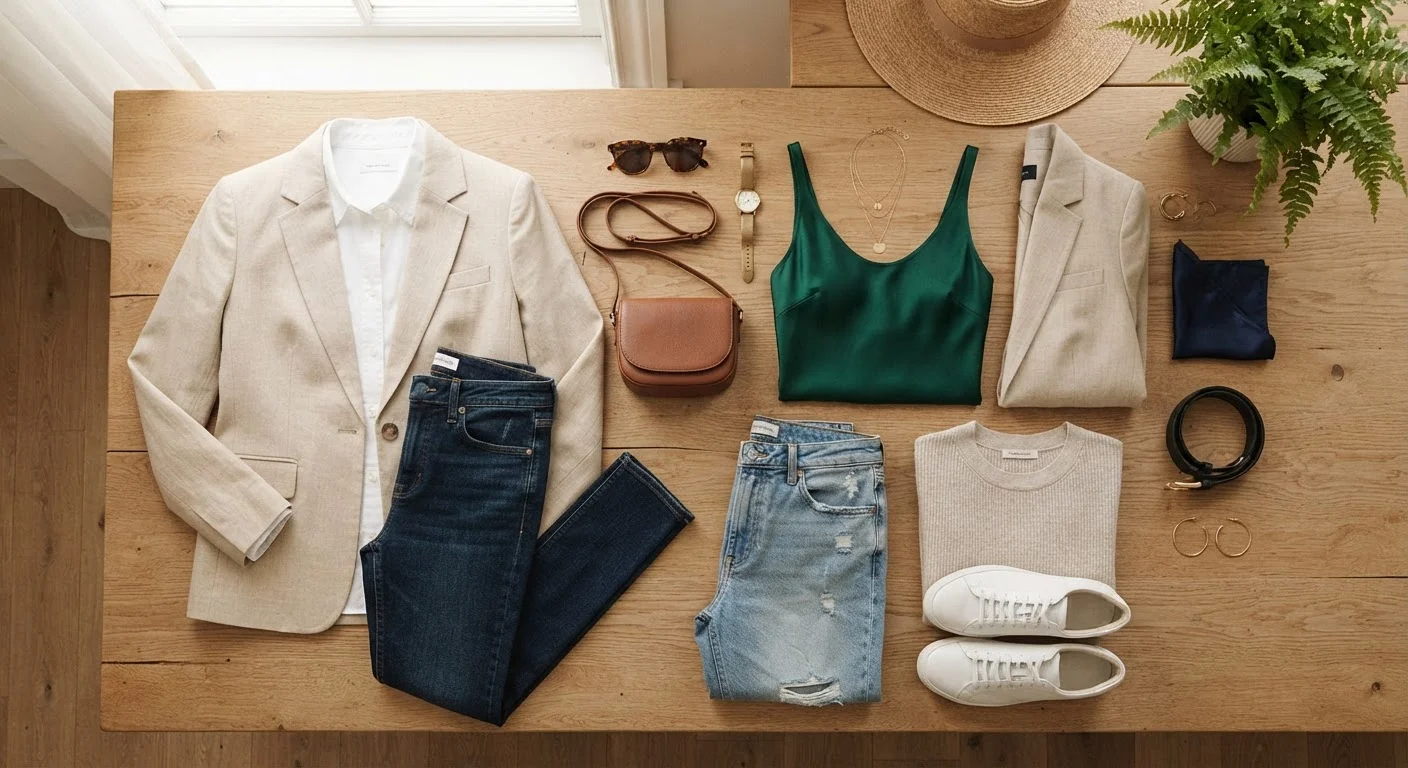
- A well-fitted dark blazer or structured jacket
- One pair of dark, straight-leg trousers or a tailored midi skirt
- A simple, quality dress in a neutral or classic color that can be dressed up or down
- A crisp button-front shirt or blouse in white or light blue
- One pair of leather or leather-look shoes or heeled sandals that skew formal
Accessories - a belt, simple jewelry, a structured bag - do the fine-tuning to move these pieces up or down the formality scale. For help assessing whether your existing wardrobe has the gaps filled, our seasonal wardrobe audit checklist walks through exactly that.
#1
Fit as the Most Important Factor in Perceived Polish
Style professionals and wardrobe consultants consistently cite proper fit as more impactful than garment price or brand when assessing overall presentation.
1 blazer
Covers multiple formality levels when styled differently
A single well-fitted dark blazer can be paired with jeans for smart casual, trousers for business casual, or a dress shirt for business formal contexts.
Fit matters more than price point. A moderately priced garment that fits your body well will always read as more polished than an expensive piece that doesn't. If you're unfamiliar with terms like "drape," "silhouette," or "ponte" when shopping, our plain-English fashion glossary explains the vocabulary without jargon.