

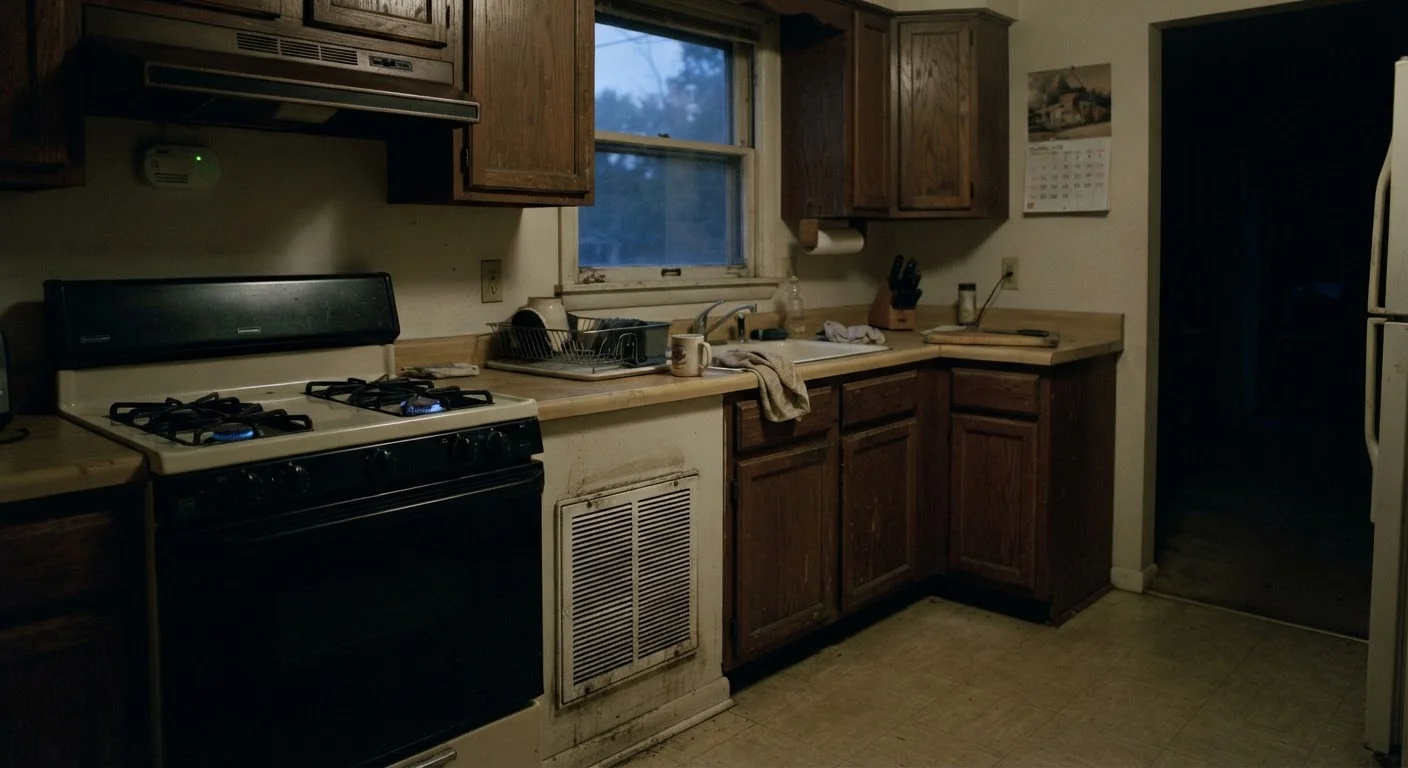
Key Takeaways
- Carbon monoxide is completely undetectable by human senses - you cannot smell, see, or taste it.
- It is produced by the incomplete combustion of any carbon-based fuel, including gas, wood, and gasoline.
- Symptoms of CO exposure mimic flu-like illness, making it easy to misattribute and ignore.
- CO detectors are the only reliable way to know if the gas is present in your home.
- Every home with fuel-burning appliances or an attached garage should have working CO detectors.
- Immediate evacuation and emergency services contact are the correct responses to a CO alarm.
Carbon Monoxide (CO)
Carbon monoxide is a colorless, odorless, tasteless gas produced whenever fuel - such as natural gas, propane, wood, or gasoline - burns incompletely. Because it has no detectable smell or visible presence, people and animals can be exposed to dangerous levels without realizing anything is wrong. This is precisely why it has earned the nickname 'the silent killer.'
CO binds to hemoglobin in red blood cells with an affinity roughly 200-250 times greater than oxygen, forming carboxyhemoglobin and preventing the blood from delivering oxygen to tissues and organs.
What Makes Carbon Monoxide So Uniquely Dangerous
Most household hazards announce themselves. A gas leak often carries a sulfur-like odor. Smoke from a fire is visible and pungent. But carbon monoxide (CO) provides none of those cues. It is physically indistinguishable from clean air to every human sense, which means exposure can progress from mild to life-threatening before anyone suspects a problem.
The danger compounds because CO symptoms - headache, dizziness, fatigue, nausea - closely mirror a common flu or food poisoning. Affected individuals may lie down to rest, losing consciousness before they can act. At high concentrations, CO can be fatal within minutes. Even at lower, chronic levels, prolonged exposure can cause lasting neurological harm.
CO Poisoning Can Affect Anyone
Infants, elderly individuals, people with heart or lung conditions, and pets are generally more vulnerable to the effects of CO at lower concentrations. However, high enough levels of CO are dangerous for every person and animal in an enclosed space. Do not assume that because you feel fine, everyone in the home is safe.
This is not a rare emergency. The Centers for Disease Control and Prevention estimates that hundreds of Americans die from unintentional, non-fire-related CO poisoning each year, with thousands more requiring emergency medical care.
How Carbon Monoxide Forms in a Home
CO is a natural byproduct of incomplete combustion - what happens when a fuel burns without enough oxygen to convert all the carbon fully into carbon dioxide (CO₂). In a well-maintained, properly vented appliance, combustion is efficient and CO output is minimal. Problems arise when something disrupts that process.
Common household CO sources include:
- Gas furnaces and boilers with cracked heat exchangers or blocked flues
- Gas or wood-burning fireplaces with obstructed chimneys
- Water heaters venting improperly
- Portable generators operated indoors or in attached garages
- Vehicles left running in an attached garage
- Charcoal or propane grills used inside the home
Even a small blockage in a flue or vent pipe - such as a bird's nest or debris - can redirect CO into living spaces instead of outside. Annual professional inspections of all fuel-burning appliances are an important preventive step.
Schedule Annual Appliance Inspections
Have a licensed HVAC technician inspect your furnace, boiler, and water heater every year before heating season begins. Ask them to check heat exchangers, burners, and all flue connections for cracks, corrosion, or blockages. This single step catches the majority of conditions that lead to CO leaks before they become emergencies.
How CO Detectors Work - and Why They Matter
Since human senses cannot detect CO, electronic detectors are the only practical early-warning system available to households. These devices continuously sample the air and sound an alarm when CO concentration reaches a threshold considered hazardous. Most residential detectors use either electrochemical sensors or metal oxide semiconductor technology to measure parts per million (ppm) in the air.
It is worth understanding that CO detectors and smoke alarms are distinct devices designed for different threats. A smoke alarm will not detect CO, and a CO detector will not respond to smoke. Many homes benefit from having both - and understanding what each does. For a deeper breakdown of how these devices differ, see our guide to smoke alarms, CO detectors, and heat sensors.
Key installation and maintenance points:
- Install detectors on every level of the home and outside each sleeping area
- Test detectors monthly using the test button
- Replace units according to the manufacturer's specified lifespan - typically 5 to 7 years
- Never ignore a CO alarm, even if you feel fine; evacuate first and investigate later
This article is for general informational and home safety education purposes only. If you suspect carbon monoxide poisoning, call 911 immediately. For health concerns related to CO exposure, consult a qualified medical professional.