
Plant Protein vs. Animal Protein: What the Science Says About Completeness and Absorption

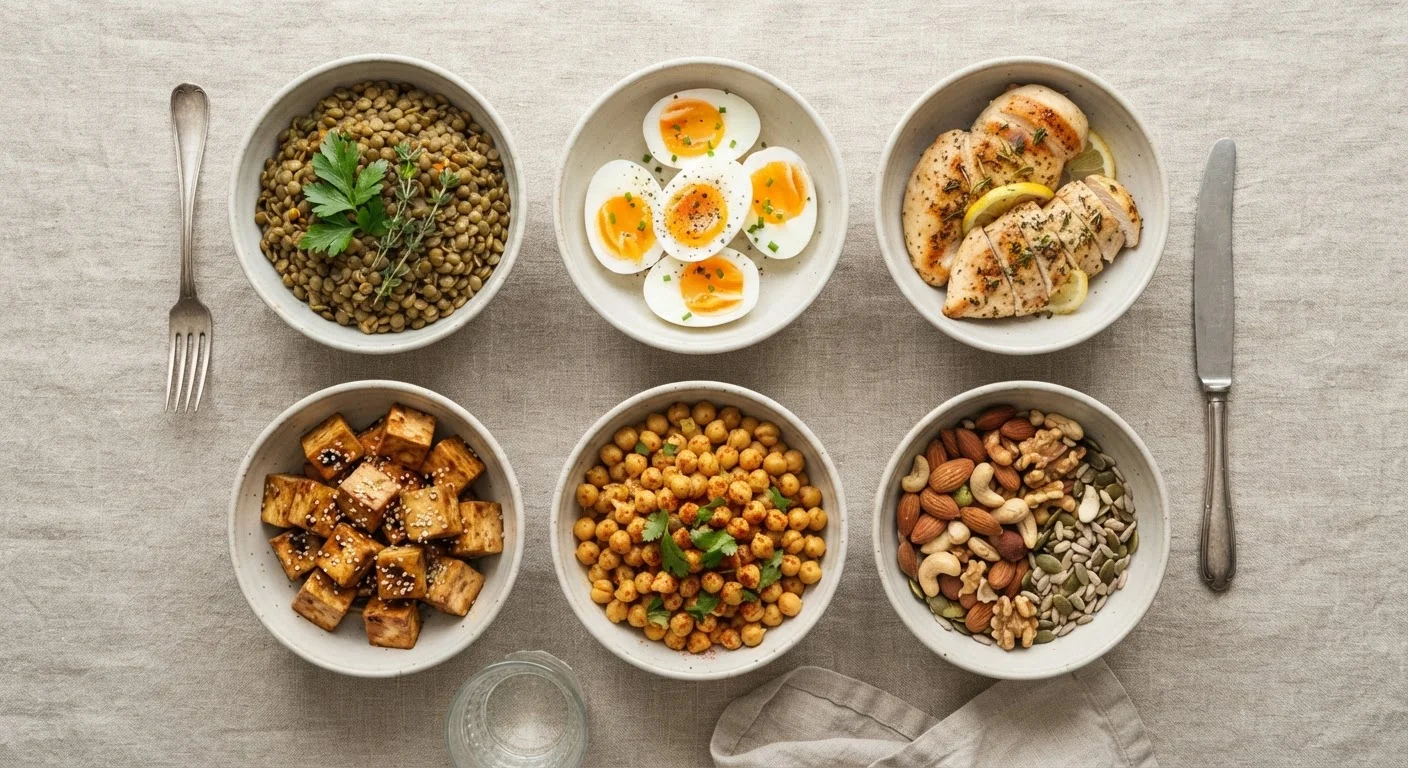
Key Takeaways
- Animal proteins are generally 'complete,' containing all nine essential amino acids in adequate proportions.
- Most plant proteins are lower in one or more essential amino acids, but strategic food combinations can close this gap.
- Animal proteins typically have higher digestibility scores, though many plant proteins are still well absorbed.
- Research links high red and processed meat intake to certain health risks, while plant proteins carry additional fiber and micronutrient benefits.
- Mixed diets and well-planned plant-based diets can both meet protein needs for most healthy adults.
- Consulting a registered dietitian is recommended for personalized protein guidance, especially for athletes or special populations.
Option A
Animal Protein
The complete, highly bioavailable classic.
Best for: Those seeking the most efficient single-source delivery of all essential amino acids, particularly athletes with high muscle synthesis demands.
Option B
Plant Protein
The fiber-rich, flexible alternative.
Best for: Those prioritizing dietary variety, reduced saturated fat intake, or plant-forward eating patterns who are willing to plan complementary sources.
If you want the simplest path to meeting all essential amino acid needs
Animal Protein
Animal sources like eggs, poultry, and fish deliver all nine essential amino acids in a single food, with high digestibility and minimal planning required.
If you follow a plant-forward or vegetarian diet
Plant Protein
Combining varied plant sources - legumes, grains, nuts, and seeds - across the day provides a complete amino acid profile alongside fiber and beneficial phytonutrients.
If cardiovascular health is a primary concern
Plant Protein
Replacing some animal protein, particularly red and processed meat, with plant-based sources is associated in research with favorable cardiovascular markers.
If maximizing muscle protein synthesis is your goal
Animal Protein
Animal proteins, especially dairy-derived whey, have a higher leucine content and superior DIAAS scores, which research associates with stronger muscle protein synthesis signals.
If you want sustainable long-term dietary flexibility
Plant Protein
A diverse plant protein strategy supports gut health through fiber, reduces dependence on a single food category, and aligns with broadly health-protective dietary patterns.
What 'Complete' Protein Actually Means
The term complete protein refers to a food that supplies all nine essential amino acids - those the body cannot synthesize on its own and must obtain through diet. Animal-derived foods (meat, poultry, fish, eggs, and dairy) consistently qualify as complete proteins. Most plant foods do not, with a few notable exceptions: soy, quinoa, buckwheat, and hemp seeds are widely recognized as plant-based complete proteins.
This does not mean plant eaters are destined for amino acid gaps. Decades of nutritional research have confirmed that eating a variety of plant foods throughout the day - for example, rice and beans, or whole-grain bread with peanut butter - provides the full complement of essential amino acids. You do not need to combine them within the same meal; meeting needs across the day is sufficient for most healthy adults.
Combining Plant Proteins: Flexibility Over Precision
Earlier nutritional guidance required combining complementary plant proteins at every meal, but current evidence supports a simpler approach: eat a variety of plant protein sources throughout the day. As long as total protein intake is adequate and food choices are diverse, amino acid needs are generally met. This makes plant-based protein planning far more practical for everyday eating.
For a practical look at how individual foods compare in protein content and amino acid composition, see our protein sources side-by-side guide.
Digestibility: How Much Protein Your Body Actually Uses
Completeness is only part of the equation. Digestibility determines how much of the protein you eat is actually absorbed and used. The most rigorous modern measure is the DIAAS, which accounts for how well each essential amino acid is digested in the small intestine.
| Criterion | Animal Protein | Plant Protein |
|---|---|---|
| Amino acid completeness | Complete in nearly all sources | Often incomplete; soy and quinoa are exceptions |
| DIAAS digestibility score | Generally high (≥1.0) | Generally lower; improves with processing/cooking |
| Fiber content | None | High; supports gut health |
| Saturated fat (typical sources) | Variable; higher in red/processed meat | Generally low |
| Key micronutrients | B12, heme iron, zinc, creatine | Magnesium, folate, potassium, phytonutrients |
| B12 availability | Naturally abundant | Absent; supplementation often needed |
| Cardiovascular research profile | Neutral to favorable (unprocessed); risk signals for processed/red meat | Generally favorable in population studies |
Animal proteins - particularly eggs, dairy, and lean meats - score highest on DIAAS, generally above 1.0, meaning they provide more usable amino acids per gram. Many plant proteins score lower, though processed or cooked forms (such as isolated soy protein or well-cooked legumes) score considerably better than raw or whole forms. The gap is real, but it narrows substantially when plant proteins are eaten in adequate total quantities and variety.
Health Implications Beyond Protein Content
Protein quality doesn't exist in isolation - the other nutrients in these foods matter too. Animal proteins often come packaged with vitamin B12, heme iron, zinc, and creatine, nutrients that can require deliberate planning to obtain from plant sources alone. On the other hand, plant proteins arrive with dietary fiber, antioxidants, and phytonutrients that animal sources largely lack.
Epidemiological research - including large cohort studies - has consistently linked high intake of processed and red meats with elevated risks of certain cancers and cardiovascular disease. Unprocessed animal proteins such as fish, poultry, and low-fat dairy show a far more neutral or even favorable relationship with long-term health outcomes. Plant protein sources, as a category, are broadly associated in population studies with lower all-cause mortality, though diet quality, lifestyle, and total caloric pattern all play significant roles.
~30%
Higher plant protein digestibility after cooking
Research published in nutrition journals indicates cooking legumes can increase their protein digestibility by roughly 25-30% compared to raw forms.
1 in 3
American adults not meeting protein RDA
Dietary survey data from the CDC and NHANES suggest a meaningful share of older American adults, particularly women over 70, fall below recommended protein intakes.
~0.8g
Protein RDA per kg body weight for adults
The U.S. Dietary Reference Intake establishes this as the baseline for sedentary healthy adults; needs rise with activity level and age.
No protein source is inherently harmful or universally superior. What matters most is the overall dietary pattern, not any single food or macronutrient in isolation.
Practical Guidance for Meeting Your Protein Needs
For most healthy American adults, the RDA for protein is 0.8 grams per kilogram of body weight per day, though needs increase for older adults, pregnant individuals, and those engaged in consistent resistance or endurance training. Both animal and plant protein sources can reliably meet this threshold when the diet is thoughtfully structured.
If you eat animal products, diversifying beyond red meat toward fish, eggs, poultry, and dairy provides protein with a more favorable overall nutrient profile. If you eat primarily or exclusively plants, prioritizing high-protein staples - lentils, tofu, tempeh, edamame, and quinoa - while varying your grains and vegetables ensures amino acid completeness without supplementation for most people. Those following strict vegan diets should be mindful of vitamin B12, iron, zinc, and omega-3 fatty acids, which may benefit from supplementation or fortified foods under the guidance of a healthcare provider.
This article is for general informational purposes only and does not constitute medical or dietary advice. Consult a registered dietitian or qualified healthcare professional for personalized nutrition guidance.