

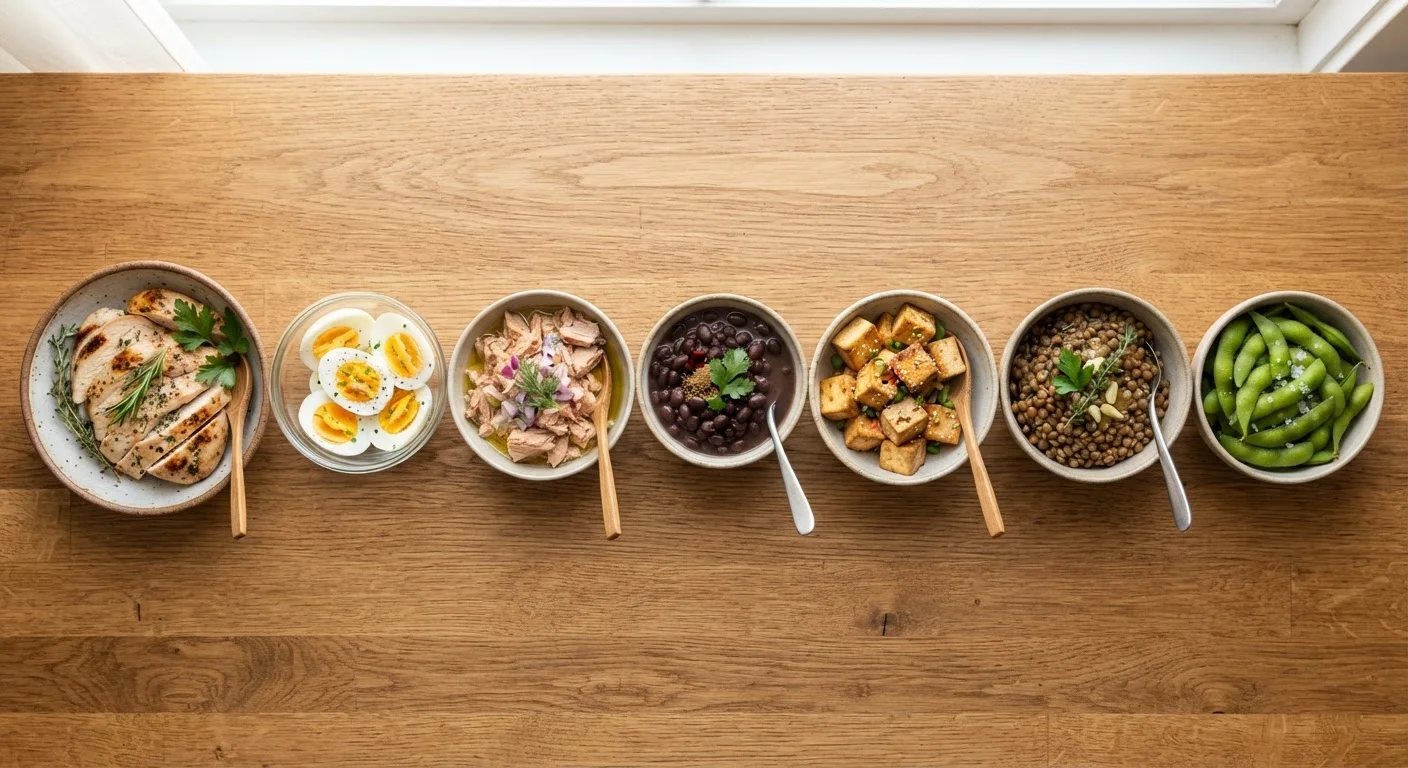
Key Takeaways
- Animal proteins are generally 'complete,' meaning they contain all nine essential amino acids in sufficient amounts.
- Plant proteins can meet your full amino acid needs when you eat a varied diet throughout the day.
- Digestibility differs between sources, but most healthy adults absorb adequate protein from both categories.
- Practical factors like cost, prep time, and dietary preferences matter just as much as grams of protein.
- No single protein source is required - mixing animal and plant options is a common and effective strategy.
Our Verdict
Both animal and plant protein sources are capable of supporting everyday nutritional needs. Animal proteins offer convenience and complete amino acid profiles, while plant proteins bring fiber, lower cost, and environmental advantages. The most practical approach for most Americans is a mix of both, chosen to fit their taste, budget, and health goals.
| Best for | Recommended |
|---|---|
| Those prioritizing complete amino acids with minimal meal planning | Animal proteins (eggs, chicken, fish) |
| Those focused on budget-friendly, high-fiber meals | Plant proteins (lentils, beans, edamame) |
| Those following vegetarian or vegan eating patterns | Varied plant proteins (tofu, tempeh, legumes, whole grains) |
| Those seeking flexibility and nutritional variety | A combination of animal and plant sources |
What Makes a Protein Source 'Good'?
Protein is made up of amino acids - the building blocks your body uses to repair tissue, make enzymes, and support immune function. Of the 20 amino acids, nine are considered essential, meaning the body cannot produce them and they must come from food. For a deeper look at how protein functions alongside carbohydrates and fat, see our plain-language guide to macronutrients.
When evaluating a protein source, three factors matter most:
- Amino acid completeness: Does it supply all nine essential amino acids?
- Digestibility: How efficiently does the body absorb and use those amino acids?
- Practicality: Is it affordable, accessible, and easy to prepare for everyday meals?
Neither animal nor plant proteins win on every dimension - the right choice often depends on your overall dietary pattern, not any single food.
Animal Protein Sources: Strengths and Trade-Offs
Animal-based proteins - including meat, poultry, fish, eggs, and dairy - are classified as complete proteins. They contain all nine essential amino acids at levels that closely match human nutritional needs. They also tend to score high on the PDCAAS (Protein Digestibility Corrected Amino Acid Score), a standard measure of protein quality used in nutrition research.
Common examples and approximate protein content per 3-oz cooked serving:
- Chicken breast: ~26 grams
- Canned tuna: ~22 grams
- Salmon: ~21 grams
- Eggs (2 large): ~12 grams
- Greek yogurt (6 oz): ~15-17 grams
The trade-offs: some animal proteins - particularly processed meats and fatty red meats - are associated with higher saturated fat and sodium intake. Cost and preparation time also vary widely. Fish and lean poultry tend to be praised by nutrition researchers for balancing protein density with other nutrients like omega-3 fatty acids and B vitamins.
Watch Processed Meat Intake
Processed meats such as bacon, deli cold cuts, hot dogs, and sausages are often high in sodium and preservatives. Major nutrition organizations, including the American Heart Association, suggest limiting these foods rather than treating them as everyday protein staples. Leaner, minimally processed options like grilled chicken, canned fish, or eggs are generally preferable for frequent use.
Plant Protein Sources: Strengths and Trade-Offs
Plant proteins - including legumes, tofu, tempeh, edamame, nuts, seeds, and whole grains - were historically described as 'incomplete' because most lack sufficient amounts of one or more essential amino acids. However, nutrition science has clarified that eating a varied plant-based diet across the day effectively supplies all essential amino acids without requiring precise 'protein combining' at every meal.
Common examples and approximate protein content per serving:
- Lentils (½ cup cooked): ~9 grams
- Black beans (½ cup cooked): ~7-8 grams
- Edamame (½ cup shelled): ~9 grams
- Firm tofu (3 oz): ~8 grams
- Tempeh (3 oz): ~16 grams
Soybeans and soy-based foods (tofu, tempeh, edamame) are notable exceptions - they are considered complete proteins. Plant proteins also bring dietary fiber, which animal proteins lack, and are generally more affordable per gram of protein than meat or fish.
The main consideration: plant proteins are often somewhat less digestible than animal proteins, and raw figures may overstate the usable protein for the body. That said, for most healthy adults eating sufficient calories and variety, this difference is unlikely to matter practically. For a detailed look at amino acid profiles and digestibility science, see what the science says about completeness and absorption.
| Criterion | Animal Proteins | Plant Proteins | |
|---|---|---|---|
| Amino acid completeness | Complete (all 9 essential) | Usually incomplete; varied diet covers all | |
| Digestibility | Generally higher | Slightly lower; still adequate for most | |
| Protein density per serving | High (20-26g per 3 oz meat/fish) | Moderate (7-16g per serving) | |
| Fiber content | None | Significant (legumes, whole grains) | |
| Typical cost | Moderate to high | Generally lower | |
| Preparation flexibility | Wide variety; some require longer cooking | Many options are quick-cooking or shelf-stable |
Putting It Together for Everyday Meals
For most Americans, the most realistic and nutritious approach is not an either/or choice. Meals built around a mix of animal and plant proteins tend to offer both amino acid completeness and the fiber and micronutrient advantages of whole plant foods.
Simple strategies that work in practice:
- Add a handful of beans or lentils to soups and stews that already contain chicken or broth.
- Use eggs as a quick, affordable protein base and pair with whole-grain toast or vegetables.
- Swap one or two weekly meat-based meals for tofu or tempeh stir-fries - both are high in protein and fast to prepare.
- Include Greek yogurt or cottage cheese as a protein-rich snack option.
If you are considering a more structured change to how you eat - whether moving toward more plants or reconfiguring your protein balance - this checklist for evaluating an eating pattern can help you assess whether a change fits your nutritional needs and lifestyle before committing.
Variety Is Your Best Tool
No single protein food needs to carry your entire daily intake. Rotating between chicken, fish, eggs, beans, lentils, and soy foods across the week naturally covers your amino acid needs while reducing over-reliance on any one source. Think of protein variety the same way you think of vegetable variety - the more, the better.
This article is for general informational and educational purposes only and is not medical or dietary advice. Consult a registered dietitian or qualified healthcare professional for personalized guidance on your protein needs.