

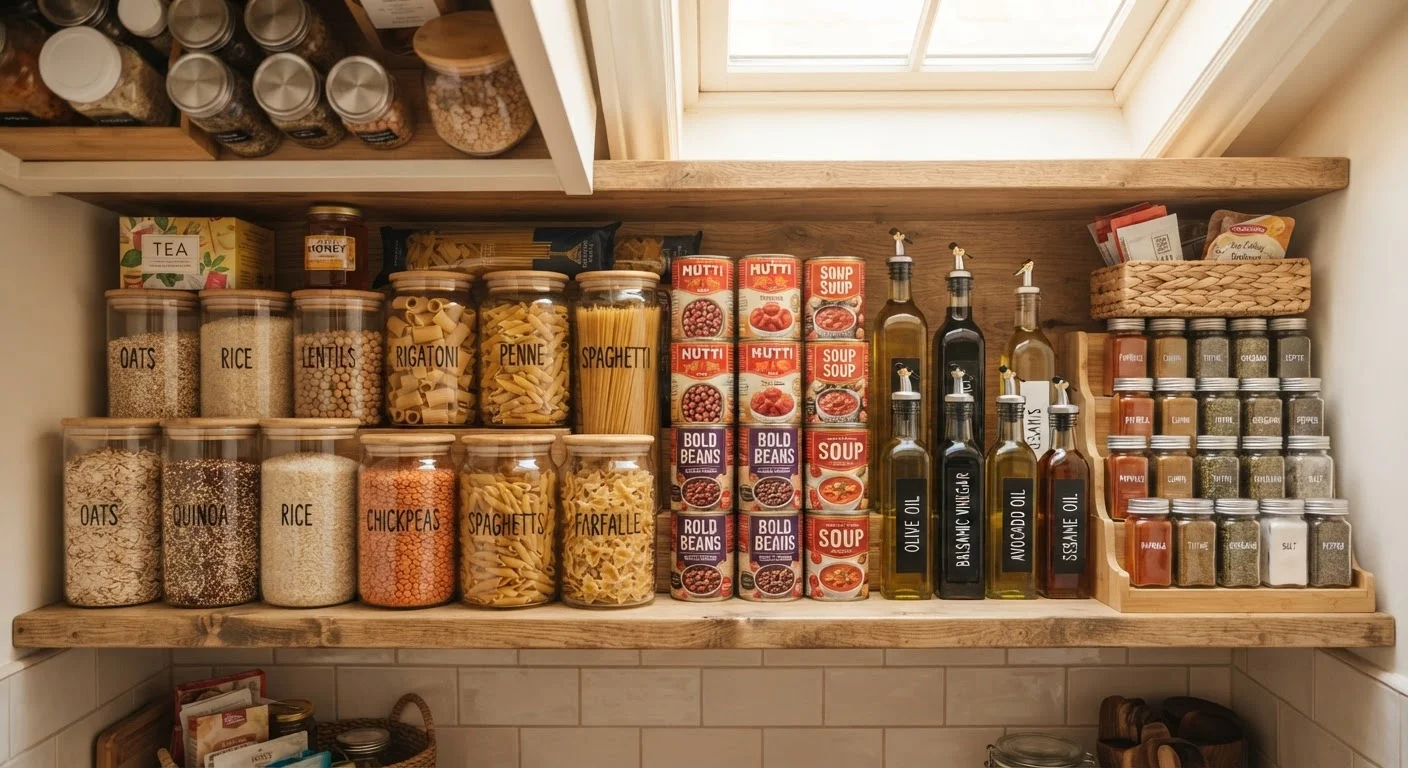
Key Takeaways
- A stocked pantry reduces decision fatigue and eliminates most last-minute grocery runs.
- Shelf-stable staples - grains, legumes, canned goods - form the backbone of flexible weeknight meals.
- Aromatics, acids, and fats are the flavor-building tools that make simple ingredients taste complete.
- Rotating your pantry stock prevents waste and keeps ingredients fresh and usable.
- A well-stocked pantry pairs naturally with batch cooking and budget-stretching strategies.
Summary
24 items · 30-60 minutes to audit and organize
Why Your Pantry Is the Most Underrated Meal-Planning Tool
Most weeknight cooking struggles aren't really about skill - they're about not having the right ingredients on hand when hunger and fatigue hit at the same time. A thoughtfully stocked pantry changes that equation entirely. Instead of staring into a bare cabinet and defaulting to takeout, you open the door and see possibilities: a grain that can become a base, a can of tomatoes that anchors a sauce, a handful of spices that can transform plain chicken into something worth eating.
This checklist is designed for a realistic kitchen - not a restaurant supply closet. Every item earns its place by pulling double or triple duty across different meals. If you're also trying to build broader cooking confidence, our end-to-end home cooking guide covers how pantry skills fit into the bigger picture. And if you're curious how cooking habits can support better nutrition even on busy days, see our piece on nutrition habits that slip when life gets busy.
Grains & Starches
Canned & Jarred Goods
Oils, Acids & Condiments
Dried Spices & Aromatics
What to Do With Your Pantry After You Stock It
Stocking a pantry is only half the job. The other half is using what's there before it expires and rotating new purchases behind older stock - a simple rule that eliminates a surprising amount of food waste. Once a week, take 60 seconds to scan your shelves: pull forward anything nearing its best-by date and plan a meal around it.
Don't Let 'Shelf-Stable' Mean 'Immortal'
Canned goods and dried staples do have best-by dates, and quality genuinely declines past them - oils can go rancid, spices lose potency, and canned goods may develop off-flavors. A quick monthly scan of your pantry helps you catch items that need to be used up soon and prevents the waste of discovering a two-year-old can of tomatoes you forgot was there. When in doubt about a canned item that's significantly past its date, discard it rather than risk foodborne illness.
A well-stocked pantry also pairs naturally with batch cooking. If you prep a pot of grains or a batch of beans on the weekend, the pantry supplies the flavor layers - sauces, spices, canned goods - that turn that prep work into three or four different meals. Our batch cooking guide walks through how to make that workflow sustainable. For cooks watching their grocery spending, the pantry is also where most budget leverage lives - techniques that stretch a grocery budget further explain how shelf staples make that possible.
Finally, use this checklist in combination with a regular pantry audit. Our weekly pantry audit checklist helps you spot nutritional gaps and make small, consistent improvements over time.
Airtight glass or BPA-free plastic containers
Store opened grains, pasta, and dried beans to extend shelf life and keep pests out.
Permanent marker or label maker
Date opened packages and jars so you can track freshness and rotate stock effectively.
Lazy Susan or tiered shelf organizer
Improve visibility in deep cabinets so nothing gets pushed to the back and forgotten.
Running grocery list (digital or paper)
Track pantry items as they run low so restocking happens before you're completely out.