

Key Takeaways
- Check for injuries and move to safety before anything else - your wellbeing comes first.
- Call 911 even for minor collisions; a police report creates a critical official record.
- Collect photos, contact info, and witness details at the scene before leaving.
- Notify your insurer within 24 hours, regardless of who appears to be at fault.
- Avoid admitting fault or making recorded statements without understanding your rights.
- Document every expense and communication starting immediately after the accident.
What you will need
Why the First 24 Hours Matter So Much
A car accident is disorienting by nature. Adrenaline spikes, details blur, and the instinct is simply to get moving again. But the decisions made in those first minutes and hours - what you document, who you call, what you say - can have lasting consequences for your insurance claim, any potential legal matter, and your own physical wellbeing.
This guide walks through every step in the order you should take them, so that if you're ever in this situation, you're not guessing under pressure. Think of it as the practical companion to broader car ownership knowledge - the kind of preparation that, like understanding what changes the moment you drive off the lot, most drivers wish they'd had sooner.
Smartphone with camera
Document vehicle damage, license plates, road conditions, and the overall scene.
Insurance card
Exchange policy number and insurer contact details with other involved drivers.
Pen and notepad (or notes app)
Record names, phone numbers, badge numbers, witness statements, and sequence of events.
Emergency triangle or road flares
Warn approaching traffic that your vehicle is stopped, reducing secondary collision risk.
What to Do: Step-by-Step
What you will need
Check for Injuries and Secure the Scene
Before anything else, assess yourself and any passengers for injury. If anyone is hurt - or if you are unsure - call 911 immediately. Do not attempt to move anyone who may have a neck or spinal injury unless there is an immediate danger, such as fire.
If the vehicles are driveable and the collision was minor, move them to the shoulder or a nearby parking area to clear traffic. Turn on your hazard lights. If you have reflective triangles or flares, deploy them behind your vehicle.
Call the Police
Contact law enforcement regardless of how minor the crash appears. Many states legally require a police report above a certain damage threshold, but even where they don't, an official report is invaluable. Give the dispatcher your location, the number of vehicles involved, and whether anyone is injured.
When the officer arrives, provide only factual information about what happened. Ask for the responding officer's name and badge number, and note the incident or report number - you'll need it for your insurance claim.
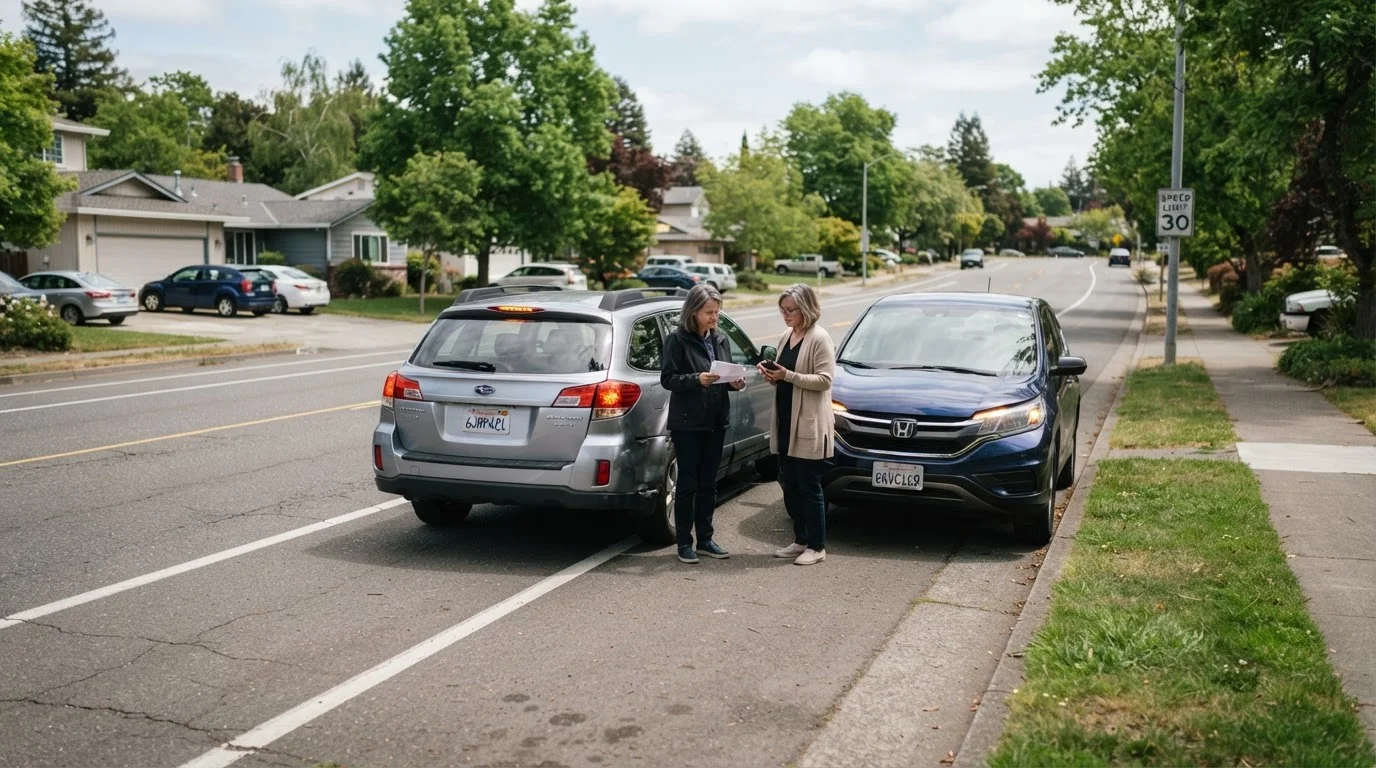
Exchange Information With the Other Driver
Collect and provide the following with every driver involved:
- Full legal name, address, and phone number
- Driver's license number and issuing state
- License plate number
- Insurance company name and policy number
- Vehicle make, model, and year
Do not share more personal information than necessary, and keep the conversation factual and brief.
Document the Scene Thoroughly
Use your phone to photograph every angle of all vehicles involved, visible damage, skid marks, road signage, traffic signals, weather conditions, and the overall position of cars. Capture timestamps by leaving the default metadata intact.
If witnesses are present, ask for their names and contact information. A neutral third-party account can be decisive if liability is disputed later. Write down your own account of events while memory is fresh - the sequence, what you saw, heard, and did.
Notify Your Insurance Company
Contact your insurer as soon as possible - ideally within a few hours and no later than 24 hours after the accident. Most policies include a duty-to-cooperate clause requiring prompt notification. Delaying can complicate or jeopardize your claim.
Provide the factual account and the information you collected at the scene. Ask your insurer what the next steps are, what documentation they need, and whether you need to obtain repair estimates before authorization.
Seek Medical Evaluation If Needed
Some injuries - whiplash, concussion, and soft-tissue damage - may not produce obvious symptoms for hours or days. If you experienced any impact, it is worth consulting a healthcare provider, even if you feel well. This is especially important if you intend to file an injury-related claim, as gaps between the accident and medical care can be used to dispute the connection.
Keep records of every visit, diagnosis, prescription, or referral related to the accident. This documentation supports any claim and ensures your care is appropriately coordinated. This article provides general information only and is not a substitute for professional medical advice. Always consult a qualified healthcare provider regarding any health concerns following an accident.
Never Admit Fault at the Scene
Even a casual apology like "I'm sorry" can be interpreted as an admission of liability by insurers or opposing attorneys. Fault is determined through official investigation - not conversation at the roadside. Stick to factual exchanges: name, contact info, insurance details, and nothing more.
After the Scene: What Comes Next
Once you've left the accident scene, your focus shifts to managing the claim and your own recovery. Keep a running log of every expense connected to the accident - towing fees, rental car costs, medical co-pays, missed work - as these may be recoverable depending on the circumstances and your coverage.
If the other driver's insurer contacts you requesting a recorded statement, you are not obligated to provide one without consulting your own insurer or an attorney first. Be cautious about settling quickly; injury symptoms can evolve over days.
Keep an Accident Checklist in Your Glove Box
Stress and adrenaline make it easy to forget critical steps at the scene. Print out a simple checklist - names, photos, witness info, insurer contact - and store it with your registration. A calm, prepared mind collects better evidence.
Going forward, file all accident-related documents in one place. Police reports, medical records, repair estimates, and claim correspondence all form a critical paper trail. Our guide on keeping records as a car owner explains exactly what to save and for how long.