

Key Takeaways
- Morning squealing after rain or overnight sitting is often harmless surface rust burning off.
- A high-pitched squeal that persists through multiple stops usually means pad wear indicators are engaged.
- Grinding sounds indicate metal-on-metal contact - a situation that requires immediate professional attention.
- Brake pulsation or a vibrating pedal often points to warped rotors rather than pad wear.
- Ignoring brake noise can turn a minor repair into a costly rotor replacement or compromise stopping ability.
Brake Squeal
Brake squeal is a high-pitched noise produced when your vehicle's brake pads make contact with the rotors during stopping. It can stem from worn pads, dust, heat, or the design of the brake system itself. While occasional squealing isn't always urgent, persistent or worsening noise signals that your brakes need attention.
Many modern brake pads include a small metal wear indicator tab - called a squeal indicator or wear sensor - that is engineered to contact the rotor and emit noise specifically to alert drivers that pad replacement is overdue.
The Most Common Causes of Brake Squeal
Brake noise isn't random - it has specific mechanical causes, and identifying which one applies to your situation helps you make smarter decisions about urgency and next steps.
Wear indicator contact. The most common cause of persistent squealing is your brake pads' built-in wear indicators. These small metal tabs are designed to scrape against the rotor once pad thickness drops to a critical level, producing a deliberate warning sound. Think of it as your car telling you it's time for service.
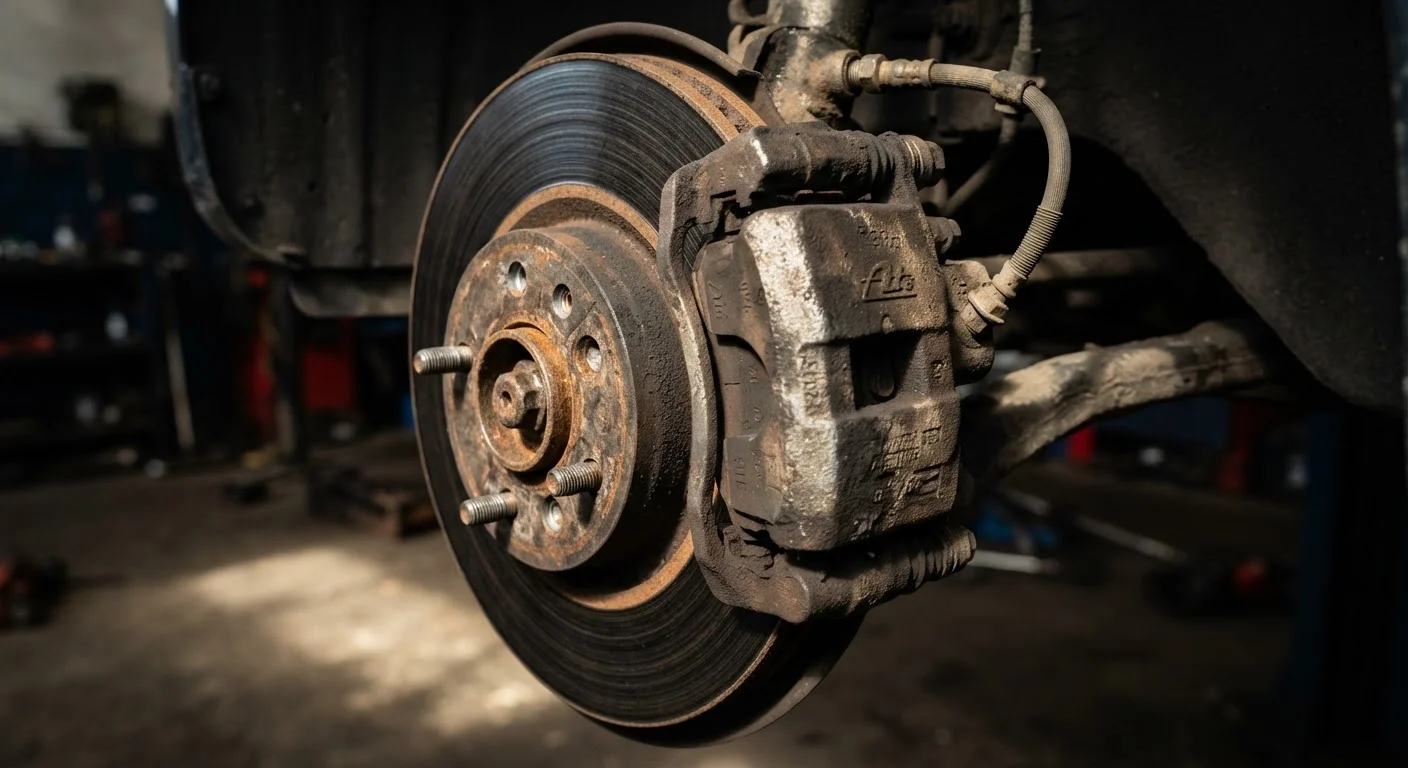
Surface rust. After overnight sitting - especially following rain - a thin layer of iron oxide forms on the rotor surface. The first few stops of the day grind this layer away, often producing a brief squeal or light grinding sound. This is considered normal and isn't a sign of damage.
Dust and debris. Fine particles - including road grit, brake dust, and even sand - can become temporarily trapped between the pad and rotor, causing intermittent squealing. This type of noise tends to be inconsistent and short-lived.
Glazed pads or rotors. Overheating brakes - common in vehicles that descend long grades while braking heavily - can cause the pad surface to harden and glaze. Glazed pads lose friction efficiency and often produce a high-pitched squeal. Brake fade and heat-related issues are closely related concerns worth understanding.
Pad composition. Semi-metallic brake pads, which are common on many vehicles, are inherently noisier than ceramic alternatives due to their metal fiber content. If your vehicle recently had pads replaced and now squeals, the pad material itself may be a factor.
~$150-$300
Typical cost for a standard brake pad replacement per axle
Rotor resurfacing or replacement adds significantly to this cost - making early detection of wear noise an important factor in managing repair expenses.
40%
Estimated share of brake noise cases tied to normal wear indicators
Industry technician surveys suggest a large portion of brake noise complaints at service centers involve pads that have simply reached their engineered replacement threshold.
3mm
Minimum safe brake pad thickness recommended by most manufacturers
Most new pads start at 10-12mm of friction material; wear indicators are typically set to trigger between 2-3mm remaining, signaling replacement is overdue.
When Noise Signals a Safety Problem
Not all brake noise carries the same level of urgency, but some sounds indicate you're moving toward genuinely compromised braking ability.
Grinding or growling. If squealing has progressed to a harsh grinding or metallic growling sound, the pad material is likely gone. Metal is now contacting metal, which damages rotors rapidly and reduces your stopping distance. This warrants same-week - ideally same-day - inspection by a qualified mechanic.
Pulsating brake pedal. A pedal that pulses or vibrates underfoot during braking often points to warped rotors. Heat cycles, aggressive braking, or improper torqueing of wheel fasteners can cause rotor surfaces to become uneven. Warped rotors don't just produce noise - they can cause inconsistent clamping force and extend stopping distances.
Pulling to one side. If the vehicle drifts left or right during braking, a stuck caliper, uneven pad wear, or a seized slide pin is likely the cause. This is a handling and safety issue, not just a noise issue.
Dashboard warning lights. Some vehicles have electronic wear sensors that illuminate a dashboard indicator when pad material reaches minimum thickness. Understanding these signals matters - see what your car's warning lights are actually telling you for broader context on how to interpret dash alerts.
Track the Pattern Before Your Appointment
When you bring your vehicle in for a brake inspection, the mechanic's job is easier if you can describe when the noise occurs - at low speeds, during light or hard braking, only in the morning, or at a specific pedal pressure. Note whether the sound comes from the front or rear, and whether the steering wheel or pedal vibrates. This context helps narrow the diagnosis faster.
What You Should Do Next
The appropriate response to brake noise depends on what you're hearing and when.
If the squeal only occurs for the first one or two stops of the day and then disappears entirely, monitor it over time but don't panic. Document when it started, whether it's worsening, and under what conditions it occurs.
If the squeal is consistent - happening on most stops, especially at low speeds - schedule a brake inspection. Most auto service providers can visually assess pad thickness quickly. At this stage, you likely need new pads, which is a routine service.
If you hear grinding, feel pedal pulsation, notice pulling, or observe any of the more serious symptoms described above, treat it as a priority repair. Driving on severely worn brakes reduces stopping effectiveness in ways that can't be compensated for by increased following distance alone.
Brake systems are one of the most safety-critical components on any vehicle. A qualified mechanic should perform brake inspections, pad replacements, and rotor work. While visual pad checks can sometimes be done through the wheel spokes without removal, accurate measurement of pad thickness and rotor depth requires professional tools and judgment.
This article is for informational and educational purposes only. It is not a substitute for a professional vehicle inspection. If you have concerns about your brakes, consult a qualified mechanic.