

Key Takeaways
- The battery provides the burst of power needed to start the engine but does not sustain the vehicle on its own.
- The alternator recharges the battery while the engine runs and powers all electrical accessories.
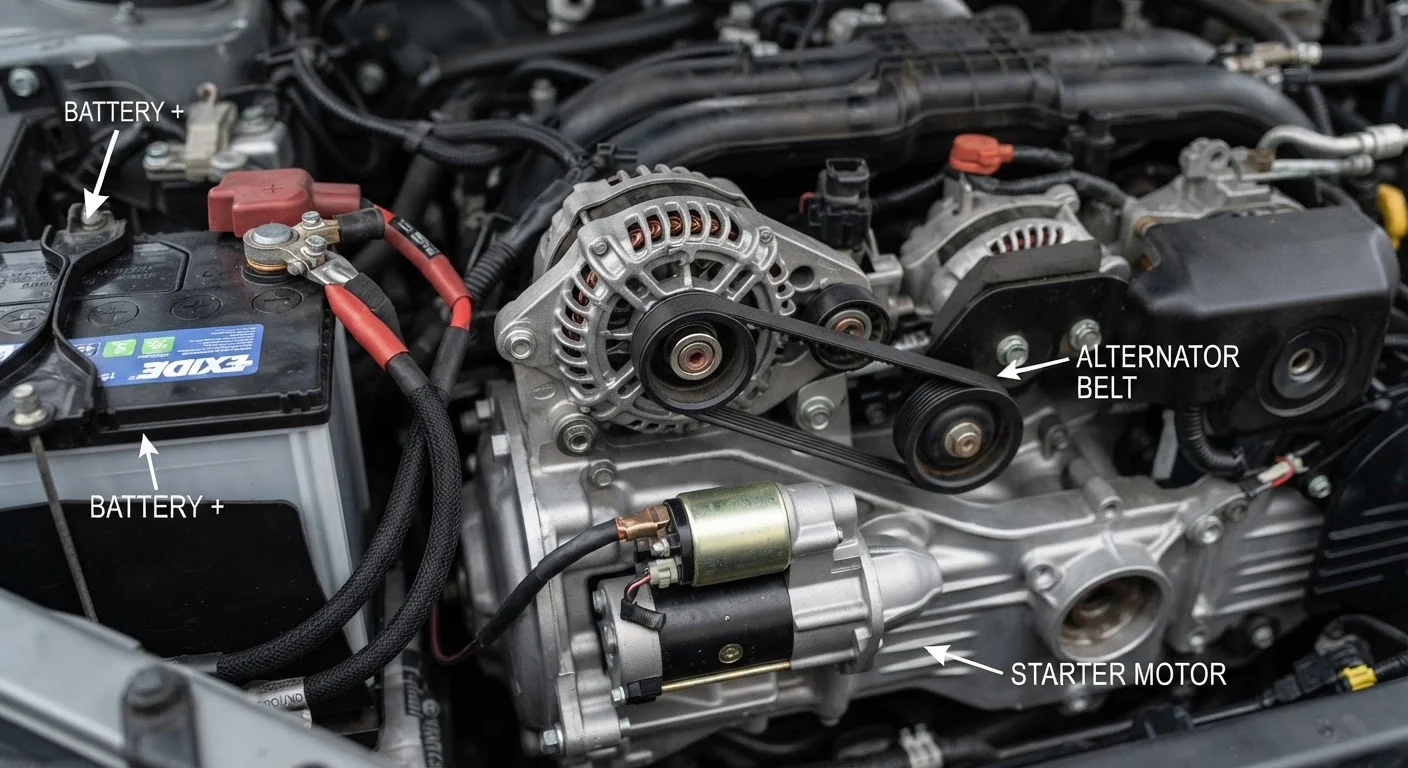
- The starter motor converts electrical energy into mechanical energy to crank the engine.
- All three components are interdependent - failure in one will eventually affect the others.
- Warning signs include slow cranking, dimming lights, and a battery or charging warning light on the dashboard.
Automotive Electrical System
Your car's electrical system is the network that stores, generates, and distributes the electrical power needed to start the engine and keep everything running. At its core, three components handle this work: the battery, the alternator, and the starter motor. Each has a distinct job, but they depend on one another to function correctly.
The system operates on 12-volt DC power in most passenger vehicles; the alternator produces AC power internally, which is then converted to DC by a built-in rectifier before reaching the battery and vehicle circuits.
The Battery: Your Car's Power Reserve
Think of the car battery as a rechargeable power reserve - it stores electrical energy and releases a large surge on demand. When you turn the ignition key or press the start button, the battery delivers a concentrated burst of current to the starter motor. Without that initial power, nothing else in the chain can happen.
Beyond starting the engine, the battery also powers the vehicle's electronics when the engine is off - interior lights, the clock, and keyless entry systems all draw from it. However, the battery is not designed to sustain those loads for long. Its primary job is that short, high-power starting burst.
Battery capacity is measured in cold cranking amps (CCA), which reflects how much current it can deliver in cold temperatures - when starting is hardest. A battery that tests low on CCA is likely nearing the end of its useful life, even if it seems to work day to day.
Check Battery Terminals Regularly
Corrosion on battery terminals - that white or bluish powder that builds up around the connectors - can interfere with the electrical connection and mimic the symptoms of a failing battery. Keeping terminals clean and secure is one of the simplest and most effective forms of electrical system maintenance. A mechanic can inspect and clean them during routine service.
The Alternator: The Engine's Built-In Generator
Once the engine is running, the alternator takes over as the primary electrical source. Driven by a belt connected to the engine, the alternator generates electricity continuously while you drive. It serves two critical roles: recharging the battery and powering every electrical system in the vehicle - the headlights, climate control, infotainment system, fuel injection, and more.
A healthy alternator typically maintains output between 13.5 and 14.5 volts, keeping the battery fully charged. When the alternator begins to fail, output drops, and the battery starts supplementing - draining faster than it can recover. Dimming interior or exterior lights, a flickering dashboard, or a battery warning light are common early indicators of alternator trouble.
3-5 years
Typical car battery lifespan
Industry guidance from AAA and automotive engineers suggests most 12V lead-acid batteries reach end of life within this window, with climate and usage as key variables.
13.5-14.5V
Normal alternator output range
Automotive electrical engineers define this voltage range as the standard charging output for a healthy alternator in a running passenger vehicle.
Unlike the battery, the alternator isn't storing power - it's generating it in real time. That distinction matters: a car with a failing alternator may start fine in the morning but die later in the day after the battery has been depleted.
The Starter: Turning Electrical Power Into Engine Motion
The starter motor is an electric motor with one purpose: to spin the engine fast enough for combustion to begin. When you initiate startup, the battery sends power to the starter, which engages a small gear (called a pinion gear) that meshes with the engine's flywheel and cranks it into motion. Once the engine fires and runs on its own, the starter disengages automatically.
Starters are built to handle short, intense bursts of use - not sustained operation. Cranking the engine repeatedly without it starting can overheat the starter motor and shorten its life. If you hear a grinding noise during startup, it may indicate the starter's pinion gear isn't engaging the flywheel cleanly, which warrants a professional inspection.
Just as with other engine maintenance, keeping related systems in good shape - including checking fluid levels - helps reduce strain on electrical components. See our guide to fluids under the hood for a closer look at how those systems connect.
How the Three Work Together - and What Fails First
The battery, alternator, and starter operate as a system. The battery starts the engine; the engine runs the alternator; the alternator recharges the battery. Break any link in that chain and the whole system suffers.
A weak battery forces the starter to work harder to crank the engine. A failing alternator means the battery never fully recharges, causing it to wear out prematurely. A damaged starter can draw excessive current, putting extra load on the battery. Problems in one component frequently accelerate wear in the others - which is why a mechanic who finds one failed part will often recommend testing the full system rather than replacing just the obvious culprit.
Test the System, Not Just the Battery
Many auto parts stores and repair shops offer free battery and charging system tests. These tests check battery health, alternator output, and starter draw simultaneously - giving a complete picture of electrical system health rather than isolating just one part. This kind of comprehensive check is especially worthwhile before long trips or as the battery approaches the three-year mark.
If your car is slow to start, makes unusual clicking or grinding noises at ignition, or if warning lights appear on the dashboard, have a qualified technician test all three components together. Addressing the root cause early is almost always less costly than dealing with a roadside breakdown.