

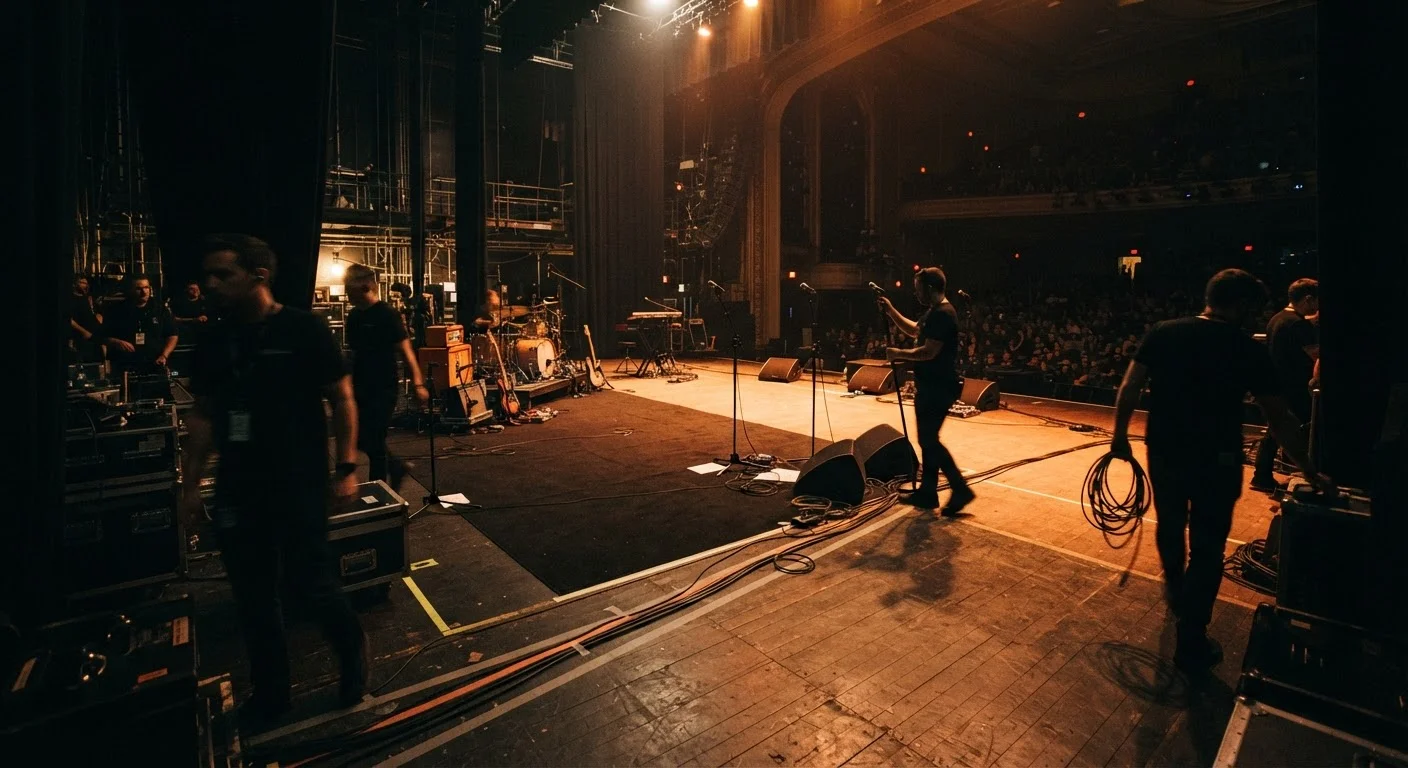
| Stage Left / Stage Right | Always from the performer's perspective facing the audience - opposite of the audience's view. |
| Downstage | The edge of the stage closest to the audience. (Theater and concert staging convention) |
| Typical Merch Cut | 20-35% of gross merchandise sales retained by the venue. |
| FOH Console Location | Usually positioned in the middle of the audience floor for optimal room sound assessment. |
| Encore Origin | From the French word for "again" - historically a spontaneous request, now often planned. |
Why Concert Vocabulary Matters
You've read a concert review that mentioned a band's "tight set" and wondered whether the critic meant the music felt polished or the show ran short. You've seen "general admission" on a ticket and been unsure whether that means standing all night or simply unreserved seats. Live music has its own working language - developed in clubs, arenas, and festival fields over decades - and knowing even a fraction of it changes how you experience a show, read about one, or talk to the people who make them happen.
This reference pulls together the terms you're most likely to encounter as a concertgoer, a curious reader, or someone who just wants to sound fluent at the after-show. The glossary below covers the full lifecycle of a live event: what happens before doors open, what's happening onstage and off while the music plays, and the business scaffolding that holds it all together.
Rider
A contractual addendum to a performance agreement specifying an artist's technical and hospitality requirements. It can cover sound equipment preferences, backstage food and drink, and dressing room conditions.
Stage Plot
A diagram sent by an artist to a venue showing the exact placement of instruments, amplifiers, and monitors on the stage. It allows local production crews to prepare before the band arrives.
Front of House (FOH)
The main mixing console positioned in the audience area, where the FOH engineer controls the sound the crowd hears. It's distinct from the monitor mix console operated at the side of the stage.
Soundcheck
A pre-show technical run-through in which artists and engineers balance levels, test equipment, and adjust the room's sound before the audience is admitted.
Monitor Mix
The customized audio blend sent through onstage speakers (monitor wedges or in-ear monitors) so performers can hear themselves and each other clearly while playing.
Set List
The planned running order of songs for a performance, typically written on paper and placed on the stage floor. Artists sometimes deviate from it in the moment.
Encore
Additional songs performed after the apparent end of a show, typically following sustained audience applause. The practice is now often planned in advance despite its spontaneous feel.
Direct Support
The opening act that performs immediately before the headliner - the highest-status slot among supporting performers on a given bill.
Pit
Can refer to the barrier-protected area near the stage used by photographers, or more generally to the high-energy standing zone at the front of a general admission crowd.
Merch Cut
The percentage of merchandise sales that a venue retains from an artist's table. Also called a hall fee, it commonly ranges from 20 to 35 percent of gross sales.
Guarantee
A fixed performance fee contractually promised to an artist regardless of ticket sales or attendance numbers. It contrasts with a door deal, where payment depends on actual turnout.
Load-In
The scheduled period when a touring act and crew bring all equipment, staging, and gear into the venue - typically the first step of any show day.
For a closer look at one of the most practical ticketing distinctions in live music, the trade-offs between general admission and reserved seating are worth understanding before your next purchase.
Before the Show: Setup, Tech, and the Business Side
Most of the labor that makes a concert feel effortless happens in the hours - sometimes days - before an audience arrives. A load-in is exactly what it sounds like: the process of bringing all equipment, staging, and gear into the venue. It's followed by production work, the broader term for rigging lights, setting speaker arrays, and assembling the physical stage.
The stage plot is a document - usually a simple diagram - that shows where every instrument, amplifier, and monitor belongs on the stage. Bands send this ahead of time so local crews can prepare. Alongside it comes the rider, a contractual attachment to the performance agreement that specifies the artist's technical and hospitality requirements. Riders cover everything from the exact microphone models a vocalist prefers to catering instructions backstage.
Soundcheck is the rehearsal-style run-through that happens before doors open. Artists and sound engineers use it to balance levels, test the room's acoustics, and make sure every monitor - the speakers aimed back at the performers - is delivering the right mix. What the band hears onstage is called the monitor mix, and it's often completely different from what the audience hears.
| Stage Left / Stage Right | Always from the performer's perspective facing the audience - opposite of the audience's view. |
| Downstage | The edge of the stage closest to the audience. (Theater and concert staging convention) |
| Typical Merch Cut | 20-35% of gross merchandise sales retained by the venue. |
| FOH Console Location | Usually positioned in the middle of the audience floor for optimal room sound assessment. |
| Encore Origin | From the French word for "again" - historically a spontaneous request, now often planned. |
The person managing all of this from the audience's perspective sits at the front of house (FOH) console - the mixing desk you can usually spot somewhere in the middle of the crowd. A separate engineer handles the monitor mix from a console at the side of the stage, sometimes called the wings.
During the Show: Stage, Sound, and Crowd
A concert's set is the sequence of songs a band performs. A set list is the running order, usually written on paper and taped to the stage floor where the musicians can glance at it. When an audience applauds loudly enough after the apparent finale to bring performers back out, the resulting bonus songs are called an encore - a tradition so ritualized that many acts now plan encores in advance, though the convention still carries emotional weight.
The opener or support act performs before the headliner, often as part of a career-building strategy. A direct support is the act immediately before the headliner, the highest-status opening slot. Some tours feature a co-headline arrangement, where two acts share top billing and alternate closing the show.
Onstage, the downstage edge is closest to the audience; upstage is toward the back wall - terms borrowed from theater. The pit is the barrier-protected area between the front row and the stage, typically used by photographers during the first few songs. Stage left and stage right are always from the performer's perspective facing the crowd, which is the reverse of what someone in the audience sees.
The raw energy of a crowd compressed near the stage - surging, swaying collectively - is often called the pit in a general admission context, though it technically differs from the press pit. Crowd safety terms like crowd surfing and moshing describe participatory audience behaviors with their own informal codes of conduct. If you're new to either, watching from the edges first is wise. The language of live performance extends to theater as well, where program notes and production roles carry their own vocabulary.
After the Show: Merch, Deals, and the Industry Behind It All
The merch table - short for merchandise - is where artists sell T-shirts, vinyl, posters, and other goods. Venues typically take a percentage of merch sales, known as a merch cut or hall fee, which can range from around 20 to 35 percent of gross sales depending on the venue. For independent artists, merch revenue often represents a significant portion of touring income.
A guarantee is the flat fee an artist is contractually promised regardless of ticket sales, while a back-end deal or door deal means the artist earns based on actual attendance - common for emerging acts in smaller venues. The promoter is the company or individual that organizes the event, handles ticketing, and takes on financial risk. The artist's booking agent negotiates the terms; the tour manager keeps daily operations running on the road.
Understanding this vocabulary doesn't just make you a better-informed fan - it offers genuine respect for the complexity behind what feels, at its best, like pure spontaneous joy. The same instinct to decode specialized language applies across art forms: the vocabulary of film criticism rewards the same kind of curious attention, and so does learning to read a painting on its own terms.