

Key Takeaways
- Misattribution can happen for centuries before modern science or scholarship catches it.
- Financial, political, and reputational pressures have historically encouraged false attributions.
- Scientific tools like infrared imaging and pigment analysis are now central to confirming authorship.
- Correcting an attribution can dramatically shift a work's market value and cultural meaning.
- Museums and auction houses face real institutional stakes when a famous attribution is overturned.
Art Misattribution
Art misattribution occurs when a work of art is credited to the wrong artist - sometimes for decades or even centuries. It can happen in any direction: a lesser-known painter's work gets elevated to a famous name, or a masterwork gets quietly downgraded. The correction process involves historians, scientists, and institutions working to set the record straight.
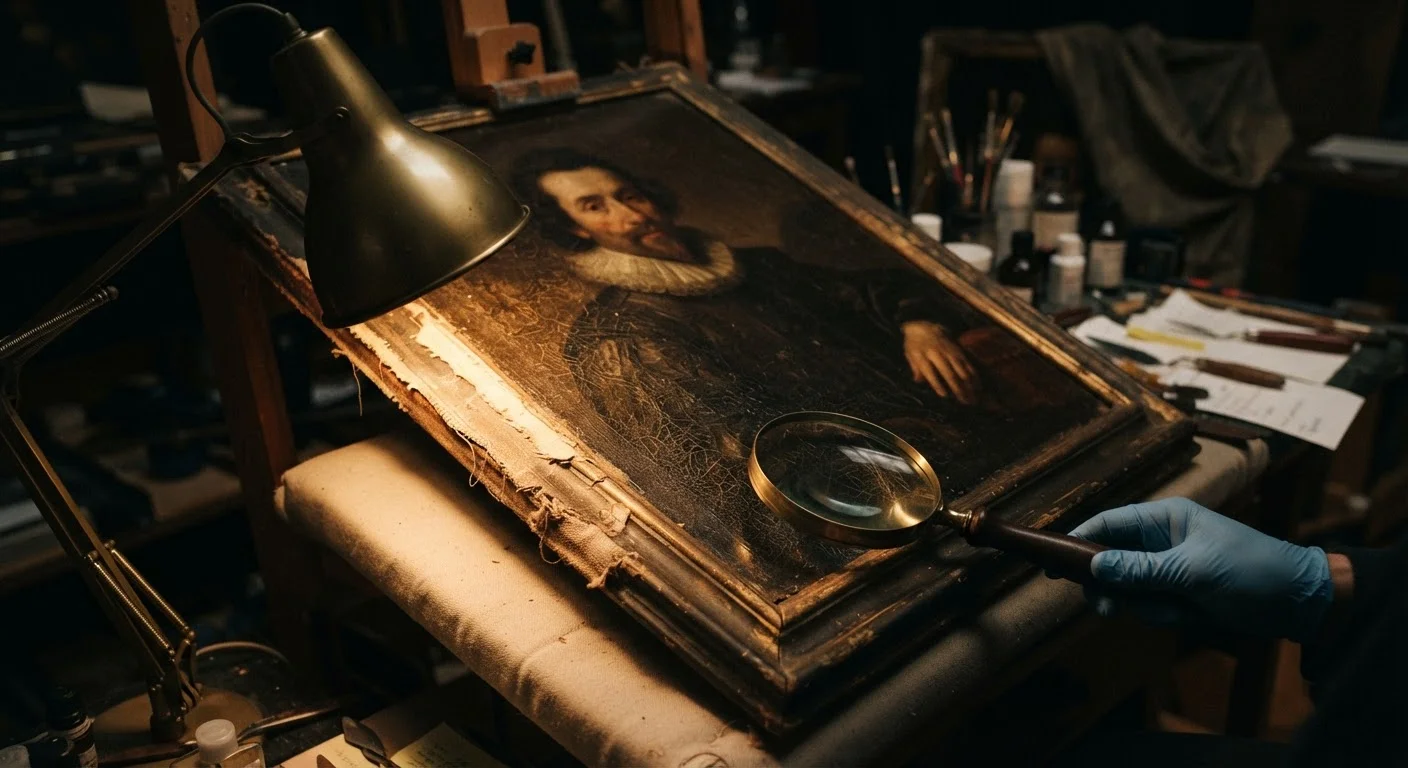
Formal reattribution typically requires a convergence of evidence: technical analysis (infrared reflectography, dendrochronology, pigment testing), stylistic assessment by specialists, and documentary research into provenance records.
The Problem With a Name on the Wall
Walk through almost any major art museum, and you'll notice how much weight rests on a single line of text: the artist's name printed beneath a painting. That name shapes everything - how long visitors linger, how critics write about the work, how much an insurer values it. But what happens when that name turns out to be wrong?
Art misattribution - crediting a work to the wrong artist - is one of the art world's most persistent and quietly dramatic problems. It stretches back centuries, touching Old Masters, Impressionists, and contemporary work alike. And in recent decades, a combination of advancing science and rigorous scholarship has been reopening cases that once seemed settled.
Understanding how misattribution happens, and what follows when it's caught, tells us something revealing about how we value art in the first place - and whether we're really responding to the object in front of us, or just to a famous name. It's also a reminder that the art world, for all its prestige, is shaped by the same human forces - ambition, commerce, and error - that drive any field. As our guide on myths about who art is really for explores, the assumptions we bring to art often say as much about us as they do about the work itself.
How Misattribution Happens
The causes of misattribution are surprisingly mundane. Old workshop practices are one major factor: for centuries, celebrated artists ran studios where apprentices and assistants produced significant portions of finished works. A painting that left Rubens's studio might bear his compositional stamp without his hand ever touching most of the canvas. Over time, workshop pieces were sometimes elevated - honestly or not - to the master's name alone.
Documentary gaps compound the problem. Paintings change hands, cross borders, survive wars, and lose their paper trails. When a canvas resurfaces without clear provenance, attributing it requires educated judgment - and educated judgment can be wrong. Add the fact that dealers and collectors historically had strong financial incentives to attach a famous name, and the conditions for widespread misattribution become clear.
~20%
Old Master works with disputed or revised attributions
Art historians and auction specialists broadly estimate that a significant portion of works from the Old Master period carry attributions that have been questioned or revised at some point in their documented history.
10x+
Potential value difference between master and workshop attribution
Industry observers note that a work attributed to a celebrated master can command many times the auction price of an identical work attributed to the studio or a follower, illustrating the enormous financial stakes of attribution decisions.
Wishful thinking plays a role too. Scholars and curators are human. When a work looks like a Vermeer, when the style fits and the period matches and the provenance is plausible, it can take extraordinary intellectual discipline to hold back from confirming what you desperately want to be true.
When Science Enters the Picture
For much of art history, attribution was almost entirely a matter of connoisseurship - the trained eye of an expert comparing brushwork, palette, and composition. That changed significantly in the 20th century as conservation science matured.
Today, a disputed painting can be subjected to infrared reflectography, which reveals underdrawings invisible to the naked eye. X-ray imaging shows how a composition was built up in layers. Dendrochronology can date the oak panels used as supports in northern European paintings to within a narrow range of years. Pigment analysis can identify materials that weren't available until after a supposed master's death - instantly disqualifying a attribution.
How to Read Museum Attribution Labels
Next time you're in a museum, look closely at how the label phrases authorship. 'Workshop of,' 'Circle of,' 'Attributed to,' and 'Follower of' are all distinct scholarly hedges - each signals a different level of confidence about who actually made the work. A label that simply states an artist's name represents the institution's strongest attribution claim.
These tools don't eliminate debate, but they change its terms. When the science contradicts the label, the burden of proof shifts decisively. The most famous recent cases - including ongoing disputes around works once attributed to Caravaggio or Raphael - illustrate how technical findings force institutions to revisit conclusions that had stood for generations.
The Stakes of Getting It Wrong - and Getting It Right
When an attribution is overturned, the consequences ripple outward fast. A painting's financial value can collapse overnight - works attributed to a celebrated master can command tens of millions at auction, while the same canvas attributed to a follower or workshop might sell for a fraction of that. Insurance policies, estate valuations, and museum acquisition records all have to be revisited.
Institutionally, reattributions can be bruising. A museum that acquired a "Leonardo" at enormous cost faces obvious reputational pressure when scholars suggest the attribution was shaky. Auction houses that guaranteed a famous name can find themselves in legal disputes. The art market's entire architecture of value depends on the stability of attribution - which is precisely why corrections, when they come, tend to arrive slowly and carefully.
But there's another side to the story. Correct attribution also restores credit to artists who were overlooked, often women and artists of color whose work was assigned to more famous male contemporaries. The ongoing reattribution of works once lumped under male names to their actual female creators is one of the more meaningful developments in recent art scholarship. Questions of cultural context and ownership in the arts - who gets credit, whose name endures - connect directly to broader conversations, like those explored in our piece on cultural appropriation vs. cultural exchange in the arts.
In the end, misattribution reminds us that art history is a living, revisable field - not a fixed monument. The name on the wall matters, but so does the willingness to change it when the evidence demands it.