

Key Takeaways
- Over-scheduling is one of the fastest ways to exhaust children and frustrate parents on a family trip.
- Involving kids in destination choices, even minimally, dramatically improves their engagement and behavior.
- Building a realistic daily rhythm around meal times and rest needs prevents most avoidable meltdowns.
- A flexible budget that accounts for kid-specific costs-snacks, activities, last-minute changes-holds up far better.
- Choosing accommodation with space to spread out is often more important than location for families.
Why Family Travel Demands a Different Planning Mindset
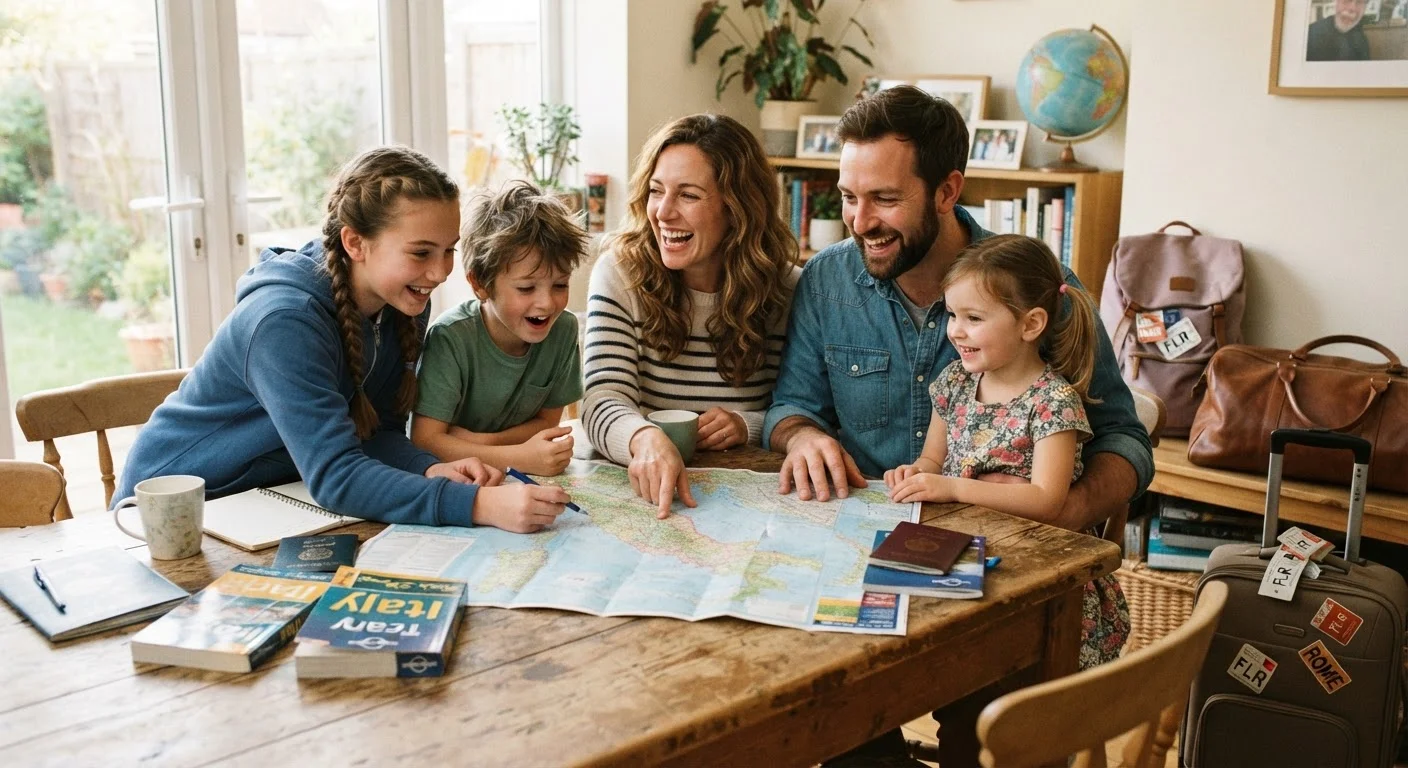
Planning a trip for two adults is hard enough. Add children of different ages, each with distinct stamina, interests, and tolerance thresholds, and the planning equation changes entirely. What works beautifully for a couple-a packed itinerary across three cities, late dinners, spontaneous detours-can collapse spectacularly with kids in tow.
The core shift is this: family travel is less about maximizing what you see and more about managing the conditions under which everyone can actually enjoy what they experience. That means building your plan around the youngest or least adaptable traveler in the group, while still leaving room for older kids and adults to have meaningful moments.
For a broader look at how group dynamics change trip planning in general, see how group travel differs from solo planning.
Practices That Consistently Work
The following approaches come up repeatedly among experienced family travelers as genuine game-changers - not just in theory, but in the middle of a long travel day.
Cap your daily activity count at two structured outings for younger children.
Children-especially those under ten-have shorter windows of engaged participation than adults expect. Two meaningful activities with genuine downtime in between produces better memories and fewer meltdowns than five rushed stops. This also builds in buffer for the unexpected delays that travel always delivers.
Let children make at least one meaningful choice per destination.
When kids feel some ownership over the trip, they become collaborators rather than passengers. Even small choices-what restaurant to try, which trail to walk-shift their attitude from reluctant to invested. This works across a surprisingly wide age range.
Anchor your daily schedule to consistent meal and rest times rather than sightseeing targets.
Hunger and fatigue are the two root causes of most in-trip family conflicts. When meals and rest are treated as flexible, they get pushed - and the consequences arrive suddenly and loudly. Treating these as fixed points and building sightseeing around them produces more consistently positive days.
Prioritize accommodation with separate sleeping areas or extra space over proximity to attractions.
A hotel room where adults and children share one small space with one bathroom stops working by day two, regardless of how much you're saving. Space to decompress individually - especially on longer trips - is a genuine quality-of-life factor that affects everyone's mood and energy.
Build a one-day buffer into any trip longer than five days.
Children get sick, flights get delayed, and the activity you thought would take two hours takes four. A buffer day - treated as genuinely unscheduled - gives the family an escape valve that prevents one disruption from cascading through the rest of the trip.
Common Mistakes That Backfire
Even well-intentioned plans go sideways. These are the patterns most likely to derail a family trip before it gets going.
Treating the itinerary like a checklist. Seeing every attraction you planned feels like success until your eight-year-old is in tears at the sixth museum and nobody remembers enjoying the first three. Ruthlessly cutting planned activities - and not replacing them - is often the best in-trip adjustment you can make. Overplanning is a documented travel pitfall that hits families especially hard.
Underestimating kid-specific costs. Entry fees, snacks, souvenir budgets, and last-minute activity changes all add up fast. A budget built on adult assumptions will crack under the pressure of real family travel. Building a budget that accounts for the full picture makes a measurable difference.
Choosing destinations based on photos rather than logistics. A picturesque destination that requires long transfers, has limited shade, or lacks family-friendly food options is a beautiful mistake. Always research what daily life at a destination will actually look like with your specific kids. Common destination research pitfalls apply even more sharply when children are involved.
Talk to Your Kids Before You Pack
A five-minute conversation about what the trip will look like - how long travel days are, what the accommodation has, what they'll get to choose - reduces anxiety and sets realistic expectations. Kids who know what to expect are significantly easier travel companions. This is especially useful for children who struggle with transitions or surprises.
Quick Actions to Take Before You Book
Some of the most effective family travel decisions happen in the weeks before a single reservation is made. These immediate steps pay dividends throughout the trip.
For families considering more ambitious itineraries, structuring a multi-city trip requires extra discipline around pacing when children are part of the group.