

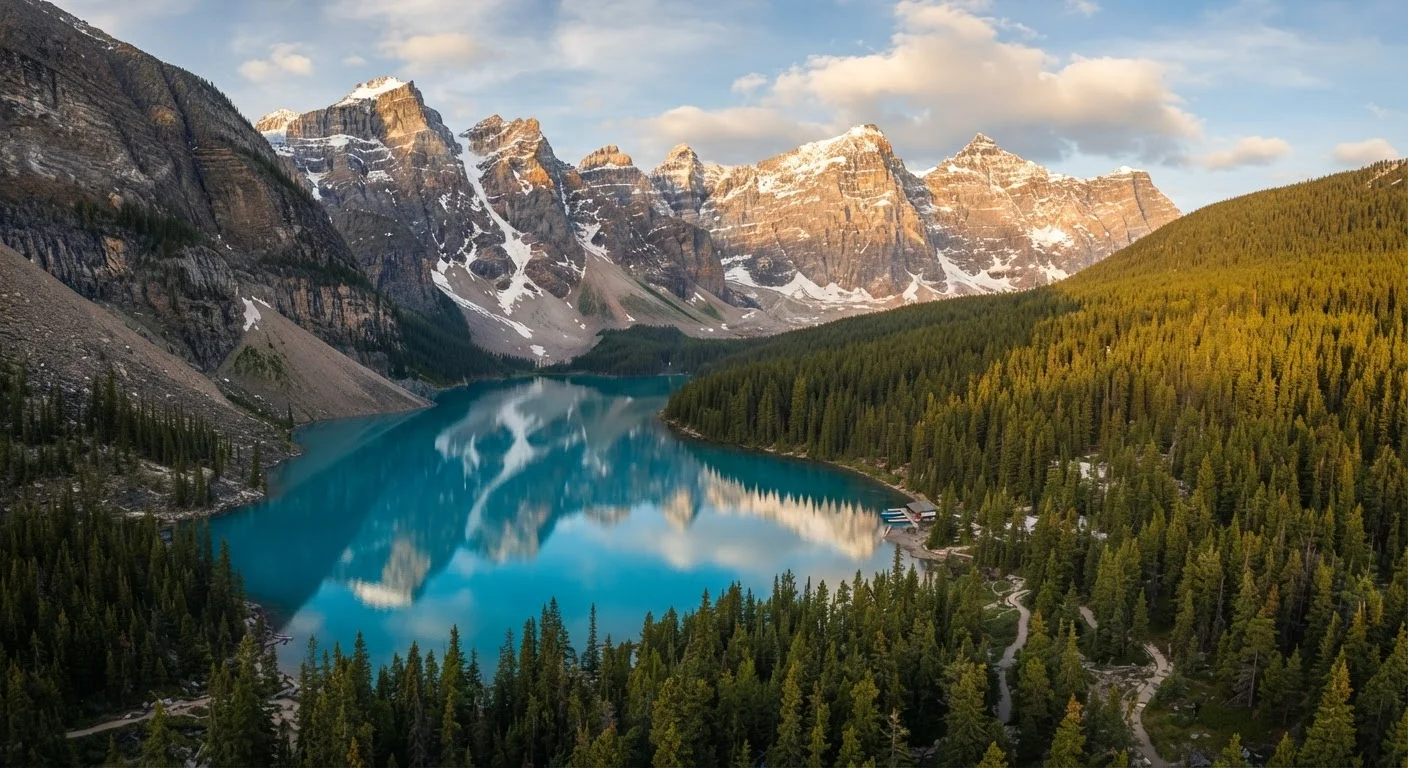
Overview: What the Canadian Rockies Actually Covers
The Canadian Rockies region centers on four UNESCO World Heritage national parks - Banff, Jasper, Yoho, and Kootenay - along with two British Columbia provincial parks, Mount Robson and Hamber. Together, these protected areas form one of the largest mountain park complexes in the world, covering approximately 20,000 square miles.
Most first-time visitors focus on Banff and Jasper, which are connected by the iconic Icefields Parkway (Highway 93), a roughly 143-mile route widely regarded as one of the most scenic drives in North America. Yoho and Kootenay parks are accessible from the Trans-Canada Highway and reward visitors who venture off the primary tourist corridor.
Before you finalize any travel plans, it's worth reviewing this national park planning checklist to ensure entry fees, reservations, and gear are sorted well in advance.
Seasons, Weather, and Timing
The Canadian Rockies have four distinct seasons, each offering a different experience and set of trade-offs.
- Summer (late June-August): Peak season. Most roads, trails, and visitor facilities are open. Expect crowds at popular sites like Lake Louise and the Columbia Icefield. Daytime highs typically range from the mid-50s to low 70s°F at valley elevations.
- Fall (September-October): Crowds thin noticeably after Labor Day. Larch trees turn golden in late September - a sought-after sight. Some higher-elevation facilities close by mid-October.
- Winter (November-April): Banff and Jasper remain open year-round with ski areas, ice walks, and frozen lake experiences. Road conditions can be severe, and some passes close seasonally. Carry chains or winter tires.
- Spring (May-early June): Snowmelt makes lower trails accessible, but high-elevation routes may remain snow-covered through June. Wildlife is frequently spotted during this period.
Altitude affects conditions significantly. Even in July, temperatures at higher elevations can drop sharply, and afternoon thunderstorms are common. Layering is essential regardless of the season you visit.
Park Fees and Entry Requirements
Canada's national parks require a valid Parks Canada discovery pass for all visitors age 18 and older. As of the most recent published fee schedules, a daily adult pass covers entry to Banff, Jasper, Yoho, and Kootenay. An annual discovery pass covers all Parks Canada locations and is worth considering for stays of four or more days. Always verify current fees directly with Parks Canada before your trip, as rates are subject to change.
There are no visa requirements for U.S. citizens entering Canada for tourism, but a valid U.S. passport is required. Travelers arriving by air need an Electronic Travel Authorization (eTA), while those driving across the border do not. Entry rules can change; check official government sources close to your travel date.
Verify Entry and Border Requirements Ahead of Travel
Entry rules, eTA requirements, and customs regulations can change without notice. Always check the official Government of Canada and U.S. Customs and Border Protection websites before your trip. Do not rely solely on third-party travel sites for current border crossing information.
Wildlife, Safety, and Responsible Travel
The Canadian Rockies are home to grizzly and black bears, elk, wolves, mountain goats, bighorn sheep, and moose. Wildlife encounters are a highlight of any visit, but they require serious caution.
- Carry bear spray and know how to use it - it is widely available at outfitters in Banff and Jasper townships.
- Parks Canada mandates a minimum distance of 30 meters (about 100 feet) from elk and bighorn sheep, and 100 meters (about 330 feet) from bears and wolves.
- Never feed wildlife. It is illegal within national parks and causes lasting harm to animals.
- On roads, animal jams (traffic stopped to view wildlife) are common. Pull completely off the road if stopping, and do not approach animals on foot.
4M+
Annual visitors to Banff National Park
Banff is among the most visited national parks in North America, according to Parks Canada visitation data.
100 m
Required distance from bears and wolves
Parks Canada mandates this minimum separation to protect both visitors and wildlife in all four mountain parks.
Trail register systems and self-registration at trailheads are in place for many backcountry routes. Camping in the backcountry requires a permit booked through Parks Canada's reservation system - availability is limited and fills quickly for summer dates.
Driving Distances and Getting Around
Personal vehicles remain the most practical way to explore the region. Key reference distances from Calgary International Airport, the primary gateway:
| Destination | Approximate Distance | Approximate Drive Time |
|---|---|---|
| Banff townsite | 80 miles | 1.5 hours |
| Lake Louise | 115 miles | 2 hours |
| Columbia Icefield | 195 miles | 3.5 hours |
| Jasper townsite | 270 miles | 4.5 hours |
Speed limits are posted in kilometers per hour throughout Canada. Wildlife crossing the highway is a genuine hazard, especially at dawn and dusk - drive attentively and within posted limits. Fuel up in Banff or Jasper before long stretches of the Icefields Parkway, as services along that route are sparse.
Shuttle services operate between Calgary, Banff, and Jasper for travelers who prefer not to drive. Within Banff National Park, a seasonal Parks Canada roam transit system connects key sites and can reduce parking congestion at popular trailheads.