

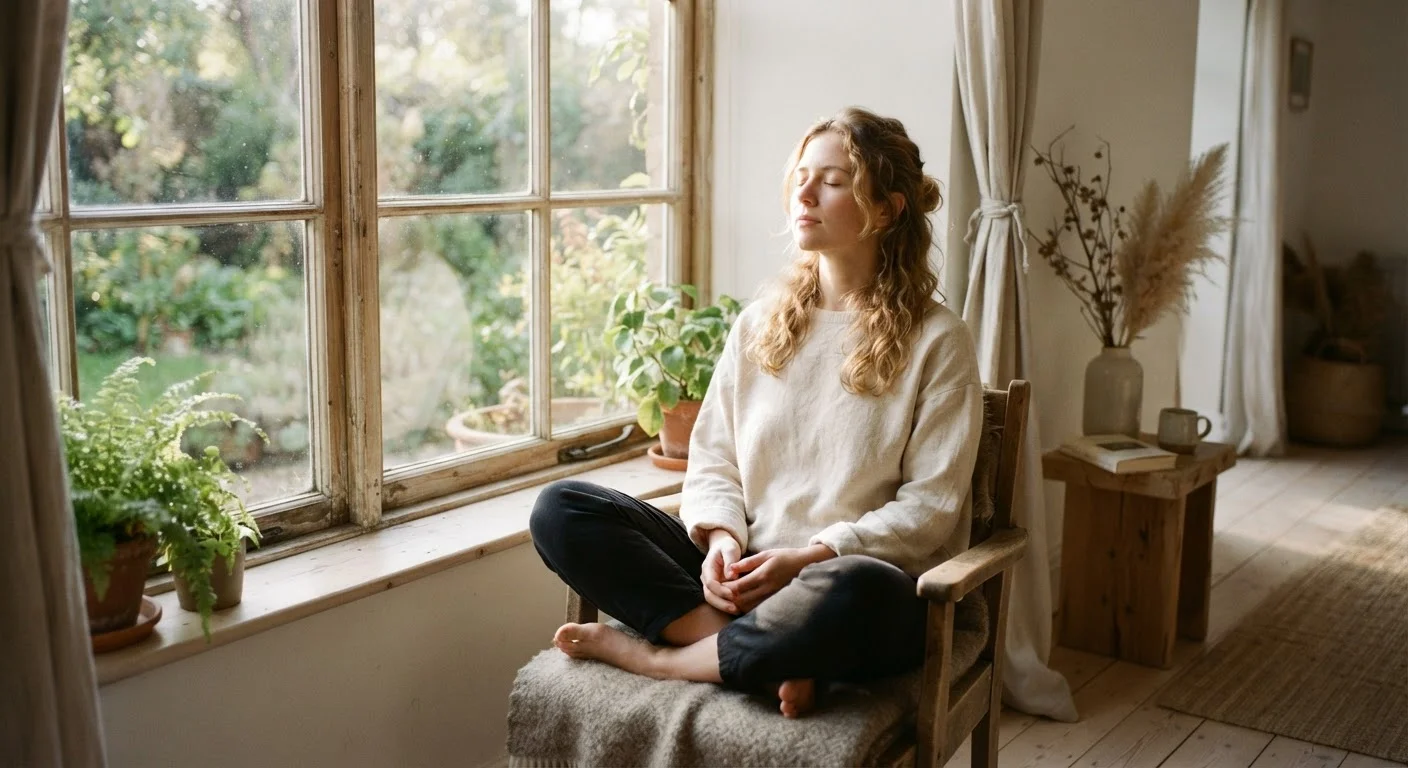
Key Takeaways
- Mindfulness is a mental quality - the ability to be fully present and aware in any moment.
- Meditation is a formal practice - a set of techniques done deliberately, usually in a dedicated session.
- All meditation can involve mindfulness, but mindfulness doesn't require meditation.
- Both approaches are backed by a growing body of research supporting stress reduction and emotional well-being.
- You don't have to choose - many people benefit from combining both in their daily routine.
Option A
Mindfulness
An everyday quality of attention you can cultivate anywhere.
Best for: People who want to reduce stress and stay present throughout daily life without setting aside dedicated practice time.
Option B
Meditation
A structured practice used to train the mind over time.
Best for: People who want a consistent, deliberate method for building focus, emotional resilience, and self-awareness.
If you want to manage stress throughout a busy day
Mindfulness
Mindfulness can be practiced anywhere - while commuting, eating, or working - making it easier to integrate into an already full schedule.
If you want to build a consistent mental wellness habit
Meditation
A regular meditation practice provides structure and cumulative benefits that develop over time with dedicated, intentional sessions.
If you're new to mental wellness practices
Mindfulness
Starting with simple mindful awareness - like paying full attention to a single task - requires no equipment, training, or set-aside time.
If you're looking to deepen focus or emotional regulation
Meditation
Specific meditation techniques, such as focused-attention or loving-kindness practices, are particularly well-studied for building these skills over time.
Two Words, Two Different Things
Walk into any wellness conversation and you'll hear mindfulness and meditation used as though they mean the same thing. They don't - and the distinction is actually pretty useful once you understand it.
Mindfulness is a quality of attention. It describes the state of being fully aware of what's happening right now - your thoughts, feelings, and surroundings - without judging or reacting automatically. You can be mindful while washing dishes, walking to your car, or listening to a colleague. It's not a technique; it's an orientation.
Meditation, on the other hand, is a practice - something you do deliberately, usually by setting aside time and following a structured method. There are many forms: focused-attention meditation (anchoring awareness on the breath), open-monitoring meditation (observing thoughts without engaging them), and loving-kindness meditation, among others. Most forms of meditation involve mindfulness, but meditation itself is the vehicle, not the destination.
A helpful analogy: mindfulness is like physical fitness - a quality you develop - while meditation is like going to the gym - the specific activity that helps you build it. For more context on how similar-sounding wellness terms can diverge meaningfully, see our exploration of how these practices serve different purposes.
| Criterion | Mindfulness | Meditation |
|---|---|---|
| What it is | A quality of awareness | A structured practice or technique |
| When it happens | Anytime, during any activity | During a dedicated session |
| Time required | No set time - integrated into daily life | Typically 5-45 minutes per session |
| Learning curve | Accessible with no instruction | Benefits from guidance or instruction |
| Relationship to the other | Can exist without meditation | Usually involves mindfulness |
| Research support | Growing evidence for stress reduction | Robust body of peer-reviewed studies |
What the Research Actually Shows
Both mindfulness and meditation have attracted serious scientific attention over the past few decades, and the evidence - while still evolving - is genuinely encouraging.
38%
U.S. adults who've tried meditation
According to a 2017 National Health Interview Survey, roughly 14% of U.S. adults reported meditating - a figure that has grown substantially in surveys conducted since.
8 weeks
Typical MBSR program length
Mindfulness-Based Stress Reduction, one of the most studied mindfulness programs, is structured as an eight-week course developed at the University of Massachusetts Medical School.
~10 min
Minimum daily practice showing measurable effects
Several studies suggest that even brief daily meditation sessions of around ten minutes can produce measurable improvements in attention and stress perception over several weeks.
Research published in peer-reviewed journals has linked regular mindfulness practice to reductions in perceived stress and improvements in emotional regulation. Meditation, particularly mindfulness-based programs like Mindfulness-Based Stress Reduction (MBSR), has been studied in clinical settings for conditions ranging from anxiety to chronic pain - though it's worth noting that study quality varies and effects differ between individuals.
Importantly, neither mindfulness nor meditation is a substitute for professional mental health care. If you're managing a significant mental health concern, these practices may be useful complements - but please speak with a qualified healthcare provider about what's appropriate for your situation. Our overview of therapy, counseling, and psychiatry can help you understand those professional options.
It's also worth separating evidence-backed practice from wellness-industry hype. Apps, courses, and retreats vary enormously in quality and approach. The core practices themselves - sitting quietly, paying attention, noticing thoughts without clinging to them - are essentially free and accessible to anyone.
Mindfulness Is Not One-Size-Fits-All
While mindfulness practices are broadly accessible, they aren't universally suitable for every individual or situation. Some people with trauma histories or certain mental health conditions may find specific practices uncomfortable or counterproductive. If you notice increased distress when attempting mindfulness or meditation, that's worth discussing with a qualified mental health professional rather than pushing through on your own.
How to Actually Use Both
You don't have to pick one. In practice, many people find that a short daily meditation session sharpens their ability to stay mindful throughout the rest of the day - the two reinforce each other naturally.
If you're starting out, informal mindfulness is the lowest-barrier entry point. Pick one routine activity - your morning coffee, a brief walk, brushing your teeth - and give it your full, unhurried attention. Notice sensations, smells, sounds. When your mind wanders (it will), gently bring it back. That's the practice.
For formal meditation, even five to ten minutes of sitting quietly with attention on your breath can be a meaningful starting point. Consistency matters more than duration. The goal isn't to empty your mind - that's a common misconception - but to notice when attention drifts and redirect it, repeatedly. Over time, that redirection becomes easier.
Both practices also complement broader physical wellness habits. Just as flexibility and mobility serve different but related functions in a fitness routine, mindfulness and meditation support each other in a balanced approach to mental well-being.
This article is for general informational purposes only and is not a substitute for professional medical or mental health advice. If you have concerns about your mental health, please consult a qualified healthcare professional.