

Key Takeaways
- The skin barrier is a physical and chemical structure that keeps moisture in and irritants out.
- Over-cleansing, harsh actives, and skipping moisturizer are among the most common ways to damage it.
- A compromised barrier often looks like persistent dryness, redness, or unexpected sensitivity.
- Barrier repair focuses on simple, consistent habits - not more products.
- Ingredients like ceramides and gentle humectants support barrier function without overwhelming the skin.
Skin Barrier
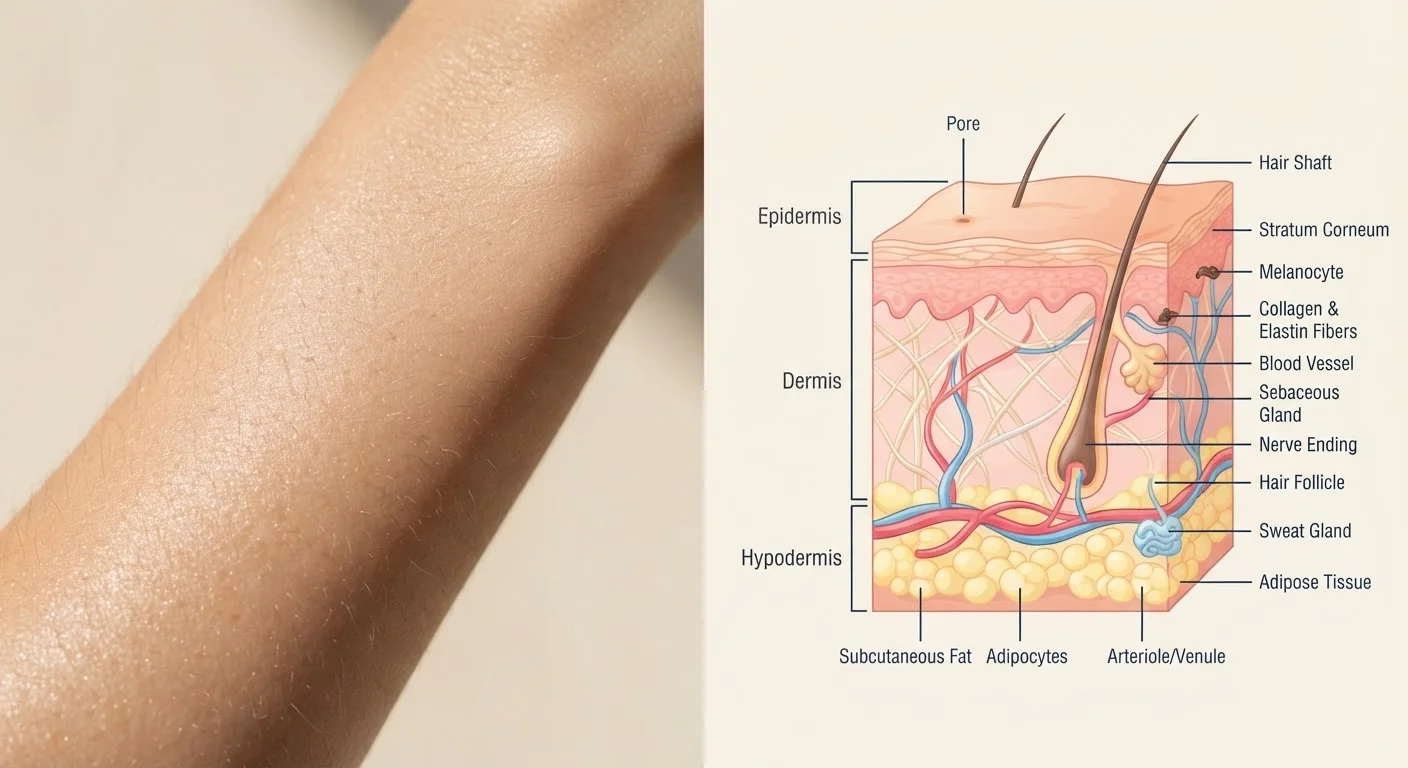
The skin barrier - formally called the stratum corneum - is the outermost layer of your skin. Think of it as a protective wall made up of skin cells (the "bricks") held together by lipids like ceramides, fatty acids, and cholesterol (the "mortar"). Its job is to keep moisture in and irritants, bacteria, and environmental stressors out. When it's working well, your skin feels comfortable, looks balanced, and holds up against daily wear. When it's compromised, you may notice dryness, redness, flaking, sensitivity, or breakouts.
In dermatology, the skin barrier is also described in terms of its acid mantle - a slightly acidic pH (around 4.5-5.5) that helps regulate microbial balance and enzyme activity critical to barrier repair.
Why the Skin Barrier Is the Whole Foundation
Skin care conversations tend to orbit serums, active ingredients, and trending routines - but the most important thing your skin does happens quietly at its surface. The skin barrier is less a glamorous concept and more a biological workhorse. Without it functioning properly, no serum in your cabinet can do its best work.
The barrier operates on two levels: structural and chemical. Structurally, dead skin cells are layered and bound together by lipids - primarily ceramides, free fatty acids, and cholesterol - in a tightly organized arrangement. Chemically, the skin's slightly acidic pH (the so-called acid mantle) helps regulate the microbiome and keeps harmful microorganisms from taking hold. Disrupt either layer and the system starts leaking - moisture escapes, irritants enter, and inflammation follows.
This is why skin that feels perpetually dry, reactive, or "angry" often isn't a product problem. It's frequently a barrier problem. And understanding that distinction changes how you approach your routine.
The Most Common Ways People Damage Their Barrier Without Realizing It
Barrier damage usually isn't dramatic. It accumulates gradually through everyday habits that seem reasonable on the surface.
~4.5-5.5
Ideal skin surface pH range
Research published in dermatology literature consistently identifies this slightly acidic range as optimal for barrier enzyme function and microbial balance.
30-40%
Ceramide content of the lipid barrier
Ceramides make up an estimated 30-40% of the lipid matrix in the stratum corneum, according to dermatological research on barrier composition.
2-4 weeks
Typical mild barrier recovery window
General dermatology guidance suggests mild barrier disruption often improves within this timeframe with consistent, gentle care - though individual results vary.
- Over-cleansing or using harsh cleansers: Surfactants strip natural lipids along with dirt and oil. Cleansing more than twice daily - or using a cleanser that leaves skin feeling "squeaky clean" - is one of the most reliable ways to degrade barrier function over time.
- Layering too many active ingredients: Exfoliating acids (AHAs, BHAs), retinoids, and high-concentration vitamin C are all genuinely useful tools. Used together without acclimation, or too frequently, they can thin the outer layers faster than the skin can rebuild them.
- Skipping moisturizer on oily skin: Oily skin still needs moisture. Skipping it can disrupt the lipid layer and paradoxically trigger more oil production as the skin tries to compensate.
- Hot water and long showers: Heat and prolonged water exposure dissolve surface lipids. Lukewarm water and shorter shower times are friendlier to barrier integrity.
- Environmental exposure without protection: UV radiation, pollution, and low-humidity environments all stress the barrier continuously. Sunscreen isn't just an anti-aging step - it's a barrier protection measure.
What a Healthy Barrier Actually Feels Like
Healthy barrier function doesn't necessarily mean perfect skin. It means skin that holds up. You can apply products without stinging. Moisture levels feel relatively stable through the day. Skin doesn't feel tight after washing. Minor environmental changes - a flight, a cold snap, a new product - don't immediately trigger visible inflammation.
By contrast, a compromised barrier tends to feel reactive. Products that used to work fine suddenly sting or cause redness. Skin feels dry even right after moisturizing. Flaking and rough patches appear without obvious cause. Breakouts may become more frequent because the barrier's ability to control surface bacteria is reduced.
Recognizing this pattern is useful because it shifts the instinct away from adding more products and toward simplifying - which is usually exactly what a stressed barrier needs.
Barrier Health Looks Different on Different Skin
There is no single "correct" appearance for a healthy skin barrier. Drier skin types naturally lose more water through the surface (a process called transepidermal water loss, or TEWL) even when the barrier is intact. Similarly, people with certain conditions like eczema or rosacea may have structurally different barriers that require ongoing management rather than a one-time fix. A dermatologist can help distinguish normal variation from barrier dysfunction that warrants treatment.
How to Support Barrier Repair Through Your Routine
Barrier recovery doesn't require a complete overhaul or a new product haul. In most cases, it calls for doing less and doing it consistently. Here's what the evidence generally supports:
- Simplify your cleanser: Gentle, low-surfactant, fragrance-free formulas are less disruptive. Cleanse once or twice daily - not more.
- Prioritize barrier-supporting ingredients: Ceramides, glycerin, hyaluronic acid, and squalane are well-studied humectants and lipid replenishers. They help restore what the barrier needs without adding irritation risk.
- Use occlusives strategically: Ingredients like petrolatum or shea butter help seal in moisture while the barrier recovers. See our overview of oils and occlusives for a grounded look at what they offer.
- Give actives a break: If your skin is irritated, pausing exfoliants and retinoids for one to two weeks can give the barrier room to recover before reintroduction.
- Wear sunscreen daily: UV damage is cumulative and directly undermines barrier repair. A broad-spectrum SPF is non-negotiable for maintaining what you're building.
When you're ready to build these habits into a structured morning routine, our practical morning routine guide walks through each step in order. And if you want to assess how your current habits stack up week to week, the weekly skin and hair care audit is a useful check-in tool.
This article is for general informational purposes only and does not constitute medical or dermatological advice. If you have persistent skin concerns, consult a licensed dermatologist or qualified health professional.