

Key Takeaways
- Hardwired detectors interconnect so every alarm sounds throughout the home when one detects smoke.
- Battery-powered detectors require no electrical work and can be installed anywhere without a permit.
- Most hardwired units still include a battery backup to function during power outages.
- Sealed lithium battery detectors can last up to 10 years without a battery replacement.
- Local building codes often require hardwired interconnected alarms in new construction.
- Both types meet UL standards when properly installed and maintained - neither is inherently unsafe.
Option A
Hardwired Smoke Detectors
The permanently integrated, interconnected home safety standard.
Best for: Homeowners in new construction or full renovations who want interconnected alarms with battery backup and minimal ongoing maintenance.
Option B
Battery-Powered Smoke Detectors
The flexible, self-contained option for any room or budget.
Best for: Renters, homeowners in older homes, or anyone needing a quick, code-compliant install without running new electrical wiring.
If you're building or fully renovating a home
Hardwired Smoke Detectors
New construction typically requires hardwired interconnected alarms by code, and running wiring during a build is far simpler than retrofitting later.
If you're renting or in a home without existing detector wiring
Battery-Powered Smoke Detectors
No electrical work is needed, installation takes minutes, and modern sealed-battery models last a decade without replacements.
If you want whole-home alarm coverage from any room
Hardwired Smoke Detectors
Interconnected hardwired systems trigger every detector in the home simultaneously, giving occupants maximum warning time regardless of where the fire starts.
If you want the simplest possible maintenance routine
Battery-Powered Smoke Detectors
10-year sealed lithium battery models eliminate the twice-yearly battery swap and alert you with a chirp when the unit reaches end of life.
How Each Type Works
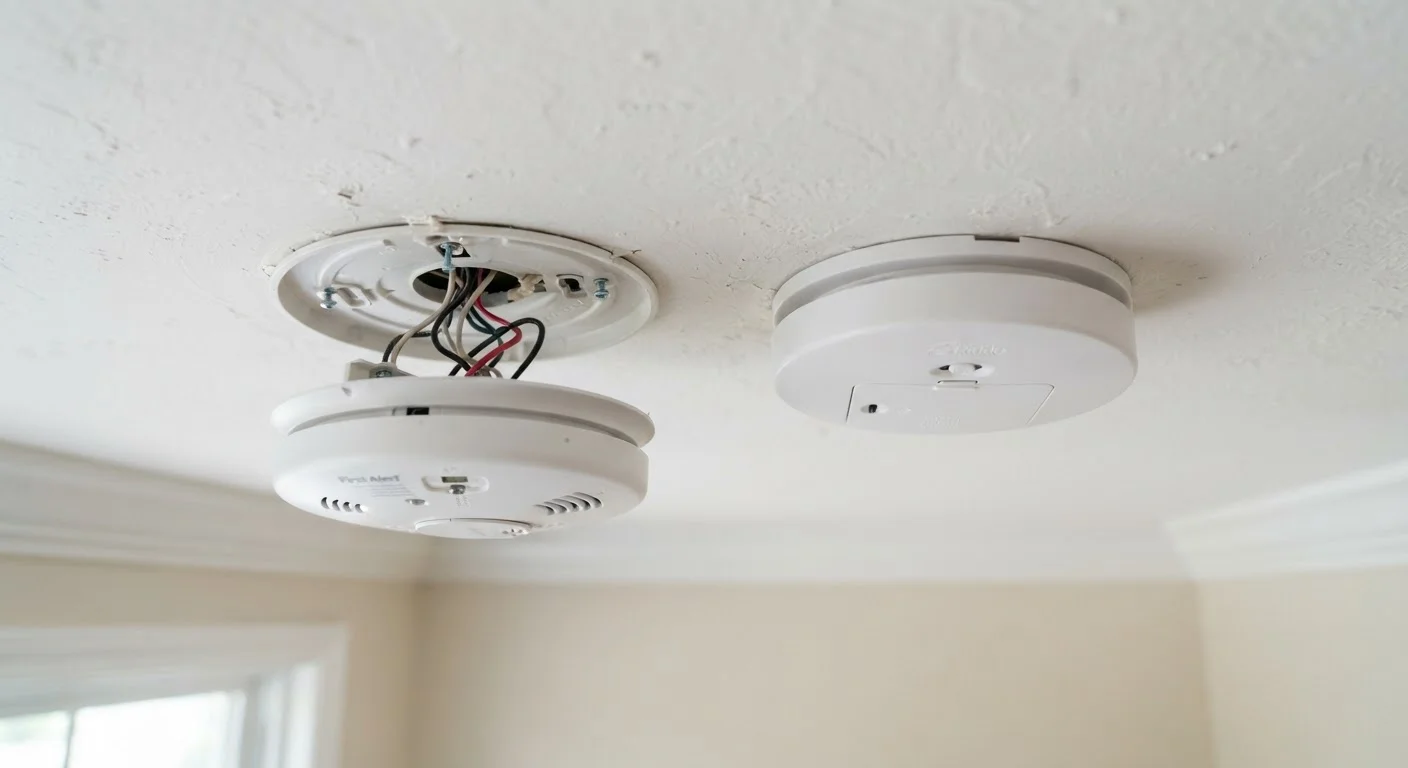
Hardwired smoke detectors connect directly to your home's electrical system, typically on a dedicated circuit. They draw continuous power from the wiring and communicate with other detectors over the same circuit - meaning when one alarm triggers, every interconnected detector in the house sounds simultaneously. A backup battery (usually a 9-volt or AA) keeps them active during power outages.
Battery-powered detectors are entirely self-contained. They rely solely on replaceable or sealed batteries and operate independently of each other. Standard models use replaceable 9-volt or AA batteries, while sealed units use a built-in 10-year lithium pack that cannot be swapped out - you replace the entire detector when the battery dies.
| Criterion | Hardwired | Battery-Powered |
|---|---|---|
| Power Source | Home electrical + battery backup | Replaceable or sealed battery only |
| Interconnection | Built-in via wiring | Wireless (select models) or none |
| Installation Complexity | Requires licensed electrician | DIY with screwdriver |
| Permit Often Required | Yes, in many jurisdictions | Rarely |
| Battery Maintenance | Annual backup battery swap | Annual or every 10 years (sealed) |
| Outage Protection | Yes, via backup battery | Yes, battery is primary power |
| Typical Code Requirement | Required in new construction | Accepted in existing homes |
| Upfront Cost | Higher (unit + labor) | Lower (unit only) |
Installation Requirements and Costs
Installing hardwired detectors involves running electrical cable to each unit and connecting it to a circuit breaker - work that typically requires a licensed electrician in most jurisdictions. Permits may be required depending on your local building code. In new construction, this cost is folded into the overall build; in existing homes, retrofitting can range from straightforward to invasive depending on wall and ceiling access.
Battery-powered detectors need only a screwdriver and a mounting bracket. There are no permits, no trades, and no circuit requirements. This makes them the practical choice for renters, older homes with plaster ceilings, or homeowners who need immediate coverage in a room not served by existing wiring.
Check Your Local Building Code First
Smoke detector requirements vary by state and municipality. Some jurisdictions mandate hardwired interconnected alarms even in existing homes when renovations exceed a certain scope. Before purchasing or installing any detector, verify current requirements with your local building or fire department - codes are updated periodically, and compliance protects both your safety and your homeowner's insurance standing.
When budgeting, factor in replacement intervals: standard battery detectors need new batteries at least annually, while sealed 10-year models and hardwired units with backup batteries reduce that maintenance burden considerably.
Reliability, Interconnection, and Safety Standards
The most meaningful safety advantage of hardwired systems is interconnection. According to the National Fire Protection Association (NFPA), many home fire deaths occur at night or in rooms distant from where the fire starts. An interconnected system ensures the alarm in a sleeping bedroom sounds even if the fire originates in the basement - something standalone battery units cannot do unless they are wirelessly linked.
Some battery-powered detectors now offer wireless interconnection, where radio signals allow multiple units to communicate without wiring. This bridges much of the gap, though it depends on reliable battery power in every unit simultaneously.
3 of 5
Home fire deaths with no working smoke alarm
The NFPA reports that roughly three of every five home fire deaths occur in properties with no smoke alarms or non-functioning alarms.
10 years
Maximum recommended smoke detector lifespan
The NFPA recommends replacing all smoke detectors - hardwired or battery-powered - after 10 years from the manufacture date printed on the unit.
Both hardwired and battery-powered detectors sold in the U.S. are tested against the same UL 217 standard. Neither type is inherently less safe - proper placement, regular testing, and timely replacement matter far more than the power source.
Making the Right Choice for Your Home
The decision often comes down to two factors: your home's construction and your long-term commitment to maintenance. If you're in a newer home that already has hardwired detectors, maintain and replace them in kind - they're there for good reason. If you're adding coverage to a finished basement, a garage, or a rented apartment, a quality battery-powered unit is entirely appropriate and code-compliant in most scenarios.
Whatever type you choose, the NFPA recommends placing detectors inside every bedroom, outside each sleeping area, and on every level of the home including the basement. Test every detector monthly, replace any unit that is 10 years or older, and never disable a detector because of nuisance alarms - address the cause instead. Consult your local fire marshal's office or building department if you're uncertain which type your jurisdiction requires for your specific situation.