

Key Takeaways
- Prolonged sitting is linked to increased health risks even among people who exercise regularly.
- Breaking up sedentary time with brief movement throughout the day is as important as dedicated workouts.
- A sustainable weekly routine combines structured exercise with built-in micro-movement habits.
- Most adults can meet movement guidelines with modest, consistent effort rather than intense daily sessions.
- Posture, stress, and sleep are all meaningfully improved by regular physical movement.
What you will need
Why Desk Workers Face a Distinct Movement Challenge
A sedentary job doesn't simply mean you're less active - it actively works against the body's need for regular positional change and muscular engagement. Extended sitting compresses the lumbar spine, tightens the hip flexors, and reduces circulation to the lower limbs. Over time, these mechanical stresses accumulate into discomfort and, without intervention, can contribute to longer-term musculoskeletal problems.
What makes this particularly challenging is that regular gym sessions don't fully offset the damage of sitting for eight or more hours. Research published in leading public health journals has found that prolonged unbroken sitting is associated with elevated metabolic and cardiovascular risk factors, even among people who meet weekly exercise guidelines. The goal, therefore, is twofold: add structured exercise and break up sedentary time throughout the day.
Understanding this distinction - between total weekly movement and moment-to-moment movement behavior - is the foundation for building a routine that actually improves your health rather than just checking a box. For a broader picture of how daily habits shape your body, the everyday habits that quietly undermine your posture article is worth reviewing alongside this guide.
This Is General Information, Not Medical Advice
The guidance in this article is intended for general educational purposes. Before starting a new exercise routine, especially if you have a chronic condition, injury, or health concern, consult a qualified healthcare professional. Do not use this content to self-diagnose or replace personalized medical care.
What You'll Need Before You Start
No gym membership is required to build an effective movement routine around a desk job. The essentials are minimal:
What you will need
Timer or phone alarm
Set recurring reminders every 45-60 minutes to prompt short movement breaks during the workday.
Resistance bands
Enable simple desk-side strength exercises like seated rows or standing hip work without gym equipment.
Comfortable walking shoes
Support lunchtime or post-work walks - a practical, accessible form of moderate-intensity activity.
Calendar or planner
Schedule dedicated movement sessions as calendar blocks to protect them from being displaced by work tasks.
Your Step-by-Step Weekly Movement Plan
Follow these steps to design and lock in a routine that realistically fits a desk-based schedule. The approach is progressive - start where you are, not where you think you should be.
Audit your current sitting time honestly
Before designing a routine, track how many hours you actually spend sitting on a typical weekday. Count commuting, desk time, meals, and evening screen time. Many office workers accumulate 10 or more hours of total sedentary time daily. Knowing your baseline makes your targets realistic rather than aspirational.
Set a micro-movement break schedule
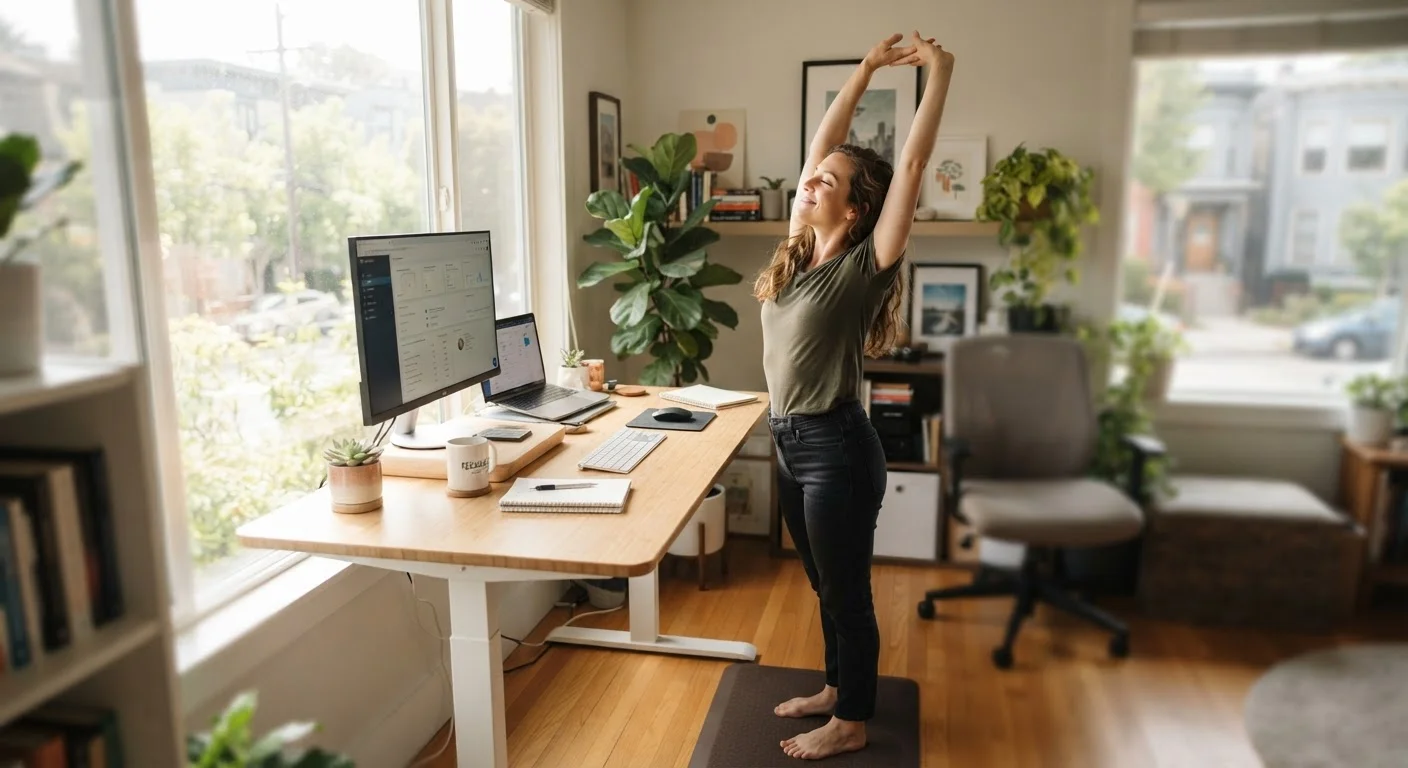
Research consistently shows that breaking up prolonged sitting - even briefly - helps counter some of its negative metabolic effects. Set a timer to go off every 45 to 60 minutes during your workday. When it fires, stand up, walk to another room, do a few standing stretches, or take a short walk. Aim for at least 2-3 minutes of movement each time.
Build structured aerobic sessions into your week
The U.S. Department of Health and Human Services recommends that most adults aim for at least 150 minutes of moderate-intensity aerobic activity per week. For desk workers, breaking this into five 30-minute sessions is practical. Brisk walking, cycling, swimming, or light jogging all qualify. Schedule these sessions as non-negotiable calendar blocks - treat them like meetings.
Add two strength-training sessions per week
Muscle-strengthening activity on two or more days per week is also recommended for adults. Desk work often leads to weakened glutes, tight hip flexors, and upper-back strain. Bodyweight exercises - squats, glute bridges, push-ups, and rows - directly address these imbalances. Sessions don't need to exceed 30 minutes to be effective. See how common desk habits affect your posture for context on which muscle groups are most affected.
Incorporate intentional movement into commute and errands
Opportunity movement - taking stairs, parking further away, walking to a colleague's desk instead of messaging - adds meaningful volume over a week without requiring extra scheduled time. If your commute allows, consider a partial walk or bike leg. These small decisions compound across weeks and months into a substantially more active lifestyle.
Wind down and recover intentionally
Movement routines fail when recovery is ignored. Build in at least one full rest or gentle-activity day per week. Gentle stretching, yoga, or a leisurely walk on recovery days maintains mobility without overloading the body. Pairing your routine with a consistent evening wind-down supports the sleep quality that physical recovery depends on - see how to build an evening wind-down routine for practical guidance.
Review and adjust weekly
At the end of each week, briefly evaluate what worked and what didn't. Did you complete your scheduled sessions? Were your micro-breaks consistent? A quick self-check helps you catch drift early. Incorporate this into a broader weekly wellness review - the weekly wellness reset checklist is a useful companion tool for this habit.
Pair Movement With Existing Habits
Attaching movement to something you already do - like standing during phone calls or walking after lunch - dramatically increases follow-through. Habit stacking reduces the mental effort of building a new routine from scratch.
Staying Consistent Over the Long Term
The most common reason movement routines collapse is that they were designed for an ideal week rather than a real one. Build flexibility deliberately: know in advance which sessions you can shorten when work is heavy, and which micro-habits are non-negotiable minimums even on the busiest days.
Stress and physical movement are tightly connected. When stress rises, physical activity often drops - yet it's one of the most effective tools for managing stress. Building movement into your stress-management strategy, rather than treating it separately, makes both more resilient. The guide to building a stress-management routine that sticks explores this connection in more depth.
Consistency over months, not perfection in any single week, is what drives lasting change. Track trends rather than individual days, and treat setbacks as data rather than failures.
This article is for general informational and educational purposes only and does not constitute medical advice. Always consult a qualified healthcare professional before beginning a new exercise program, particularly if you have any underlying health conditions or physical limitations.