

Key Takeaways
- The glycemic index ranks foods on a scale of 0-100 based on how quickly they spike blood sugar.
- Low-GI foods (55 or below) include most legumes, non-starchy vegetables, and many whole grains.
- GI alone doesn't capture the full picture - portion size and food combinations also matter significantly.
- Glycemic load (GL) is a more practical measure that accounts for realistic serving sizes.
- People managing diabetes or blood sugar conditions should discuss dietary strategies with a healthcare provider.
Glycemic Index (GI)
The glycemic index is a numerical scale that ranks carbohydrate-containing foods by how quickly they raise blood sugar (glucose) levels after eating. Foods are scored from 0 to 100, with pure glucose as the reference point at 100. A higher score means blood sugar rises faster; a lower score means the rise is slower and more gradual.
GI values are measured under controlled laboratory conditions using a standard 50-gram portion of available carbohydrate, with responses averaged across a group of test subjects - so individual results can vary.
How the Glycemic Index Works
When you eat carbohydrates, your digestive system breaks them down into glucose, which enters the bloodstream. How quickly that happens depends on the type of carbohydrate, its fiber content, its structure, and how it's prepared. The glycemic index was developed in the early 1980s by researcher David Jenkins and colleagues at the University of Toronto as a way to quantify these differences.
Foods are placed into three tiers:
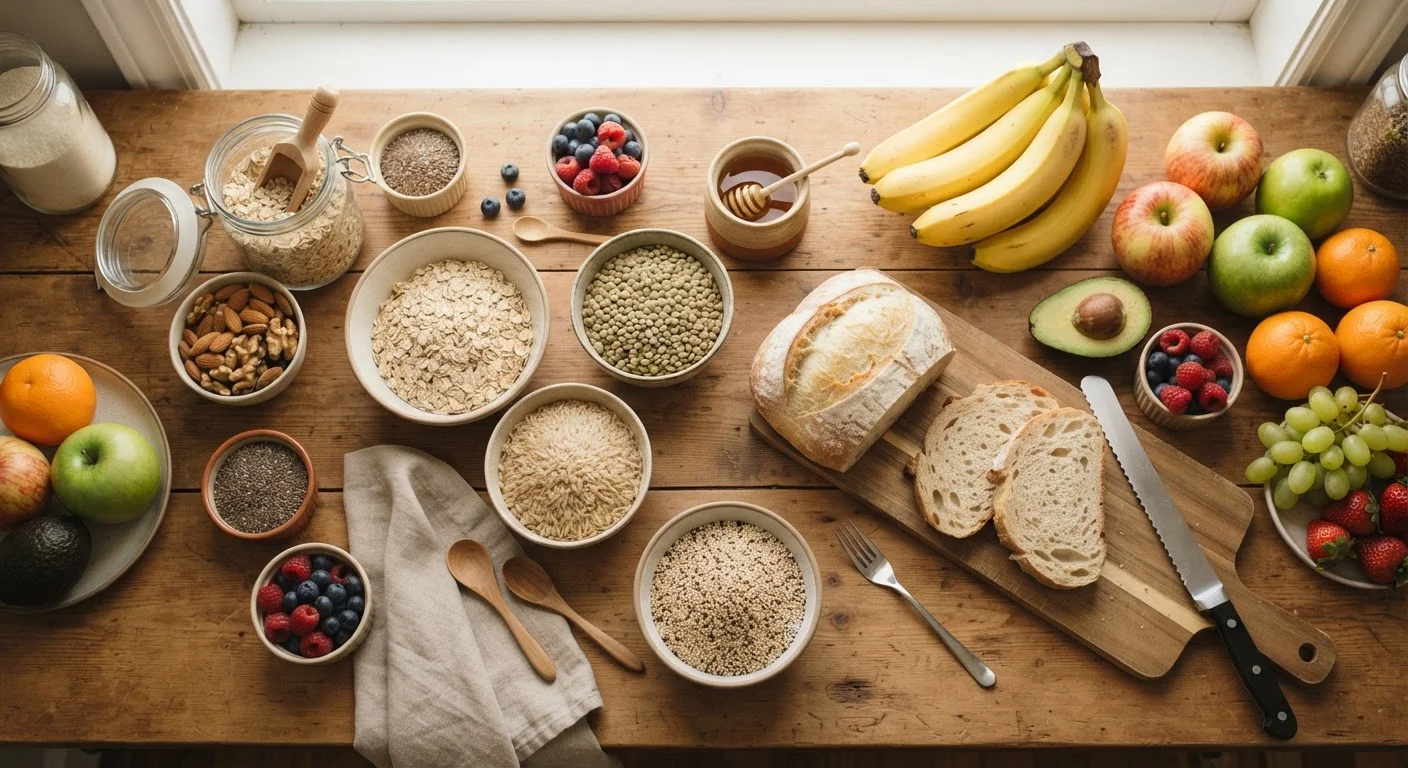
- Low GI (55 or below): Lentils, chickpeas, most non-starchy vegetables, steel-cut oats, whole-grain pasta
- Medium GI (56-69): Brown rice, whole wheat bread, sweet corn, ripe bananas
- High GI (70 and above): White bread, most breakfast cereals, white rice, baked potatoes, watermelon
A slower rise in blood sugar generally means a more gradual release of energy and a steadier insulin response - which is why low-GI foods are often highlighted in discussions of blood sugar management and metabolic health.
0-100
The glycemic index scoring scale
Pure glucose sets the benchmark at 100; all other carbohydrate foods are measured relative to this reference point.
55 or below
Threshold for a low-GI food
Foods in this range, such as lentils (GI ~32) and non-starchy vegetables, are commonly emphasized in blood sugar management guidance.
~40%
Variation in individual blood sugar response
Research published in Cell (Zeevi et al., 2015) found large inter-individual differences in blood sugar responses to identical foods, highlighting the limits of population-averaged GI scores.
Why GI Alone Has Real Limits
The glycemic index is a useful starting point, but it has well-recognized limitations that make it imperfect as a standalone dietary tool.
It ignores portion size. GI is measured against a fixed 50-gram carbohydrate portion - not necessarily the amount you'd actually eat. Watermelon scores high on the GI scale (around 72-80), but a typical serving contains so little carbohydrate that its real-world blood sugar impact is modest. This is where glycemic load (GL) becomes more informative. GL multiplies the GI by the actual grams of carbohydrate in a serving, then divides by 100.
Food combinations change the equation. Eating carbohydrates alongside fat, protein, or fiber significantly slows digestion and blunts the blood sugar response. A plain baked potato eaten alone behaves very differently in the body than the same potato eaten as part of a meal with vegetables and protein.
Individual responses vary. Research has found that two people eating the same food can have substantially different blood sugar responses, influenced by gut microbiome composition, metabolic health, stress levels, and sleep.
Use Glycemic Load for a Truer Picture
When evaluating a food's real-world blood sugar impact, glycemic load (GL) is more practical than GI alone. A GL of 10 or less is considered low, 11-19 medium, and 20 or above high. You can calculate it by multiplying a food's GI by its carbohydrate grams per serving, then dividing by 100. Many nutrition databases list GL values alongside GI.
When the Glycemic Index Is Worth Paying Attention To
For most healthy adults, obsessing over GI numbers isn't necessary. A balanced diet rich in whole grains, vegetables, legumes, and lean proteins naturally gravitates toward the lower end of the glycemic scale without requiring calorie-by-calorie tracking.
That said, understanding GI can be genuinely useful in certain contexts:
- Diabetes management: People with type 1 or type 2 diabetes may use GI as one tool - alongside carbohydrate counting and medication management - to help regulate blood sugar. This should always be done in coordination with a healthcare provider or registered dietitian.
- Sustained energy: Athletes and those who experience energy crashes after meals sometimes find that shifting toward lower-GI carbohydrate sources helps maintain more consistent energy levels throughout the day.
- General nutrition literacy: Understanding why whole grains and legumes behave differently than refined starches can help people make more informed everyday food choices.
The glycemic index is one useful lens among many. It works best when combined with a broader focus on overall dietary quality, portion awareness, and individual health goals. If you have a specific health condition that may be affected by blood sugar regulation, consult a registered dietitian or your healthcare provider for personalized guidance.
This article is for general informational and educational purposes only and is not a substitute for professional medical or nutritional advice. Always consult a qualified healthcare professional regarding your individual health needs.