

| Adults with a mental illness in the U.S. | Approximately 1 in 5 (SAMHSA National Survey on Drug Use and Health) |
| Median delay between symptom onset and treatment | 11 years (National Alliance on Mental Illness (NAMI)) |
| Most common mental health conditions | Anxiety disorders, depression (National Institute of Mental Health (NIMH)) |
| Mental health professionals in the U.S. | Psychologists, psychiatrists, licensed counselors, social workers, and therapists |
Why Mental Health Language Matters
Mental health vocabulary can feel like a foreign language - terms like affect dysregulation, hypervigilance, or somatic symptom appear in conversations with therapists, in news articles, and on social media, often without explanation. A working familiarity with these words doesn't replace professional care, but it does help you ask better questions, understand a diagnosis, and communicate more clearly with providers and loved ones.
This reference defines the mental health terms you're most likely to encounter - drawn from clinical practice, public health resources, and everyday conversations about well-being. For a broader look at how mental health professionals differ from one another, see our guide to therapy, counseling, and psychiatry. For foundational wellness vocabulary more broadly, Key Terms in Wellness Explained covers related concepts like parasympathetic response and circadian rhythm.
This Is General Information, Not Medical Advice
The definitions in this glossary are provided for educational purposes only. They are not diagnostic criteria and should not be used to self-diagnose or evaluate others. If you have concerns about your mental health or that of someone you care about, please consult a qualified mental health professional.
Core Mental Health Terms, Defined
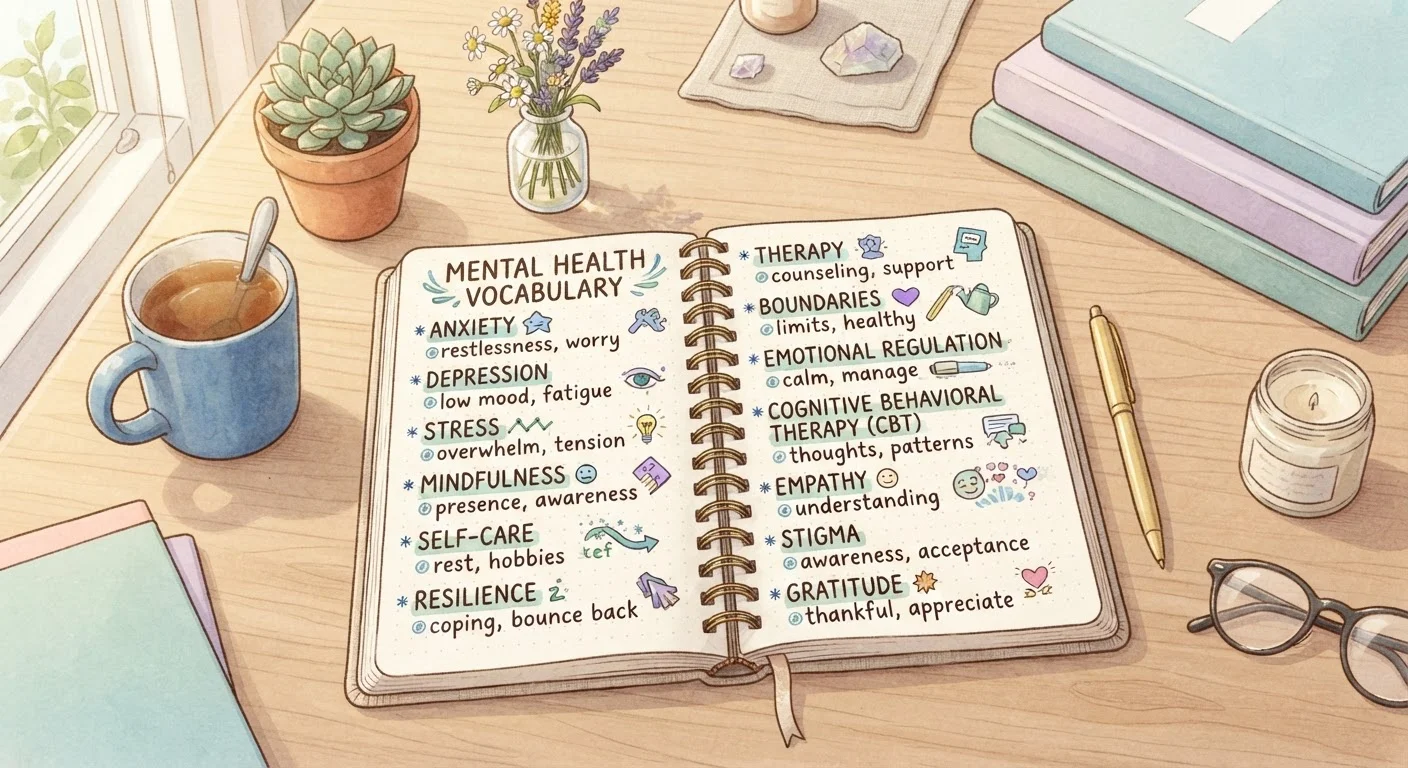
The glossary below covers terms that come up frequently - whether you're reading about a diagnosis, starting therapy, or simply trying to better understand what someone close to you is experiencing. Terms are grouped conceptually rather than alphabetically to make the relationships between ideas easier to follow.
Language in this field continues to evolve. Terms that were once clinical shorthand have entered everyday use - sometimes accurately, sometimes not. For example, trauma is frequently used colloquially to mean any upsetting experience, while clinically it refers to an event that overwhelms a person's ability to cope and may produce lasting psychological effects. Neither usage is wrong, but the difference matters in a clinical conversation.
Putting These Terms to Practical Use
Knowing mental health vocabulary improves the quality of conversations in a few specific ways:
- With a provider: Accurate language helps you describe what you're experiencing more precisely, which supports better assessment. If you feel detached from your surroundings, saying 'I sometimes feel like I'm watching myself from outside my body' is more useful than 'I feel weird.'
- With family or friends: Understanding terms like rumination or window of tolerance can reduce misunderstandings about behavior and responses during difficult periods.
- When reading health content: Knowing the difference between mood and affect, or psychosis and delusion, prevents misinterpretation of news articles, research summaries, or condition descriptions.
| Adults with a mental illness in the U.S. | Approximately 1 in 5 (SAMHSA National Survey on Drug Use and Health) |
| Median delay between symptom onset and treatment | 11 years (National Alliance on Mental Illness (NAMI)) |
| Most common mental health conditions | Anxiety disorders, depression (National Institute of Mental Health (NIMH)) |
| Mental health professionals in the U.S. | Psychologists, psychiatrists, licensed counselors, social workers, and therapists |
Mental health literacy - the ability to understand and act on mental health information - is associated with reduced stigma and earlier help-seeking. If you're exploring wellness habits that support mental health day-to-day, the Wellness Basics hub covers sleep, stress management, and other foundational practices.
This article is for informational and educational purposes only. It does not constitute medical or psychological advice. If you have concerns about your mental health, please speak with a qualified healthcare or mental health professional.