

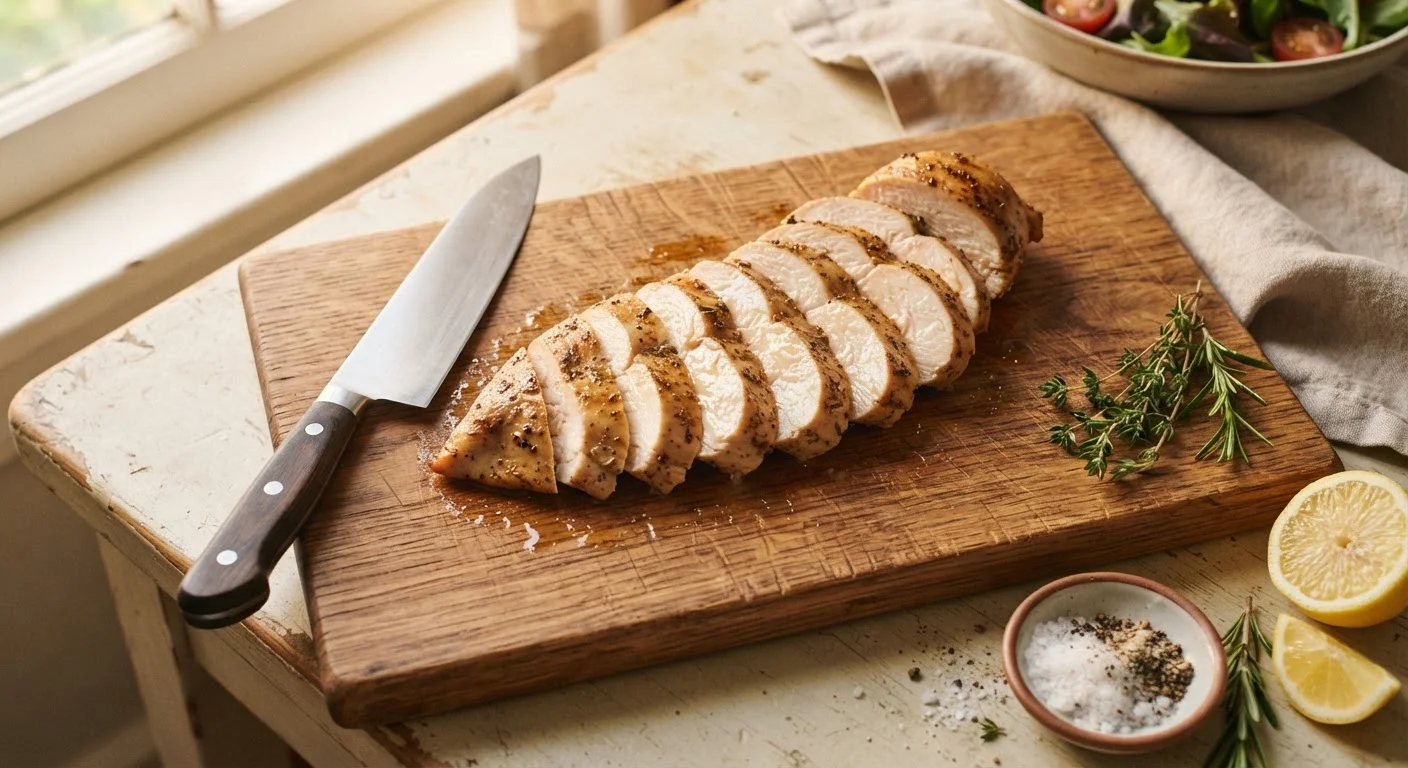
Key Takeaways
- Overcooking is the leading cause of dry chicken breast - internal temperature matters more than time.
- Skipping a brine or marinade leaves chicken breast without moisture protection during cooking.
- Uneven thickness causes parts of the breast to overcook before the rest is done.
- Cutting into chicken immediately after cooking releases juices that should redistribute first.
- High, uncontrolled heat without any moisture management strips lean breast meat of tenderness.
The Real Reason Chicken Breast Dries Out
Chicken breast is one of the most popular proteins in American kitchens - and one of the most frequently overcooked. Unlike thighs, which contain more fat and connective tissue to buffer against heat, breast meat is extremely lean. That means it has a very narrow window between perfectly cooked and unpleasantly dry.
The frustrating part is that most dry chicken isn't the result of some cooking mystery. It almost always comes down to a handful of predictable, repeatable mistakes - the kind that are easy to correct once you understand what's actually happening. If your chicken keeps coming out rubbery or flavorless, the fix is likely simpler than you think. You may also want to check out our piece on cooking myths that might be quietly sabotaging your food, since some bad chicken habits start with bad advice.
Cooking by time alone instead of checking internal temperature.
Why it happens: Many recipes list a cooking time, and home cooks trust it without accounting for differences in pan size, stove output, or breast thickness.
Skipping a brine or marinade before cooking.
Why it happens: Brining feels like an extra step that seems optional, especially on busy weeknights.
Not evening out the thickness of the breast before cooking.
Why it happens: Chicken breasts are naturally thicker at one end, a detail that's easy to overlook when you're in a hurry.
Cutting into the chicken right off the heat.
Why it happens: Hunger and habit make it tempting to slice immediately, but the juices haven't had a chance to redistribute through the meat.
Using heat that's too high for too long.
Why it happens: Cooks often assume more heat means faster, better results - and while initial high heat is useful for a sear, sustained high heat dries out lean meat quickly.
How to Course-Correct and Keep It Juicy
Making consistently moist chicken breast isn't about a secret trick - it's about stacking good habits. A quick brine (even 30 minutes in salted water) makes a measurable difference in moisture retention. Pounding or butterflying thick breasts before cooking removes the thickness problem entirely. A reliable instant-read thermometer removes the guesswork around doneness.
For pan cooking, searing over medium-high heat and then finishing in a 375°F oven gives you browning without the surface charring that traps steam and dries out the exterior. Always let the meat rest for at least five minutes before slicing - this step alone can rescue an otherwise borderline piece of chicken.
Don't Rely on Color to Judge Doneness
A chicken breast can look white and fully cooked on the outside while still being underdone in the center - or it can look perfectly golden while being dried out and overcooked throughout. Color is not a reliable safety or quality indicator. Always verify doneness with a calibrated food thermometer inserted into the thickest part of the breast.
The biggest mindset shift is treating chicken breast as a precision ingredient rather than a forgiving one. Once you calibrate your approach to its lean nature, dry chicken becomes the exception rather than the rule.