

Key Takeaways
- All 50 U.S. states have some form of graduated driver licensing (GDL) for teen drivers.
- GDL unfolds across three stages: learner's permit, intermediate license, and full license.
- Nighttime driving and passenger restrictions are the most common limitations at the intermediate stage.
- Teen crash risk drops significantly as supervised driving hours accumulate before full licensure.
- Parents play a critical role in reinforcing safe habits during the supervised practice phase.
Start here
What Is a Graduated Driver License?
Next
The Three Stages of GDL
Understand the reasoning
Why These Restrictions Exist
Practical guidance
What Parents and Teens Should Know
What Is a Graduated Driver License?
A Graduated Driver License (GDL) is a structured licensing system that introduces new teen drivers to the road in stages, each with progressively fewer restrictions. Rather than handing a 16-year-old a full license immediately, the GDL system builds driving experience in lower-risk conditions before granting unrestricted access.
All 50 U.S. states and the District of Columbia have adopted some form of GDL, though the specific rules - required hours, curfews, passenger limits - vary considerably from state to state. The overarching principle is consistent: earning the privilege to drive alone, at night, and with peers should be a gradual process tied to demonstrated competence and time behind the wheel.
Graduated Driver License (GDL)
A staged licensing system that restricts when and how teen drivers can operate a vehicle, progressively lifting limitations as they gain experience.
Learner's Permit
The first stage of GDL, allowing a teen to practice driving only when a licensed adult supervisor is present in the vehicle.
Intermediate (Provisional) License
The second GDL stage, permitting unsupervised driving but with restrictions such as nighttime curfews and limits on teen passengers.
Nighttime Curfew
A rule that prohibits an intermediate-license holder from driving during late-night hours without an adult present, targeting a high-risk driving period.
Supervised Driving Hours
The minimum number of hours a permit holder must practice with a licensed adult before becoming eligible for a road test and intermediate license.
The Three Stages of GDL
Nearly every state GDL program follows a three-stage framework:
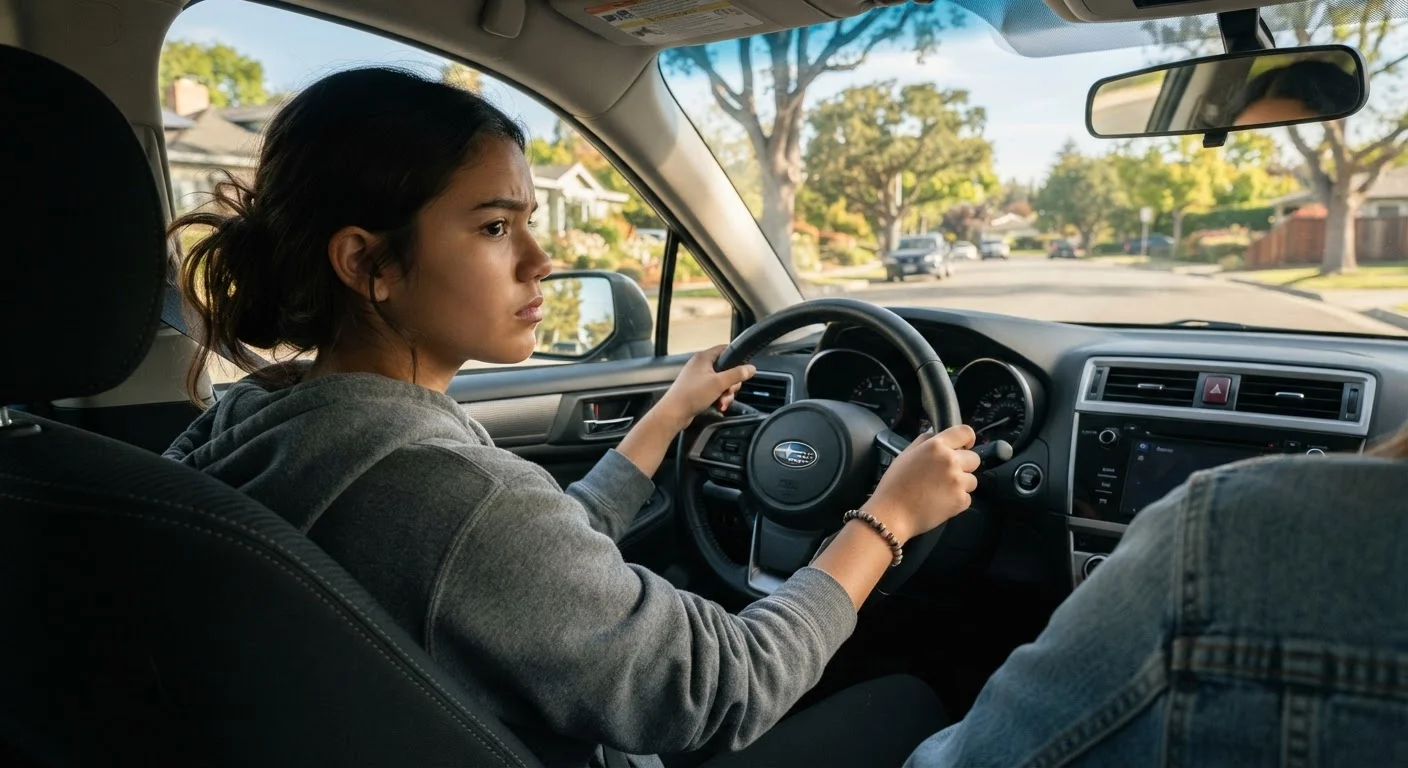
- Learner's Permit (Supervised Stage): A teen passes a written knowledge test and receives a permit that allows driving only with a licensed adult supervisor - usually age 21 or older - in the vehicle. Most states require holding the permit for at least six months and logging a set number of supervised hours before advancing. Permit holders face the fewest unsupervised situations, which is intentional.
- Intermediate (Provisional) License: After passing a behind-the-wheel road test, the teen may drive without supervision - but with restrictions. The two most universal restrictions are nighttime driving curfews (commonly no driving between 11 p.m. and 5 a.m. without an adult) and passenger limits (often no more than one non-family teen passenger for the first six to twelve months). These conditions target the highest-risk scenarios for new drivers.
- Full Unrestricted License: Once the teen has held an intermediate license for the required period - typically one to two years - and maintained a clean record, they graduate to a full license with no special conditions. The minimum age for this stage in most states is 17 or 18.
Log More Hours Than Required
State minimums for supervised practice hours represent the baseline - not the ideal. Aim to practice in varied conditions: wet roads, highway merging, busy intersections, and nighttime drives with a licensed adult. Teens who exceed the minimum consistently show better readiness for independent driving.
Why These Restrictions Exist
Motor vehicle crashes remain a leading cause of death among teenagers in the United States. Research consistently shows that crash risk is highest in a new driver's first months of independent driving - not because teens are inherently careless, but because driving requires a complex set of skills that only develop through deliberate, repeated experience.
Two risk factors stand out in the data. First, nighttime driving is objectively more demanding: reduced visibility, greater likelihood of encountering fatigued or impaired drivers, and less reference context for hazards. Second, carrying teenage passengers significantly increases distraction. Studies have found that crash risk rises with each additional teen passenger in the vehicle. GDL restrictions directly target both variables during the period when a driver's judgment is still developing.
Understanding the why behind these rules helps families treat them as safety tools rather than bureaucratic hurdles. For a broader look at the mindset that keeps drivers safe at any experience level, see our guide to defensive driving.
What Parents and Teens Should Know
The supervised practice phase is arguably the most important part of the entire GDL process. Meeting the minimum required hours is a floor, not a goal. Teens who log significantly more supervised hours - across a variety of conditions including rain, highway driving, and night practice with a parent present - arrive at the intermediate stage with measurably more confidence and competence.
Parents should approach supervised sessions as a deliberate coaching role, not just a passenger seat. Provide calm, specific feedback. Introduce challenging conditions gradually rather than avoiding them entirely. The goal is to expose the teen to real-world complexity while a safety net is still in place.
Teens should also understand that GDL restrictions carry real consequences when violated. Depending on the state, a restriction violation can result in fines, a delayed graduation to full licensure, or suspension. Treating the intermediate stage as a genuine stepping stone - not a waiting game - sets the foundation for a lifetime of safer driving.
GDL Rules Vary by State
Because licensing is regulated at the state level, the specific ages, curfew times, passenger limits, and required hours differ across the country. Always consult your state's official Department of Motor Vehicles (DMV) website for the accurate, current rules that apply to your teen. Requirements can also change when a teen moves to a different state.
As teens gain full driving privileges and potentially their own vehicle, new responsibilities come with it. Our article on what changes the moment you drive off the lot covers the practical side of early car ownership.