

Key Takeaways
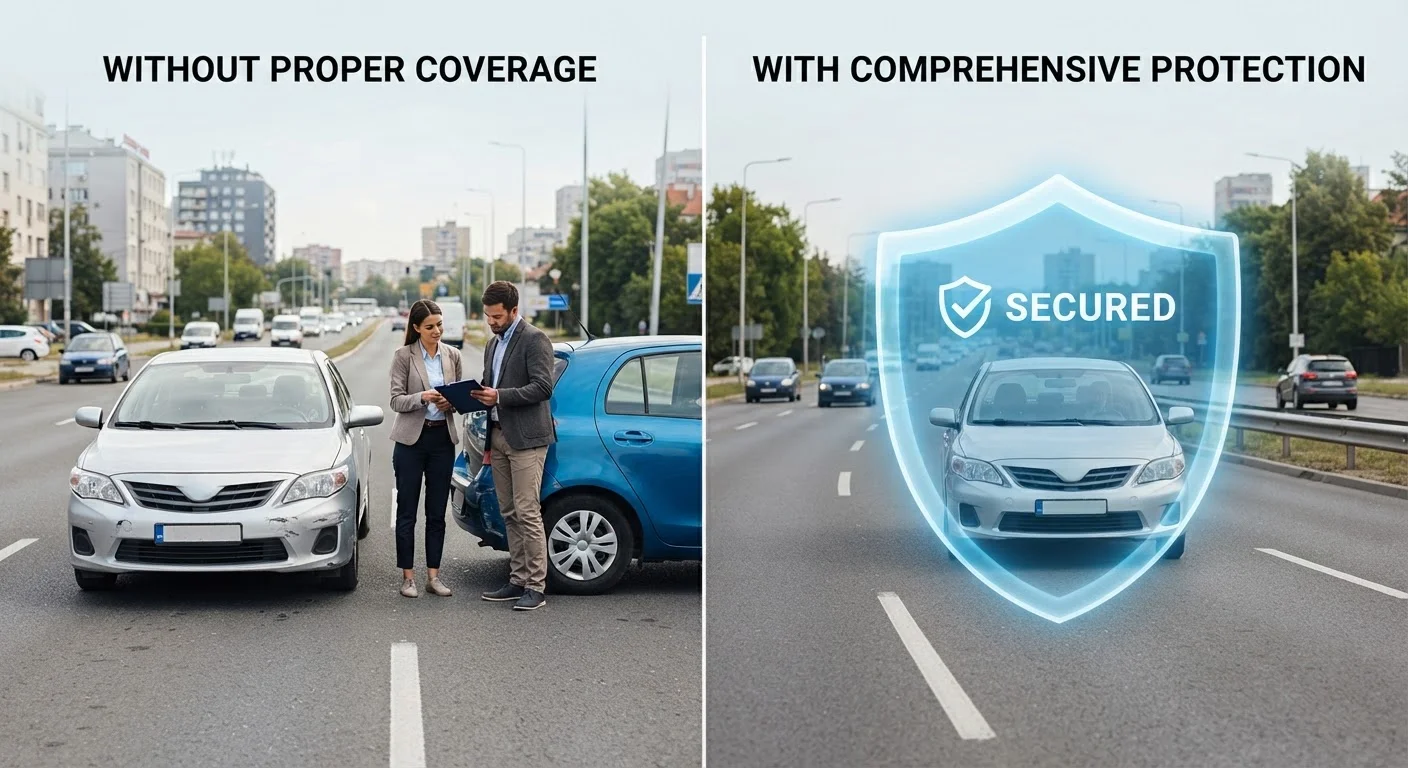
- Liability coverage pays for damage or injuries you cause to others, not your own vehicle.
- Full coverage combines liability with collision and comprehensive protection for your own car.
- Lenders typically require full coverage on financed or leased vehicles.
- Your vehicle's age and value are key factors in deciding how much coverage makes financial sense.
- Neither coverage type is universally "right" - the best choice depends on your specific situation.
Option A
Liability Coverage
The legally required baseline that protects others from your mistakes.
Best for: Drivers of older, lower-value vehicles who can absorb the cost of repairing or replacing their own car.
Option B
Full Coverage
The broader protection that also shields your own vehicle from damage.
Best for: Drivers of newer or financed vehicles who need protection against a wider range of financial risks.
If you own an older vehicle outright with low market value
Liability Coverage
When a car's value is low, the cost of full coverage premiums may exceed what you'd receive in a claim payout, making liability-only a financially reasonable choice.
If you're financing or leasing your vehicle
Full Coverage
Lenders require full coverage to protect their financial interest in the vehicle - dropping below this level typically violates your loan or lease agreement.
If you drive a newer or high-value vehicle you own outright
Full Coverage
A significant repair or total loss on a valuable car can be financially devastating without collision and comprehensive protection in place.
If you're on a tight budget with a paid-off, modest vehicle
Liability Coverage
Liability-only coverage keeps premiums lower while still meeting your legal obligation to cover harm you cause to others on the road.
What Liability Coverage Actually Pays For
Liability insurance is the foundation of any auto policy and is required in nearly every U.S. state. Despite being mandatory, it's frequently misunderstood. Liability coverage pays for damage or injuries that you cause to other people - not for repairs to your own vehicle.
There are two components to liability coverage. Bodily injury liability covers medical expenses, lost wages, and legal costs if you injure another person in an at-fault accident. Property damage liability covers the cost of repairing or replacing someone else's vehicle or property - a fence, storefront, or guardrail, for example.
Policy limits are expressed as three numbers, such as 25/50/25. These represent the maximum payout in thousands of dollars: per-person injury, per-accident injury total, and property damage. If damages exceed your limits, you're personally responsible for the remainder. That gap can be significant in a serious accident.
What liability does not cover is equally important: your own medical bills, your vehicle's repair costs, or damage caused by an uninsured driver. For a plain-language breakdown of these and other policy terms, see our Auto Insurance Terms Every Driver Should Know.
What Full Coverage Adds to the Picture
"Full coverage" isn't a single policy product - it's a shorthand for bundling liability with two additional coverages: collision and comprehensive.
Collision coverage pays to repair or replace your vehicle when it's damaged in an accident with another car or object, regardless of fault. Hit a guardrail, get rear-ended, or back into a pole - collision steps in for your car's repair bill, minus your deductible.
Comprehensive coverage handles non-collision damage: theft, vandalism, hail, flooding, fire, or striking an animal. These are events outside your control, and without comprehensive, you absorb those losses entirely out of pocket.
| Criterion | Liability Coverage | Full Coverage |
|---|---|---|
| Covers damage you cause others | Yes | Yes |
| Covers your own vehicle in a crash | No | Yes (collision) |
| Covers theft or weather damage | No | Yes (comprehensive) |
| Required by law | Yes, in most states | No (but lenders require it) |
| Typical monthly cost | Lower | Higher |
| Deductible applies | No | Yes |
| Best for older, low-value cars | Often yes | Rarely cost-effective |
| Best for financed vehicles | Insufficient | Required by lender |
Together, these two coverages mean your own vehicle is financially protected in a broad range of scenarios. That protection comes with a higher premium and a deductible - the amount you pay before insurance kicks in. Choosing a higher deductible generally lowers your monthly premium but increases what you owe when you file a claim.
How to Think About Which Makes Sense for You
The decision between liability-only and full coverage isn't just about cost - it's about the financial risk you're willing to carry yourself.
13%
Estimated uninsured drivers on U.S. roads
According to the Insurance Research Council, roughly 1 in 8 U.S. drivers carries no insurance, underscoring the value of uninsured motorist protection as an add-on.
$4,700+
Average collision claim payout
The Insurance Information Institute has reported average collision claim costs consistently above this threshold, illustrating the potential out-of-pocket exposure without coverage.
A useful starting point is your vehicle's current market value. If your car is worth $4,000, and full coverage costs $1,200 per year with a $1,000 deductible, the maximum net benefit from a total-loss claim would be $3,000. For many drivers with low-value paid-off vehicles, self-insuring that risk is a reasonable trade-off.
If you're financing your vehicle, the decision is largely made for you. Lenders require full coverage to protect their collateral - your loan agreement will specify minimums. Dropping to liability-only without the lender's consent puts you in breach of contract. This financial dimension is worth considering alongside the broader trade-offs in our guide to financing versus paying cash for a car.
Your financial cushion also matters. If an unexpected $8,000 repair bill would seriously strain your household finances, the premium cost of full coverage may be worth the security. If you could absorb that loss without significant hardship, liability-only keeps more money in your pocket each year.
Finally, consider where and how you drive. Parking in urban areas raises theft and vandalism risk. Driving in hail-prone regions makes comprehensive coverage more valuable. High-mileage highway driving increases collision exposure. Your real-world conditions should inform how much protection you carry.
This article is for general informational purposes only and does not constitute insurance, legal, or financial advice. Coverage requirements, policy terms, and state regulations vary. Consult a licensed insurance professional for guidance specific to your situation.