

Key Takeaways
- Awards season runs from approximately late August through early March each year.
- Venice, Telluride, and Toronto film festivals in late summer are the traditional launch pads for Oscar contenders.
- Critics groups, guild awards, and the Golden Globes all serve as momentum-builders leading to Oscar nominations.
- A film's release strategy - theatrical versus streaming - affects its awards eligibility and visibility.
- Oscar nominations are voted on by Academy members, making guild recognition particularly influential.
- Understanding the sequence helps viewers know when and why certain films dominate the conversation.
Awards Season
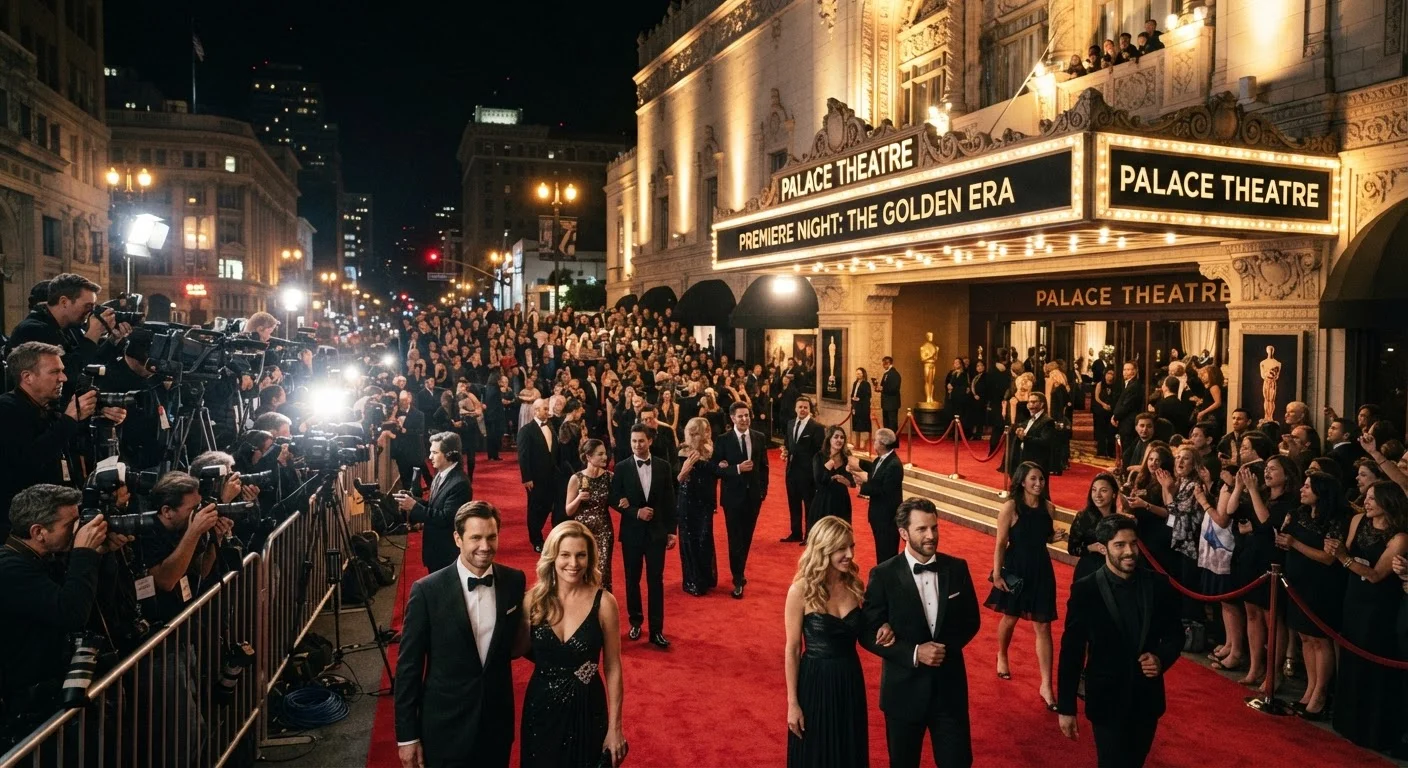
Awards season is the stretch of the film calendar - roughly August through March - during which major festivals premiere contenders, critics groups announce their picks, and Hollywood's guilds and academies hand out their prizes. It culminates with the Academy Awards, commonly known as the Oscars. The season functions as a months-long conversation among filmmakers, critics, studios, and audiences about which films matter most.
Oscar eligibility requires a qualifying theatrical run in Los Angeles County during the calendar year, which is why studios time releases strategically within the season.
The Starting Gun: Late Summer Festivals
If you've ever wondered why certain films seem to arrive in a rush between September and December, awards season is the answer. It's a structured calendar with identifiable milestones - and it begins far earlier than most viewers realize.
The Venice Film Festival, held annually on Italy's Lido island in late August and early September, is traditionally the first major platform for Oscar contenders. Venice carries enormous prestige, and its top prize - the Golden Lion - has historically gone to films that later figure prominently in the Oscar conversation. Just days later, the Telluride Film Festival in Colorado offers a more intimate setting where critical opinion often crystallizes quickly. Then comes the Toronto International Film Festival (TIFF), where the audience award - voted on by everyday festivalgoers - has become one of the more reliable early indicators of a film's popular appeal.
These three festivals don't just screen films; they generate the critical mass of reviews, word-of-mouth, and industry conversation that can define a movie's entire awards trajectory. A film that premieres strongly at Venice and is embraced at Toronto enters the season with significant momentum.
~7 months
Duration of a typical awards season
The cycle runs from late August festival premieres through the Oscars ceremony in late February or early March.
10,000+
Voting members of the Academy
The Academy of Motion Picture Arts and Sciences has grown its membership significantly through inclusion initiatives in recent years.
~18
Years the DGA predicted the Oscar for Best Director
In the roughly two decades leading up to the mid-2020s, the Directors Guild Award aligned with the Oscar for Best Director in the overwhelming majority of cases.
The Middle Miles: Critics, Guilds, and the Globes
October through January is where the season's complexity really shows. Studios begin releasing their prestige films in theaters - often starting in limited runs in New York and Los Angeles to qualify for awards - while the machinery of recognition shifts into gear.
Critics groups are among the first to weigh in formally. Organizations like the New York Film Critics Circle and the Los Angeles Film Critics Association announce their winners in December, followed by many regional groups around the country. These aren't just honorifics; they shape the media narrative and put certain films in front of more voters.
The guild awards carry arguably even more weight. The Screen Actors Guild Awards, the Directors Guild of America Awards, and the Producers Guild of America Awards are all voted on by working professionals - many of whom are also Academy members. When a film sweeps the guilds, it signals broad industry respect, which tends to translate at the Oscars. The DGA Award for Outstanding Directorial Achievement, in particular, has aligned with the Oscar for Best Director in the vast majority of years.
The Golden Globes, presented by the Hollywood Foreign Press Association (now restructured as the Hollywood Foreign Press Association Awards), generate significant media attention and can give a film's campaign fresh oxygen mid-season. They're watched closely, even though the voting body and criteria differ meaningfully from the Academy's.
“Awards season is less a meritocracy than a conversation - and like any conversation, what gets said early tends to echo the loudest.”
— A. O. Scott, Film critic and author, known for long-running work at The New York Times
It's also worth noting that a film's release path - whether through theaters or straight to a streaming platform - can shape not just its awards eligibility but its ability to sustain the kind of visibility that awards campaigns require throughout this long stretch.
The Finish Line: Nominations, Campaigns, and Oscar Night
By mid-January, Oscar nominations voting closes and the official nominees are announced - usually within days of each other. This moment resets the season: films that weren't on everyone's radar suddenly become essential viewing, and frontrunners face fresh scrutiny.
The weeks between nominations and the ceremony are filled with screenings, Q&A sessions, and industry events designed to keep voters engaged. Academy members watch, discuss, and ultimately cast their final ballots in the days before the ceremony.
The Oscars themselves typically air in late February or early March, marking the official close of the season. But understanding the road to that moment - the festivals, the critics, the guilds, the nominations - transforms the ceremony from a surprise-filled spectacle into something more like the final chapter of a story you've been following all year. Readers who track the season from Venice onward often find that Oscar night feels less arbitrary and far more satisfying.